 English



Auto Titrator: Fast, Accurate, Affordable—Why Us?
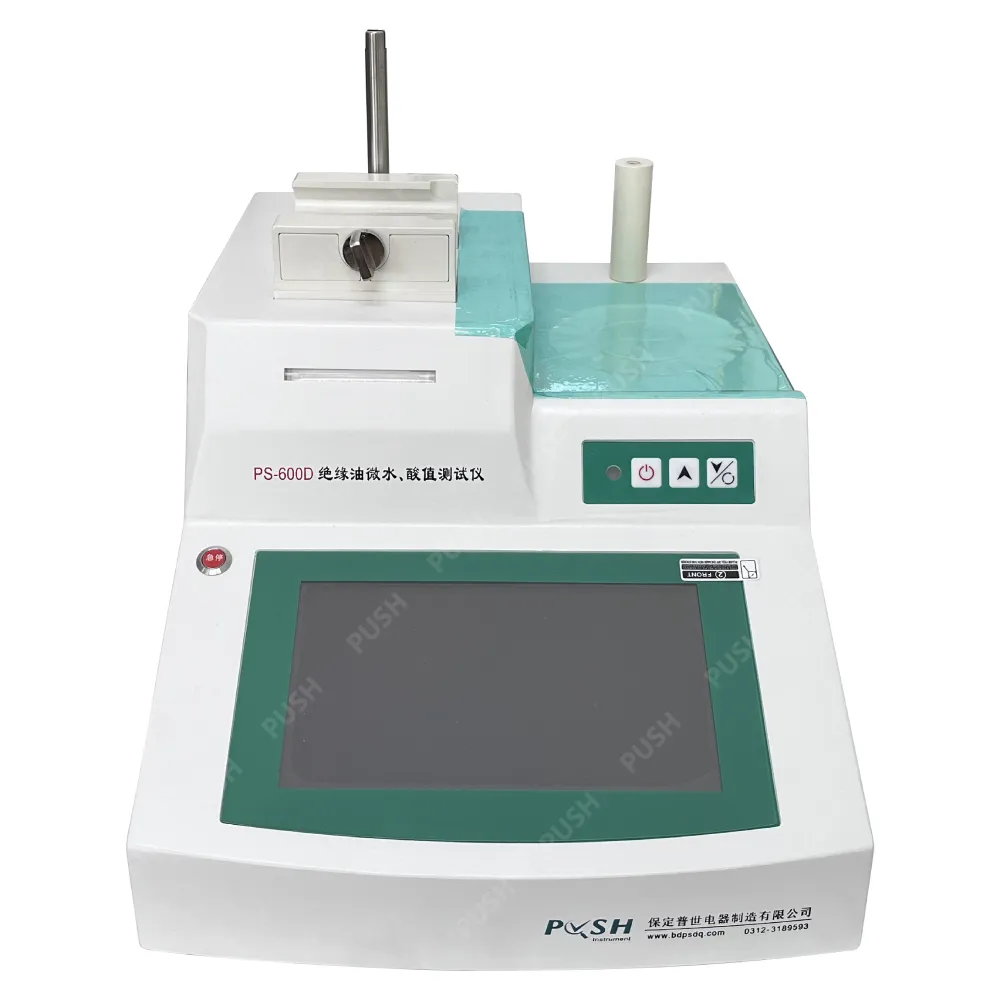
If you work in QA or a teaching lab, you’ve probably watched the quiet rise of the auto titrator—not flashy, but it’s the backbone of repeatable chemistry. The PS-DD600 Fully Potentiometric Titrator (Automatic High-Precision Titrator) from PushTester comes out of Room 302, Building 5, Baoding Zhongguancun Digital Economy Industrial Park, No. 777 Lixing Street, Jingxiu District, Baoding, Hebei. Quite a mouthful, I know. But the machine? Surprisingly nimble.
Industry trend check: labs want less fiddling and more audit-ready data. In fact, many customers say the shift is toward compliance-first automation—21 CFR Part 11–style user control, traceable titrant standardization, method locks. And remote QC dashboards, because someone always asks for last month’s alkalinity curve during lunch.
What the PS-DD600 actually does
It handles potentiometric acid–base, redox, and precipitation titrations across pharma, food, geochemical, petrochemical, environmental, water treatment—you name it. I’ve seen it used for acid number in lubricants in the morning and chloride in brine after lunch. Slightly chaotic, but it works.
Key specs (real-world use may vary)
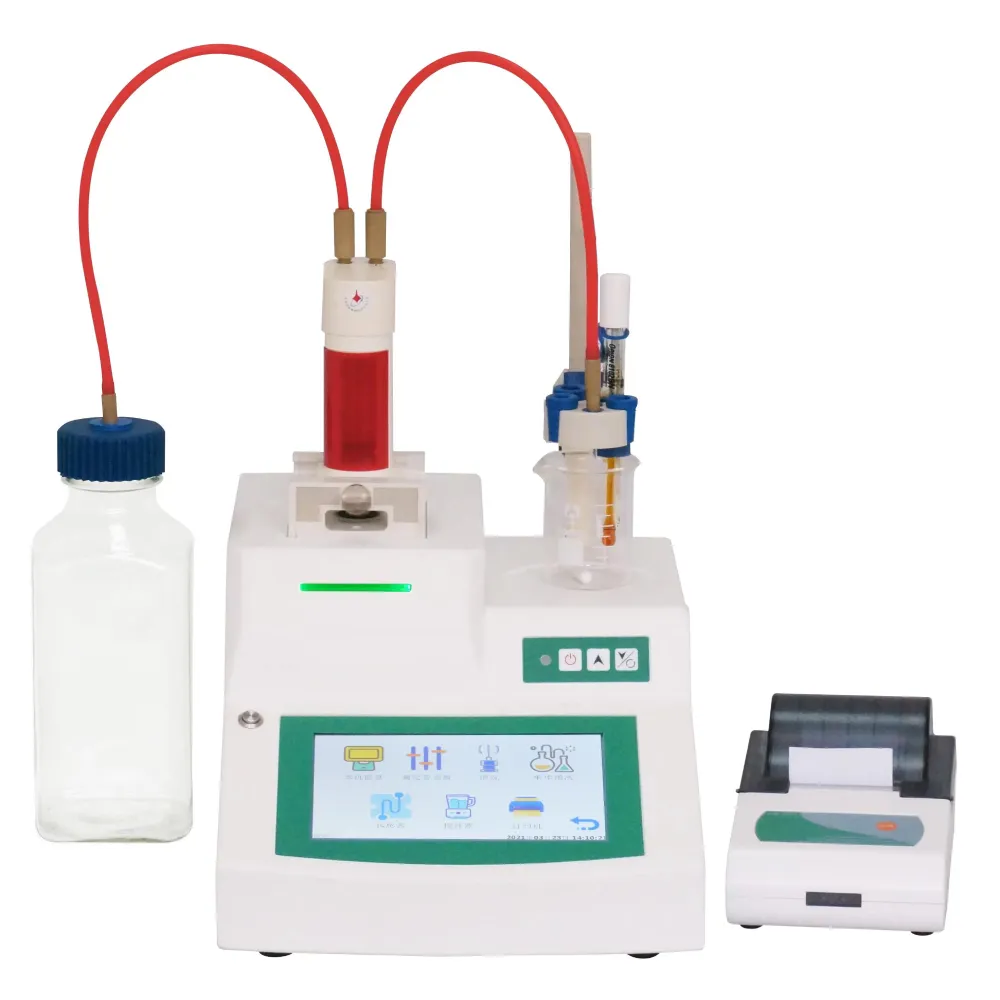
| Titration modes | Potentiometric (acid–base, redox, precipitation), dynamic equivalence detection |
| Burette | 10 mL standard, optional 20 mL; resolution ≈0.005 mL; repeatability ≈±0.1% FS |
| mV/pH range | ±2000 mV (0.1 mV res); pH 0–14 with glass electrode |
| Algorithms | First-derivative, Gran, endpoint hold, drift check |
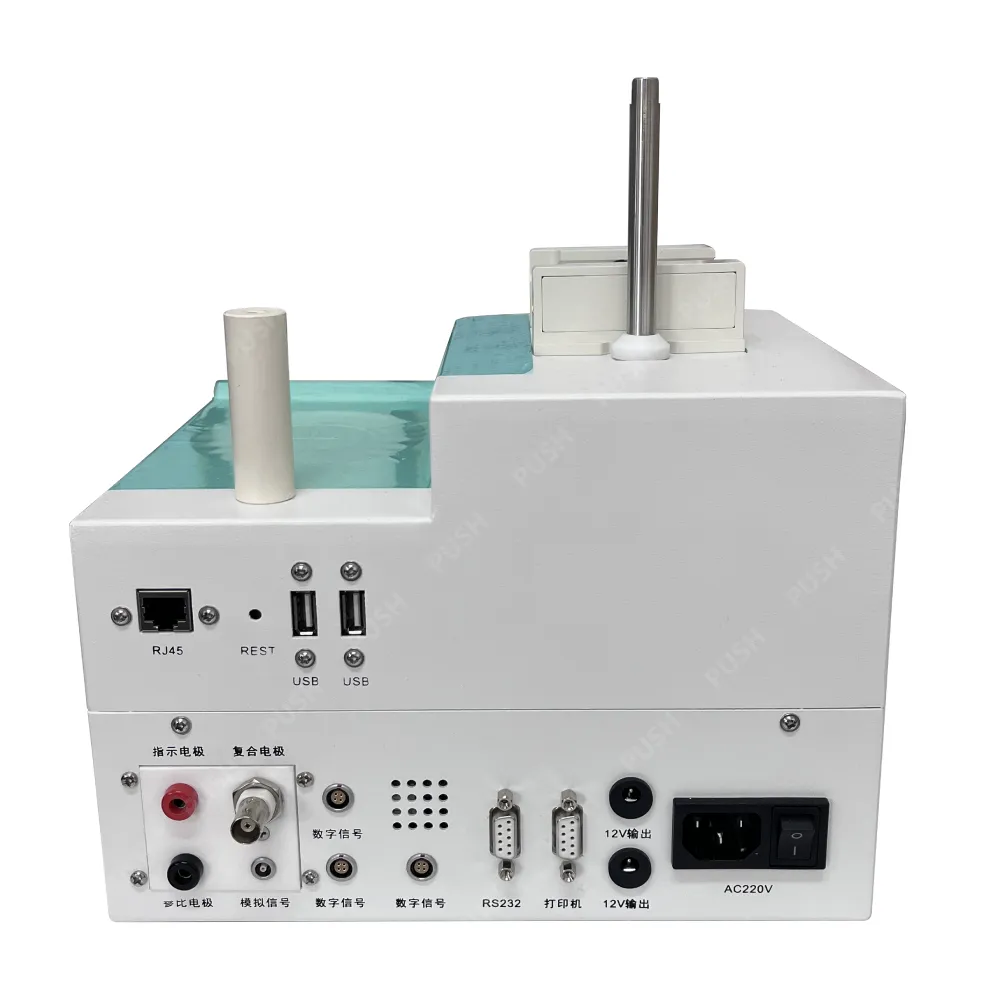
| Data & I/O | ≈10,000 results, USB export; optional Ethernet/LIMS bridge |
| Compliance | Audit trail, user levels; 21 CFR Part 11–ready with software |
| Service life | Around 5–7 years typical with annual maintenance |
Process flow (how labs run it)
- Materials: titrants (e.g., KOH in IPA, HCl, AgNO3), standards (KHP, NaCl), electrodes (glass pH, Pt redox), PTFE tubing.
- Method: standardize titrant; verify electrode slope; load method (ASTM/ISO/AOAC); run sample in triplicate.
- Testing standards: ASTM D664/D974 (acid number), ISO 9963-1 (alkalinity), AOAC 969.10/942.15 (salt/chloride).
- Industries: pharma, food oil QC, geochem exploration, petrochemical labs, wastewater plants, agriculture.
- Resulting data: curves, equivalence volume, mg KOH/g or mg/L as CaCO3; RSD target ≤2% for routine QC.
Quick test note: in a sunflower oil trial, the PS-DD600 returned AV = 0.18 mg KOH/g with RSD 0.9% (n=6). That’s solid for day-to-day QA, to be honest.
Vendor snapshot (indicative, public info, ≈)
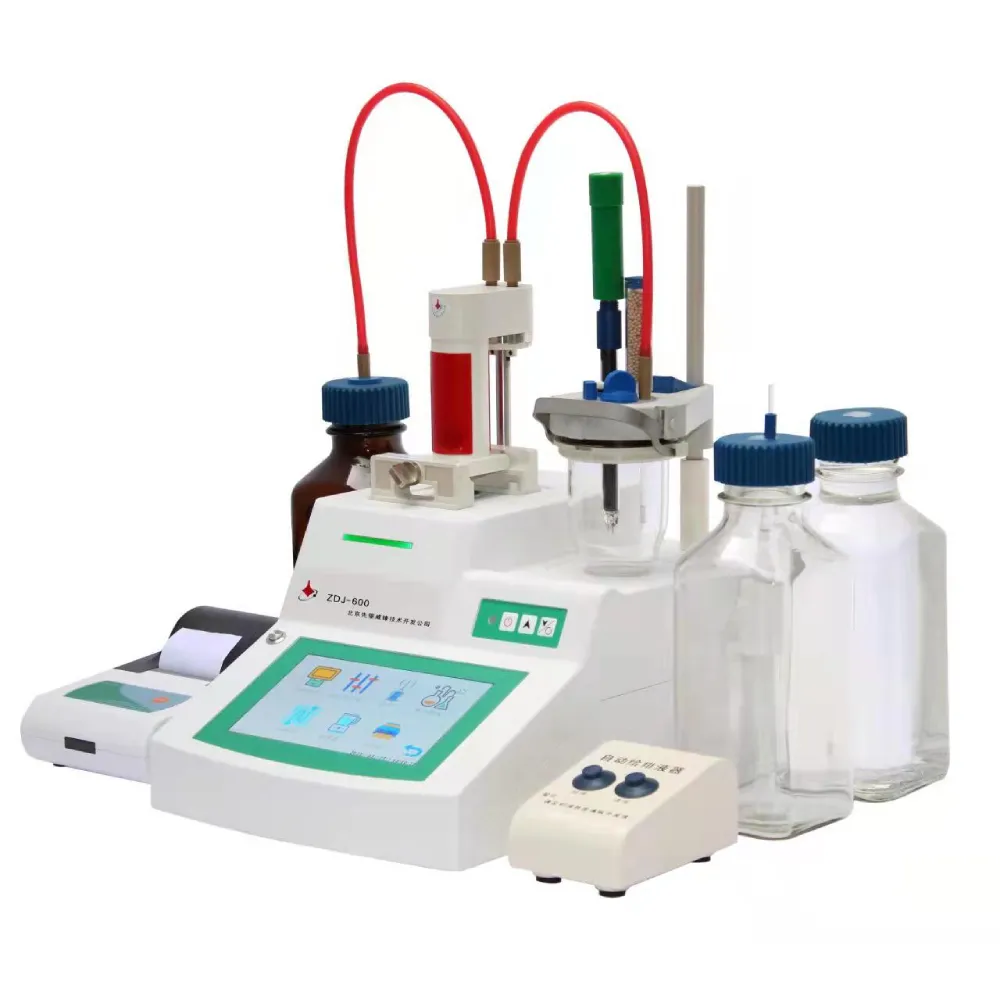
| Model | Accuracy | Burette | Methods | Price | Notes |
|---|---|---|---|---|---|
| PushTester PS-DD600 | ≈±0.1% FS | 10/20 mL | ASTM/ISO/AOAC templates | Mid-range | Good value, flexible I/O |
| Metrohm entry model | High | 5–50 mL options | Rich library | Premium | Ecosystem strength |
| Mettler Toledo G-series | High | 10/20 mL | Guided methods | Premium | Great UX |
| Hanna HI931 | Moderate–High | 5/10 mL | Common methods | Budget–Mid | Compact footprint |
Customization, certifications, feedback
- Customization: dual burettes, solvent-resistant tubing, language UI, LIMS hooks.
- Certifications: CE, RoHS; calibration traceable to ISO/IEC 17025 via partner labs.
- Many customers say installation takes ≈30 minutes; method validation a bit longer (as it should).
Two quick cases
Food oil plant: acid value by ASTM D664, auto titrator reported 0.12–0.20 mg KOH/g; outliers flagged by drift control. Water utility: alkalinity by ISO 9963-1, auto titrator mean 120 mg/L as CaCO3, RSD 1.2% over 20 days—operator turnover didn’t affect results. That’s the point.
Bottom line: if you want a pragmatic, audit-friendly auto titrator that doesn’t fuss, the PS-DD600 earns its bench space.
Authoritative citations
- ASTM D664: Standard Test Method for Acid Number of Petroleum Products by Potentiometric Titration. https://www.astm.org/d0664
- ASTM D974: Standard Test Method for Acid and Base Numbers by Color-Indicator Titration. https://www.astm.org/d0974
- ISO 9963-1: Water quality — Determination of alkalinity — Part 1. https://www.iso.org/standard/17700.html
- AOAC Official Methods (e.g., 942.15 Chloride). https://www.aoac.org/official-methods-of-analysis
- 21 CFR Part 11: Electronic Records; Electronic Signatures. https://www.ecfr.gov/current/title-21/part-11
-
Find the Best Loop Impedance Tester for Sale and Ensure Electrical SafetyNewsMar.31,2026
-
Comprehensive Guide to Loop Impedance Meter for Electrical SafetyNewsMar.28,2026
-
Understanding and Choosing a Line Impedance Tester for Optimal Network PerformanceNewsMar.26,2026
-
Comprehensive Guide to Line Earth Loop Impedance Test for Electrical SafetyNewsMar.24,2026
-
Comprehensive Guide to Fault Loop Impedance Meter and Electrical SafetyNewsMar.21,2026
-
Comprehensive Guide to External Loop Impedance Test for Electrical SafetyNewsMar.19,2026


