 English



BDV Testing Machine for Transformer Oil – Fast, Accurate
Insider Notes on the PS-1003 Three-Cup Insulating Oil Dielectric Strength Tester
If you work around transformers, switchgear, or HV labs, you already know the quiet importance of oil breakdown testing. I spent a morning at PUSH Electrical’s Baoding facility (Room 302, Building 5, Baoding Zhongguancun Digital Economy Industrial Park, No. 777 Lixing Street, Jingxiu District, Baoding, Hebei) and got hands-on with their Bdv Testing Machine — formally, the PS-1003 Three-Cup Insulating Oil Dielectric Strength Tester. It’s compact, surprisingly user-friendly, and, to be honest, faster than I expected for multi-sample work.
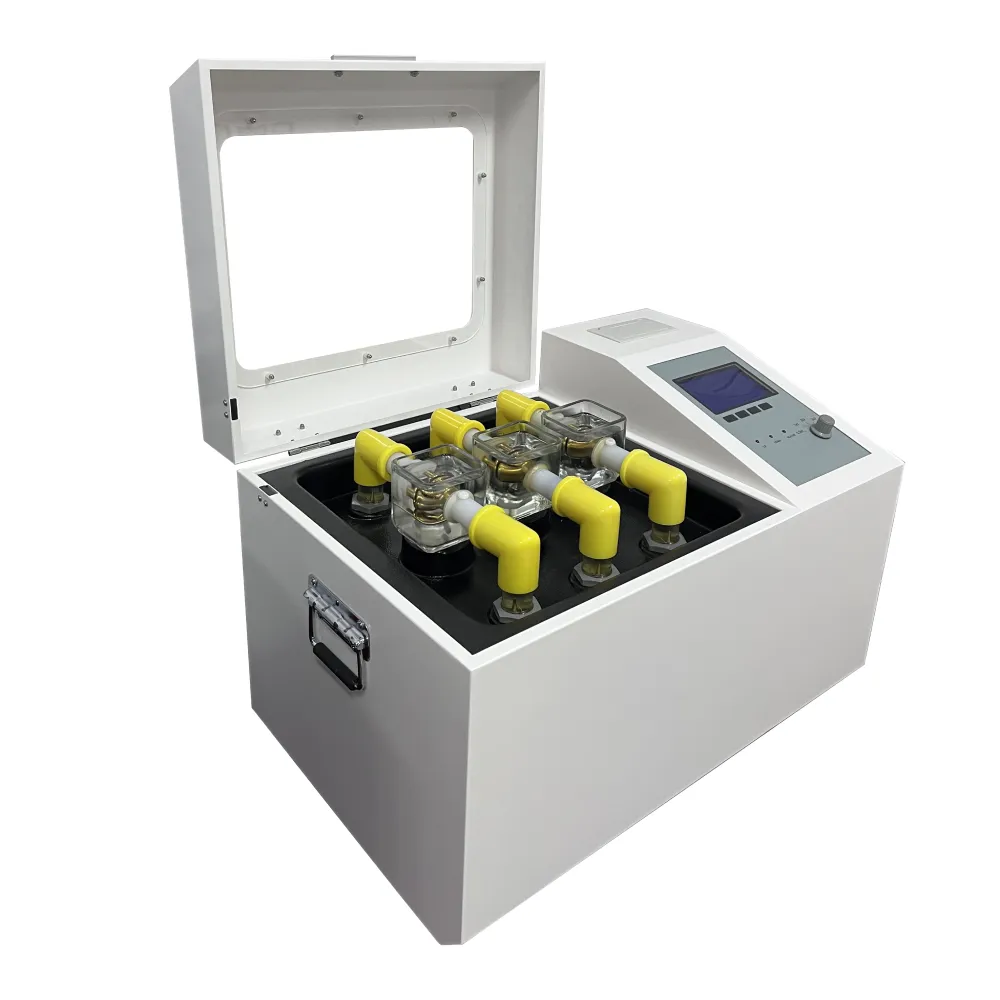
What’s shifting in the industry
Utilities are shortening maintenance cycles; insurers are fussier about oil records; and renewables are pushing equipment to the edge. The trend is clear: labs want faster throughput and fewer retests. A three-cup design like the PS-1003 makes sense—three oil samples in parallel, fewer set-ups, and consistent protocols. Compliance matters too: the unit is built to meet ASTM D1816 and ASTM D877—two of the most used breakdown voltage methods in North America.
Quick spec snapshot
| Model | PUSH Electrical PS-1003 |
| Cups / Channels | 3 simultaneous oil samples (parallel testing) |
| Standards Supported | ASTM D1816, ASTM D877 (per product brief) |
| Electrodes | Flat, spherical, hemispherical (interchangeable) |
| Throughput | 3× faster prep vs single-cup units (real-world use may vary) |
| Origin | Baoding, Hebei, China |
How testing actually runs (process flow)
- Materials: mineral transformer oil, natural/FR esters, silicone fluids, cable oils.
- Prep: filtration and moisture control (experienced labs monitor ppm water); measure temp if required.
- Methods: per ASTM D1816 (spherical electrodes, defined gap) or ASTM D877 (flat electrodes, 0.1 in gap).
- Procedure: ramp voltage until breakdown; repeat per method; compute average and SD.
- Service life: instruments like this typically run 5–10 years with periodic calibration and electrode care.
- Industries: power utilities, transformer OEMs, rail, petrochem, independent test labs.
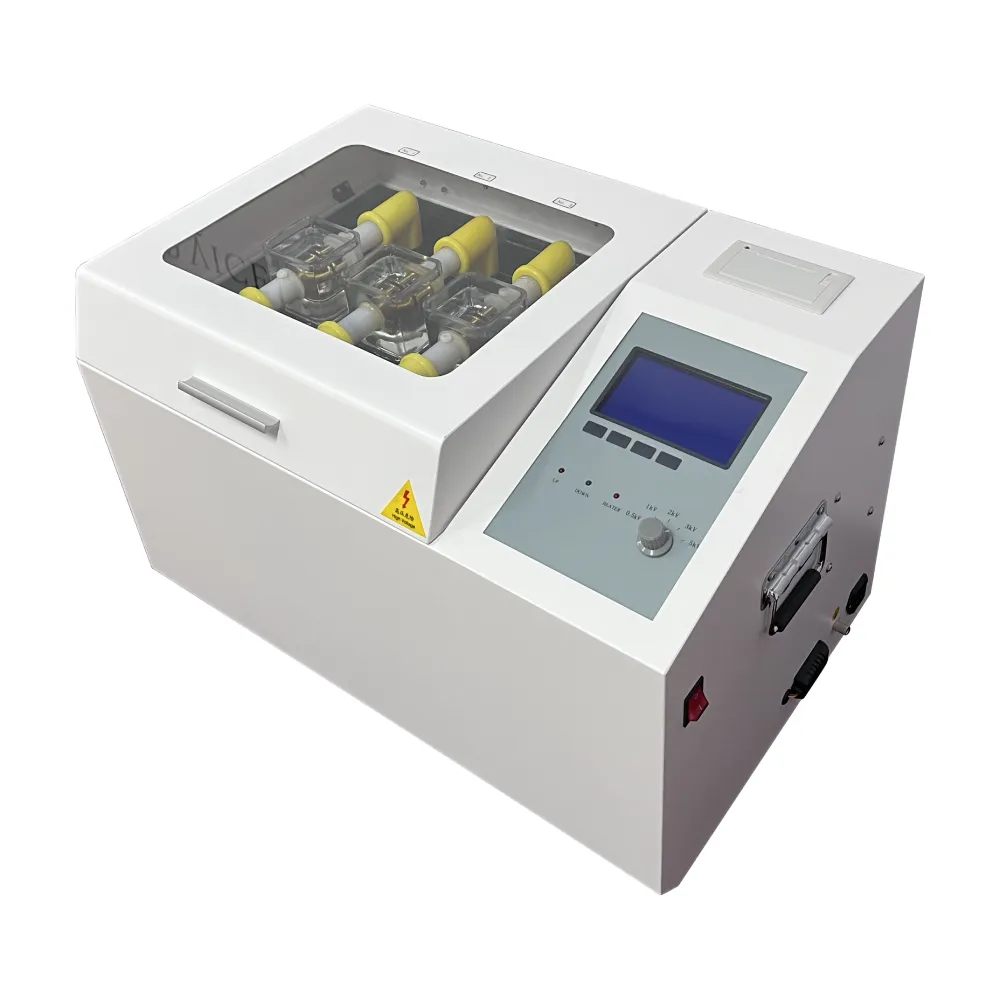
Use cases, advantages, and what customers say
Common scenarios: incoming oil QC, transformer maintenance rounds, post-repair validation, and condition trending for critical assets. Advantages? Parallel testing (less downtime), flexible electrodes, and standards-focused workflows. Many customers say the triple-cup arrangement reduces operator fatigue—less rinse-repeat between samples. It seems that consistency improves too, which matters for audits.
Vendor comparison (brief)
| Vendor / Model | Channels | Standards | Electrodes | Notes |
|---|---|---|---|---|
| PUSH PS-1003 | 3 | ASTM D1816, D877 | Flat, spherical, hemispherical | High throughput; convenient for labs |
| Vendor A (single-cup) | 1 | Often D1816 or IEC 60156 | May be limited | Lower cost; slower throughput |
| Vendor B (bench-top) | 1–2 (≈) | Varies | Interchangeable (check) | Compact; mixed software maturity |
Customization
- Electrode kits: flat, spherical, hemispherical (swap based on method).
- Programmed sequences: ramp rates, hold times, repeat counts (ask for templates).
- Data handling: print/export formats, LIMS-friendly CSV, language UI.
- Safety add-ons: lid interlocks, HV signage; calibration accessories.
Case notes and sample data
One regional utility ran parallel tests on reclaimed mineral oil. Under ASTM D1816 (2 mm, spherical), their average was 42 kV with low scatter; under D877 (flat electrodes, 0.1 in), new ester oil in the same lab posted ≈68 kV. Not headline numbers, but steady—and actionable. Actually, the win was speed: three beakers, one operator, lunch on time.
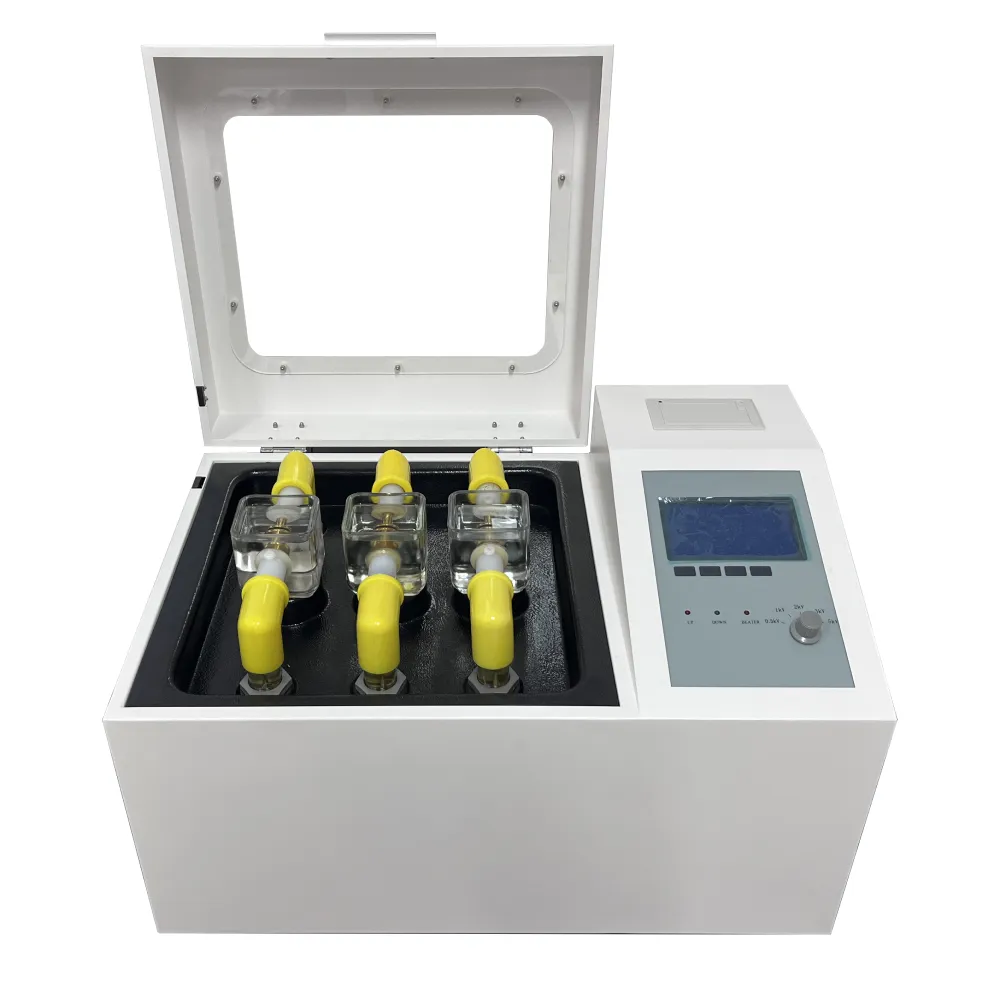
Compliance, calibration, and care
This unit is designed to comply with ASTM D1816 and D877. If your lab leans IEC, you’ll likely compare with IEC 60156 methods. As for documentation, ask PUSH Electrical for current calibration procedures and any CE/ISO paperwork (many labs keep copies on file). Service life, I guess, hinges on electrode maintenance and stable lab conditions—keep it clean and dry, and it will treat you well.
Final thought: if you need a reliable Bdv Testing Machine for routine transformer oil checks—and you care about throughput—the PS-1003 is a practical, nicely executed option. And yes, surprisingly easy to train on.
Authoritative references
- ASTM D1816 – Standard Test Method for Dielectric Breakdown Voltage of Insulating Liquids Using VDE Electrodes. https://www.astm.org/d1816
- ASTM D877 – Standard Test Method for Dielectric Breakdown Voltage of Insulating Liquids Using Disk Electrodes. https://www.astm.org/d0877
- IEC 60156 – Insulating liquids – Determination of the breakdown voltage at power frequency. https://webstore.iec.ch/publication/2458
-
Find the Best Loop Impedance Tester for Sale and Ensure Electrical SafetyNewsMar.31,2026
-
Comprehensive Guide to Loop Impedance Meter for Electrical SafetyNewsMar.28,2026
-
Understanding and Choosing a Line Impedance Tester for Optimal Network PerformanceNewsMar.26,2026
-
Comprehensive Guide to Line Earth Loop Impedance Test for Electrical SafetyNewsMar.24,2026
-
Comprehensive Guide to Fault Loop Impedance Meter and Electrical SafetyNewsMar.21,2026
-
Comprehensive Guide to External Loop Impedance Test for Electrical SafetyNewsMar.19,2026


