 English



BDV Testing Machine: Accurate Transformer Oil Dielectric Strength
The Imperative Role of BDV Testing in Electrical Infrastructure
In the intricate landscape of electrical engineering, the reliability and safety of insulating oils are paramount. These oils, critical components in transformers, circuit breakers, and other high-voltage apparatus, serve to insulate live parts and dissipate heat. Over time, factors such as moisture ingress, contamination, and thermal degradation can compromise their dielectric strength, leading to potential equipment failure and costly downtime. This necessitates rigorous and routine dielectric strength testing. A state-of-the-art bdv testing machine is indispensable for accurately assessing the breakdown voltage (BDV) of these insulating fluids, ensuring the operational integrity and longevity of electrical assets.
The breakdown voltage is a direct measure of an insulating oil's ability to withstand electrical stress without succumbing to dielectric breakdown. Regular testing with a high-precision bdv testing machine helps detect early signs of insulation deterioration, allowing for proactive maintenance and preventing catastrophic failures. This commitment to preventative diagnostics is a cornerstone of modern industrial safety and efficiency protocols.
Current Industry Trends in Dielectric Strength Testing
The field of dielectric strength testing is continually evolving, driven by demands for greater accuracy, automation, and data integration. Key trends include:
- Enhanced Automation and IoT Integration: Modern bdv transformer oil testers are increasingly incorporating automated test sequences, data logging, and remote monitoring capabilities. This reduces human error, streamlines testing processes, and allows for trend analysis over time.
- Portability and Field Testing: While lab-grade equipment remains essential, there's a growing demand for compact, rugged, and portable dielectric strength tester units that can perform reliable oil bdv tests directly on-site, minimizing equipment downtime.
- Multi-functional Testing: Next-generation devices often integrate multiple diagnostic capabilities beyond simple breakdown voltage, such as dissipation factor (tan delta) and resistivity measurements, providing a more comprehensive assessment of insulating oil quality.
- Adherence to Stricter Standards: As electrical grids become more complex and operate at higher voltages, testing standards (e.g., IEC 60156, ASTM D1816, ASTM D877) are becoming more stringent, requiring precise and repeatable results from any bdv tester.
- Data Analytics and Predictive Maintenance: The collection of vast amounts of bdv testing data facilitates advanced analytics, enabling predictive maintenance strategies that optimize asset lifespan and prevent unscheduled outages.
Manufacturing Process of a High-Precision BDV Testing Machine
The development and manufacturing of a reliable bdv test kit involves a sophisticated process, prioritizing precision, durability, and adherence to international standards. This ensures the device delivers accurate and repeatable results crucial for industrial safety.
Key Stages in Manufacturing:
- Conceptual Design & Engineering: This initial phase involves detailed electrical and mechanical design, material selection (e.g., high-purity aluminum alloys for test cells, robust steel for enclosures), and simulation to optimize performance and safety. Adherence to standards like IEC 60156 is central.
- Component Sourcing & Fabrication: High-quality, certified components are procured. Precision manufacturing techniques such as CNC machining are employed for electrode assemblies and test cell components to ensure exact dimensions and smooth finishes, critical for accurate voltage application. Forging may be used for high-stress parts to enhance material strength.
- Assembly of High-Voltage Circuitry: Skilled technicians meticulously assemble the high-voltage transformer, control circuitry, and safety interlocks. This stage demands extreme precision and cleanroom conditions to prevent contamination.
- Test Cell Construction: The core of the oil bdv tester, the test cell, is engineered for electrical isolation and chemical inertness. Materials like glass or acrylic are chosen for visibility and resistance to transformer oil, and often manufactured with precise casting or molding techniques.
- Software Development & Integration: For automated testers, sophisticated software is developed for test sequence control, data acquisition, analysis, and user interface. This software is rigorously tested for accuracy and ease of use.
- Calibration & Quality Control: Each oil bdv test kit undergoes extensive calibration against traceable standards. Multiple quality control checks, including dielectric withstand tests on internal components, functional tests, and safety compliance checks (e.g., earth continuity, insulation resistance), are performed.
- Final Testing & Certification: Before shipment, the complete transformer oil bdv tester undergoes final performance validation according to international standards (e.g., ISO 17025 accredited labs). Certification to relevant safety and electromagnetic compatibility (EMC) standards is secured.
Target Industries and Advantages: These machines are vital across petrochemical, metallurgy, power generation & distribution, and water supply & drainage sectors. Advantages include enhanced safety through early detection of insulation breakdown, significant energy savings by preventing inefficient operations caused by compromised insulation, and superior corrosion resistance of components due to high-grade material selection, ensuring a long service life.
Technical Specifications: PUSH Electrical PS-1003 Three-Cup Insulating Oil Dielectric Strength Tester
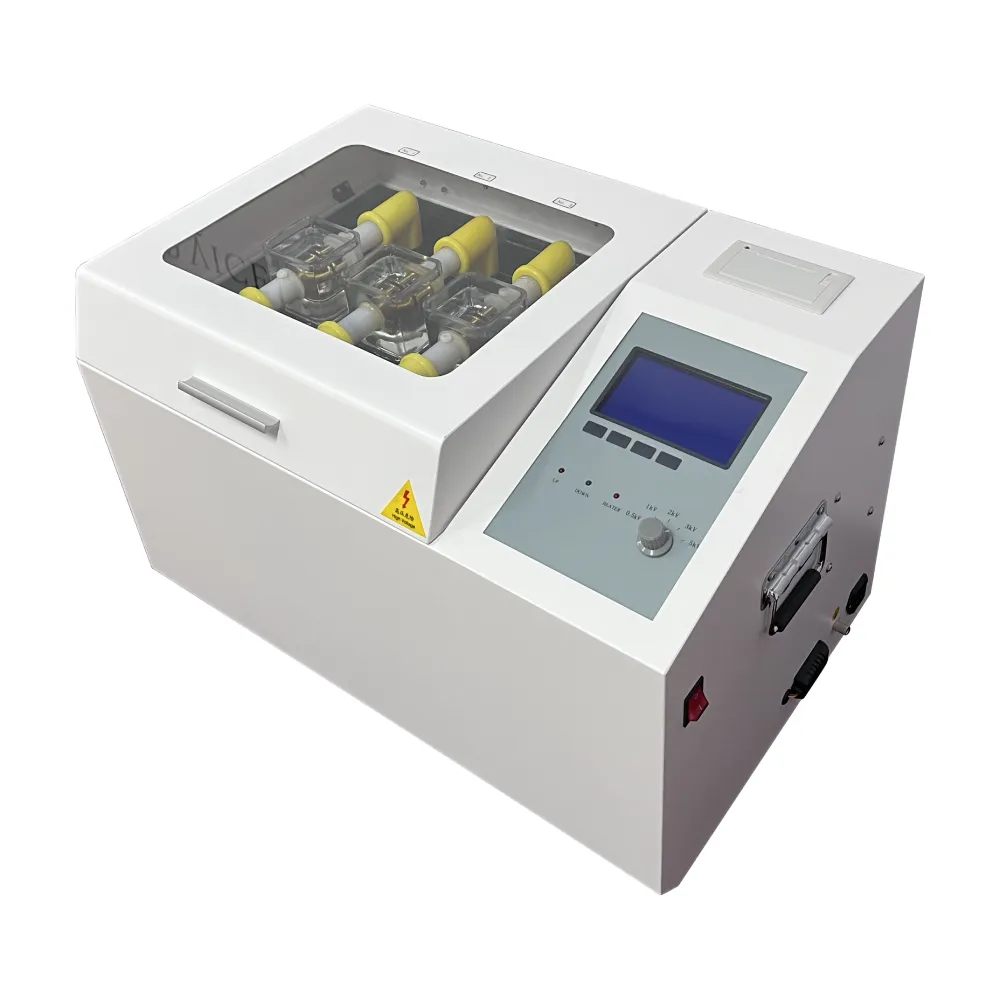
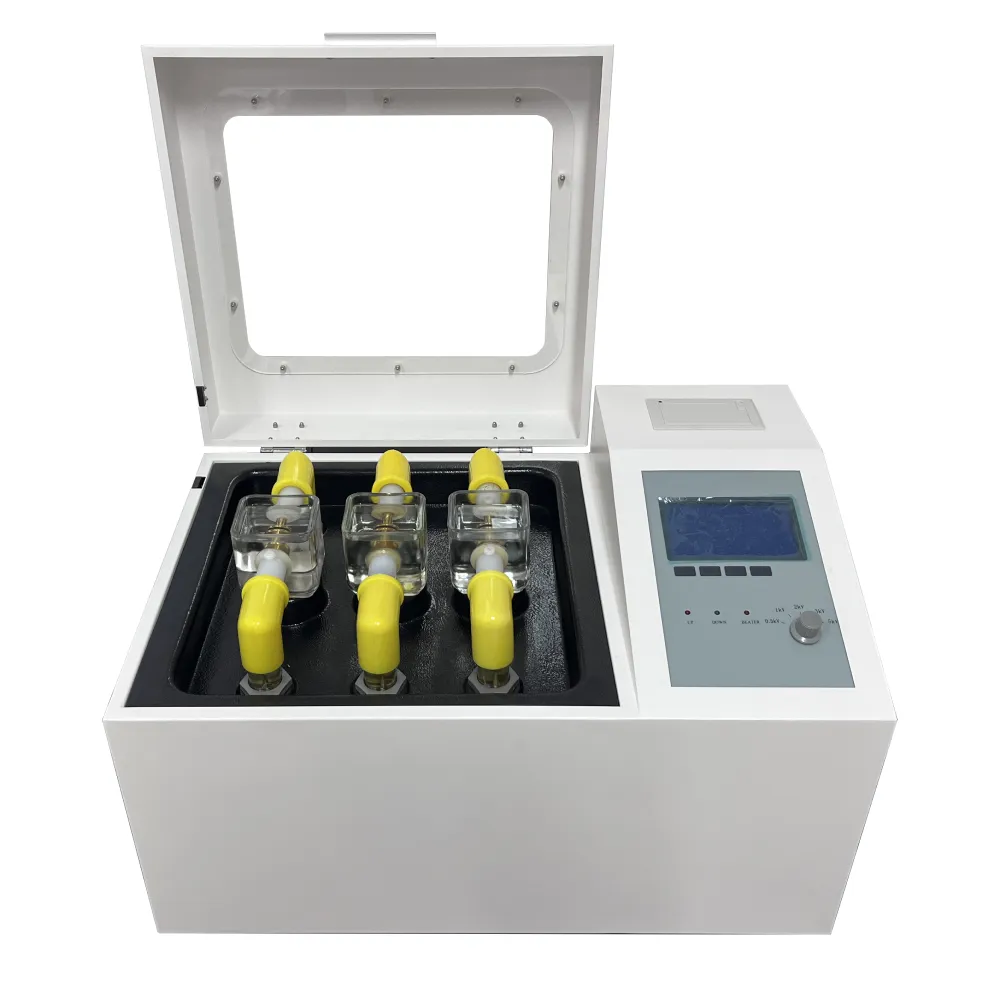
The PUSH Electrical PS-1003 exemplifies a cutting-edge bdv testing machine, designed for unparalleled accuracy and efficiency. Its three-cup design significantly enhances throughput for laboratories and maintenance depots. Below are its core technical parameters:
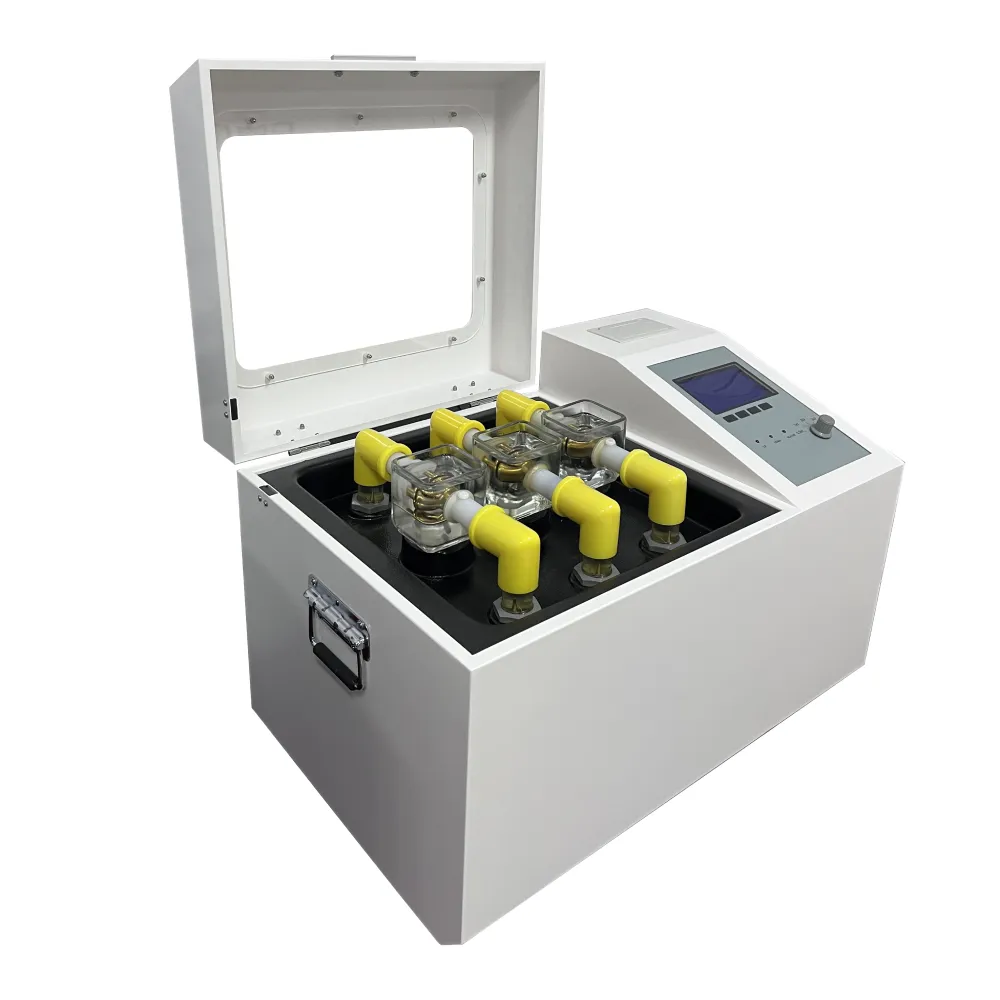
Product Specification Table: PUSH Electrical PS-1003
| Parameter | Specification |
|---|---|
| Output Voltage Range | 0 - 80 kV (customizable up to 100 kV) |
| Voltage Boost Rate | 0.5 kV/s to 5.0 kV/s (adjustable) |
| Number of Test Cups | 3 (independent testing) |
| Test Standards Supported | IEC 60156, ASTM D1816, ASTM D877, IS 6792, BS 5874, VDE 0370-5 |
| Measurement Accuracy | Voltage: ±1% of reading ±1 digit; Time: ±1% of reading ±1 digit |
| Display | 7-inch color LCD touch screen |
| Data Storage | >1000 test results, USB export capability |
| Power Supply | AC 220V ±10%, 50/60Hz |
| Operating Temperature | 0 °C to 45 °C |
| Dimensions (L×W×H) | Approx. 420mm × 380mm × 400mm |
| Weight | Approx. 28 kg |
The PS-1003's ability to conduct independent tests on three oil samples simultaneously significantly reduces testing time, a critical advantage for high-volume environments. Its advanced safety features, including zero-start interlocking and automatic discharge, ensure operator protection and compliance with stringent industrial safety regulations.
Application Scenarios and Operational Experience
The versatility of an advanced oil bdv test of transformer unit like the PUSH Electrical PS-1003 makes it indispensable across a spectrum of industrial and utility applications.
Typical Application Scenarios:
- Power Generation & Transmission: Essential for routine maintenance of power transformers, circuit breakers, and tap changers. Utilities use the bdv tester price and performance to determine the most cost-effective solution for ensuring grid stability.
- Industrial Facilities: Manufacturing plants, data centers, and heavy industries rely on continuous power. Regular bdv test kit price comparisons help justify investment in maintaining their critical electrical equipment, minimizing unscheduled outages.
- Petrochemical and Mining: In hazardous environments, reliable electrical insulation is paramount. BDV testing ensures the safety and operational efficiency of transformers and switchgear in these challenging conditions.
- Transformer Manufacturers: Used for quality control during the production of new transformers and other oil-filled electrical apparatus.
- Research & Development Laboratories: For testing new insulating fluid formulations and evaluating the performance of existing oils under various stress conditions.
Customer Feedback: PUSH Electrical clients consistently praise the PS-1003 for its robust design and intuitive user interface. An energy utility in the Midwest reported a 30% reduction in testing time for their transformer fleet after implementing the three-cup system, leading to significant operational savings. Another industrial client noted the ease of data export via USB, simplifying their compliance reporting and trend analysis. The machine's stability and repeatable results under varying ambient conditions have been a particular highlight for field engineers.
Technical Advantages of Advanced BDV Testers
Modern bdv test transformer units offer significant advantages over older generations, primarily focusing on precision, safety, and operational efficiency. The PUSH Electrical PS-1003 embodies these advancements.
- High-Precision Voltage Control: Utilizing digital control systems and high-stability voltage sources, these testers achieve breakdown voltage measurement accuracy of ±1%, essential for critical decision-making in asset management.
- Advanced Arc Detection & Shutdown: Sophisticated algorithms detect the precise moment of dielectric breakdown, ensuring quick shutdown to minimize carbonization of electrodes and preserve oil sample integrity for subsequent tests.
- Programmable Test Sequences: Users can configure custom test sequences, including voltage rise rates, dwell times, and the number of breakdowns, to comply with various national and international standards without manual intervention.
- Temperature Compensation: Some advanced models incorporate temperature compensation for more accurate breakdown voltage measurements, as oil dielectric strength is temperature-dependent.
- Robust Electrode Designs: Featuring standard spherical, mushroom, and VDE electrodes, engineered for durability and easy maintenance, ensuring long-term stable performance.
- Comprehensive Data Management: Built-in memory stores thousands of test results, and USB/Ethernet connectivity allows for seamless transfer to external systems for detailed analysis and reporting. This facilitates robust predictive maintenance programs based on historical data.
Vendor Comparison and Selection Criteria
Choosing the right oil bdv test of transformer equipment involves careful consideration of several factors beyond just the initial bdv tester price. A comprehensive evaluation helps ensure long-term value and operational efficiency.
Key Comparison Factors:
- Accuracy and Repeatability: The cornerstone of reliable testing. Verify measurement precision and consistency across multiple tests and samples.
- Compliance with Standards: Ensure the tester adheres to international standards (e.g., IEC, ASTM) relevant to your operational regions.
- Automation and Ease of Use: Look for intuitive interfaces, automated test sequences, and minimal operator intervention.
- Safety Features: Essential for protecting personnel and equipment, including zero-start interlocks, emergency stops, and automatic discharge.
- Data Management: Capabilities for data storage, analysis, and export are vital for trend analysis and compliance.
- Durability and Portability: Consider the environmental conditions of use. Rugged construction and portability are advantages for field testing.
- After-Sales Support & Calibration: Availability of technical support, spare parts, and calibration services is crucial for sustained operation.
Why PUSH Electrical Stands Out:
PUSH Electrical distinguishes itself through a commitment to innovation, quality, and customer support. Our PS-1003 model, for instance, offers a superior combination of advanced features, robust build quality, and competitive pricing. Our long-standing industry presence and certifications (e.g., ISO 9001, CE) underscore our authoritativeness. We partner with leading utilities and industrial giants, a testament to our product reliability and service excellence. Our expertise in high-voltage testing equipment ensures that every bdv testing machine we deliver meets the highest global standards for performance and safety.
Customized Solutions for Diverse Industry Needs
Understanding that 'one-size-fits-all' rarely applies in complex industrial environments, PUSH Electrical offers tailored solutions for our bdv test kit range. We collaborate closely with clients to configure testers that align precisely with their specific operational requirements and regulatory frameworks.
- Voltage Range Adjustments: While standard units operate up to 80 kV, we can customize output voltage ranges (e.g., 100 kV or higher) for specialized applications or unique transformer oil types.
- Software Customization: Tailoring reporting formats, data export protocols, or integrating with existing SCADA/asset management systems to enhance data flow and analysis.
- Environmental Hardening: For extreme operating conditions, enclosures can be upgraded for enhanced dust, moisture, or vibration resistance.
- Specific Electrode Geometries: While standard electrode types are available, custom electrode designs can be fabricated to meet very specific research or operational requirements.
- Multi-Standard Compliance Packages: Configuring testers to prioritize or include specific lesser-known regional standards in addition to mainstream international ones.
Our technical team, with decades of collective experience, works as an extension of your engineering department to deliver a bdv testing machine that truly meets your project's unique demands, ensuring both technical excellence and operational synergy.
Real-World Application Case Studies
Case Study 1: Large-Scale Power Utility BDV Program
A major national power utility, responsible for over 1000 transmission transformers, faced challenges with slow turnaround times for insulating oil analysis. Their existing single-cup BDV testers were bottlenecks. After adopting multiple PUSH Electrical PS-1003 three-cup units, the utility reported a 45% increase in daily sample throughput. This allowed them to transition from reactive maintenance to a fully proactive, condition-based maintenance program, reducing the incidence of unexpected transformer failures by 18% over two years. The data logging and export features were crucial for their centralized asset management system.
Case Study 2: Petrochemical Plant Safety Enhancement
A large petrochemical complex in the Middle East required stringent dielectric strength testing for its substation transformers and oil-filled switchgear, operating in a challenging desert environment. High temperatures and airborne particulates posed a risk to insulating oil integrity. The plant invested in a customized PUSH Electrical bdv testing machine with enhanced environmental protection and specialized software for trend analysis adapted to their operational cycles. This investment led to an improved safety record, with zero oil-related electrical incidents recorded in the subsequent three years, along with optimized oil change schedules based on precise degradation tracking, leading to 15% savings on oil procurement and disposal costs.
Ensuring Trust: Certifications, Warranty, and Support
Trust is built on transparency, proven quality, and unwavering support. PUSH Electrical is committed to upholding the highest standards across all these facets for our bdv testing machine offerings.
Authoritativeness & Certifications:
- ISO 9001 Certified: Our manufacturing processes adhere to the rigorous quality management standards of ISO 9001, ensuring consistent product excellence.
- CE Mark Compliance: All PUSH Electrical products, including the PS-1003, bear the CE mark, signifying compliance with European safety, health, and environmental protection requirements.
- Accredited Calibrations: Instruments are calibrated in ISO 17025 accredited laboratories, providing verifiable and traceable accuracy.
- Global Partnerships: We serve an extensive client base globally, including major power companies, industrial conglomerates, and government institutions. Our two decades of service in the high-voltage testing sector underscore our expertise and reliability.
- Comprehensive Test Data: We provide detailed factory test data with each unit, demonstrating adherence to published specifications and international standards.
Frequently Asked Questions (FAQ)
- Q1: What is the typical lead time for a PUSH Electrical BDV testing machine?
- A1: Standard models like the PS-1003 generally have a lead time of 2-4 weeks. For customized solutions, lead times may vary and will be provided with the project proposal.
- Q2: What warranty is provided with your BDV testers?
- A2: PUSH Electrical offers a standard 2-year warranty on all our bdv testing machine units, covering parts and labor for manufacturing defects. Extended warranty options are available upon request.
- Q3: Do you offer after-sales calibration and maintenance services?
- A3: Yes, we provide comprehensive after-sales support, including annual calibration services, preventative maintenance, and repair services through our certified technicians and global service network.
- Q4: How does the three-cup design improve testing efficiency?
- A4: The three-cup design allows for simultaneous preparation and sequential testing of three oil samples without needing to clean and refill a single cup repeatedly. This significantly reduces overall testing time, especially in high-volume laboratory settings.
Logistics, Warranty, and Customer Support
PUSH Electrical is committed to providing a seamless experience from procurement to post-sale support for every bdv testing machine.
- Fulfillment Details: We maintain efficient logistics channels to ensure timely delivery worldwide. Shipping options and lead times are clearly communicated at the time of order, with transparent tracking.
- Warranty Commitments: Our industry-leading 2-year warranty provides peace of mind, covering manufacturing defects and ensuring reliable operation. Extended warranty plans are available for comprehensive, long-term protection.
- Dedicated Customer Support: Our technical support team is available via phone, email, and online portal. We offer remote diagnostics, on-site assistance (where applicable), and training programs to ensure your team maximizes the utility of your PUSH Electrical equipment.
- Spare Parts Availability: A comprehensive inventory of genuine spare parts is maintained to facilitate rapid repairs and minimize downtime.
We believe that superior product quality must be matched with equally superior service, ensuring your investment in a PUSH Electrical bdv testing machine continues to deliver value for years to come.
Conclusion
The integrity of insulating oils is a non-negotiable aspect of electrical infrastructure safety and performance. Investing in an advanced bdv testing machine, such as the PUSH Electrical PS-1003, is not merely a compliance measure but a strategic decision that safeguards assets, optimizes operational efficiency, and enhances personnel safety. With its precision, automation, and robust design, PUSH Electrical stands as a trusted partner in maintaining the health of your critical electrical assets.
References
- International Electrotechnical Commission. (2018). IEC 60156: Insulating liquids – Determination of the breakdown voltage at power frequency – Test method.
- ASTM International. (2019). ASTM D1816: Standard Test Method for Dielectric Breakdown Voltage of Insulating Oils of Petroleum Origin Using VDE Electrodes.
- ASTM International. (2018). ASTM D877: Standard Test Method for Dielectric Breakdown Voltage of Insulating Liquids Using Disk Electrodes.
- IEEE Std 62-1995 (R2005): IEEE Guide for Diagnostic Field Testing of Electric Power Apparatus - Part 1: Oil-Filled Transformers, Regulators, and Reactors.
-
Find the Best Loop Impedance Tester for Sale and Ensure Electrical SafetyNewsMar.31,2026
-
Comprehensive Guide to Loop Impedance Meter for Electrical SafetyNewsMar.28,2026
-
Understanding and Choosing a Line Impedance Tester for Optimal Network PerformanceNewsMar.26,2026
-
Comprehensive Guide to Line Earth Loop Impedance Test for Electrical SafetyNewsMar.24,2026
-
Comprehensive Guide to Fault Loop Impedance Meter and Electrical SafetyNewsMar.21,2026
-
Comprehensive Guide to External Loop Impedance Test for Electrical SafetyNewsMar.19,2026


