 English



Expert Hipot Cable Testing: VLF Solutions for Cable Integrity
Understanding the Criticality of Hipot Cable Testing in Modern Infrastructure
In the intricate landscape of modern power distribution and industrial operations, the integrity of electrical cables is paramount. Any failure can lead to catastrophic outages, significant financial losses, and safety hazards. This underscores the vital role of comprehensive hipot cable testing, a diagnostic method designed to assess the dielectric strength and insulation quality of cables. This process is not merely a compliance measure; it is a proactive strategy for ensuring long-term operational reliability and safety across diverse industries.
With advancements in cable technology and the increasing demands on electrical grids, the methods for evaluating cable health have evolved significantly. Modern approaches incorporate techniques like VLF (Very Low Frequency) hipot testing, which offers distinct advantages for assessing medium and high voltage AC cables without causing undue stress. This article delves into the technical nuances, application benefits, and strategic implications of advanced cable testing methodologies, providing B2B decision-makers and technical professionals with essential insights.
Industry Trends and the Evolution of Cable Hipot Test Standards
The global energy sector is experiencing rapid transformation, driven by renewable integration, smart grid initiatives, and escalating power demands. These shifts place unprecedented stress on existing cable infrastructure, necessitating more sophisticated and reliable testing protocols. Key industry trends influencing hipot cables and their testing include:
- Increased Adoption of HVDC: While AC cables remain dominant, the growth of High Voltage Direct Current (HVDC) transmission for long distances and grid interconnections introduces new challenges for insulation integrity, requiring adapted testing procedures.
- Smart Grid Integration: The push for intelligent grids demands real-time monitoring and predictive maintenance, making advanced diagnostic tests like VLF tan delta cable testing crucial for assessing insulation degradation and prioritizing maintenance activities.
- Aging Infrastructure: A significant portion of global cable infrastructure is aging, making accurate assessment of remaining service life critical to prevent failures and optimize capital expenditure.
- Emphasis on Sustainability: Minimizing energy losses and extending asset life through effective testing contributes to environmental sustainability goals.
In response to these trends, cable hipot test standards are continuously evolving. While traditional DC hipot testing is still used for certain applications, AC hipot testing, particularly VLF, has gained prominence for medium voltage (MV) and high voltage (HV) polymeric cables (XLPE, EPR). Standards like IEEE 400.2 (Guide for Field Testing of Shielded Power Cable Systems Using Very Low Frequency (VLF)), IEC 60502-2 (Power cables with extruded insulation and their accessories for rated voltages from 1 kV (Um = 1.2 kV) up to 30 kV (Um = 36 kV)), and national standards like BS EN 50522 provide comprehensive guidelines for proper test procedures, voltage levels, and acceptance criteria.
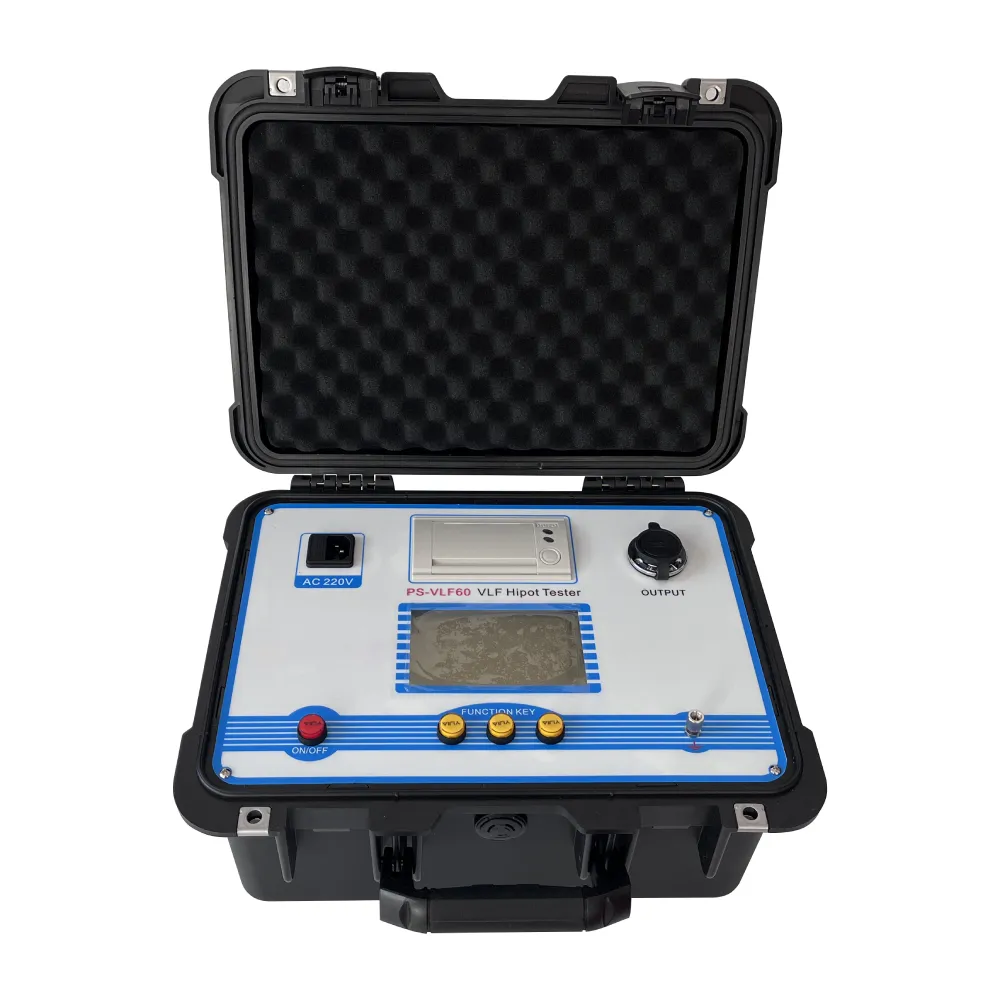
Modern VLF Hipot Tester for reliable cable diagnostics.
The Process Flow of Hipot Cable Testing (VLF AC Method)
The process of conducting a hipot cable testing, particularly using the VLF AC method, is a structured procedure designed to detect insulation weaknesses without damaging healthy insulation. This method is preferred for its ability to stress the insulation in a way that mimics AC service conditions, yet at a frequency low enough to allow the use of portable equipment and minimize partial discharge effects. Here’s a typical process flow:
- Preparation & Safety:
- Isolation: The cable under test must be completely de-energized and isolated from all external power sources and connected equipment.
- Grounding: Ensure proper grounding of the cable shield and the test equipment for safety and accurate measurements.
- Cleaning: Terminal ends must be clean and dry to prevent flashover during testing.
- Safety Barriers: Establish a safe work perimeter and ensure all personnel are aware of high voltage hazards.
- Connection of VLF Hipot Tester:
- Connect the high-voltage output of the VLF tester to the conductor of the cable under test.
- Connect the return lead from the tester to the cable shield/ground.
- Test Parameter Configuration:
- Set the desired test voltage (e.g., 2Uo for acceptance testing, 3Uo for diagnostic testing, where Uo is the nominal phase-to-ground voltage).
- Set the test frequency (typically 0.1 Hz, as per IEEE 400.2).
- Set the test duration (e.g., 30-60 minutes for acceptance, up to 120 minutes for diagnostic).
- Execution of Test:
- Slowly ramp up the voltage to the set test level. The hipot VLF equipment continuously monitors current, voltage, and sometimes tangent delta.
- Maintain the test voltage for the specified duration.
- Monitor for any breakdown (trip) or significant changes in leakage current or tan delta values.
- Interpretation and Analysis:
- Pass/Fail: If the cable withstands the test voltage for the duration without breakdown, it passes. If it breaks down, it fails.
- Tan Delta Analysis: For diagnostic testing, the tan delta (dissipation factor) value and its stability over time provide insight into the overall insulation condition and the presence of water trees or other contaminants. A rising or high tan delta indicates insulation degradation.
- Discharge and Reconnection:
- After the test, safely discharge any residual charge on the cable using the discharge function of the VLF hipot tester or an external grounding stick.
- Carefully disconnect the test equipment and reconnect the cable to service.
This rigorous process ensures that only cables meeting stringent insulation integrity requirements are put into or returned to service, greatly enhancing system reliability.
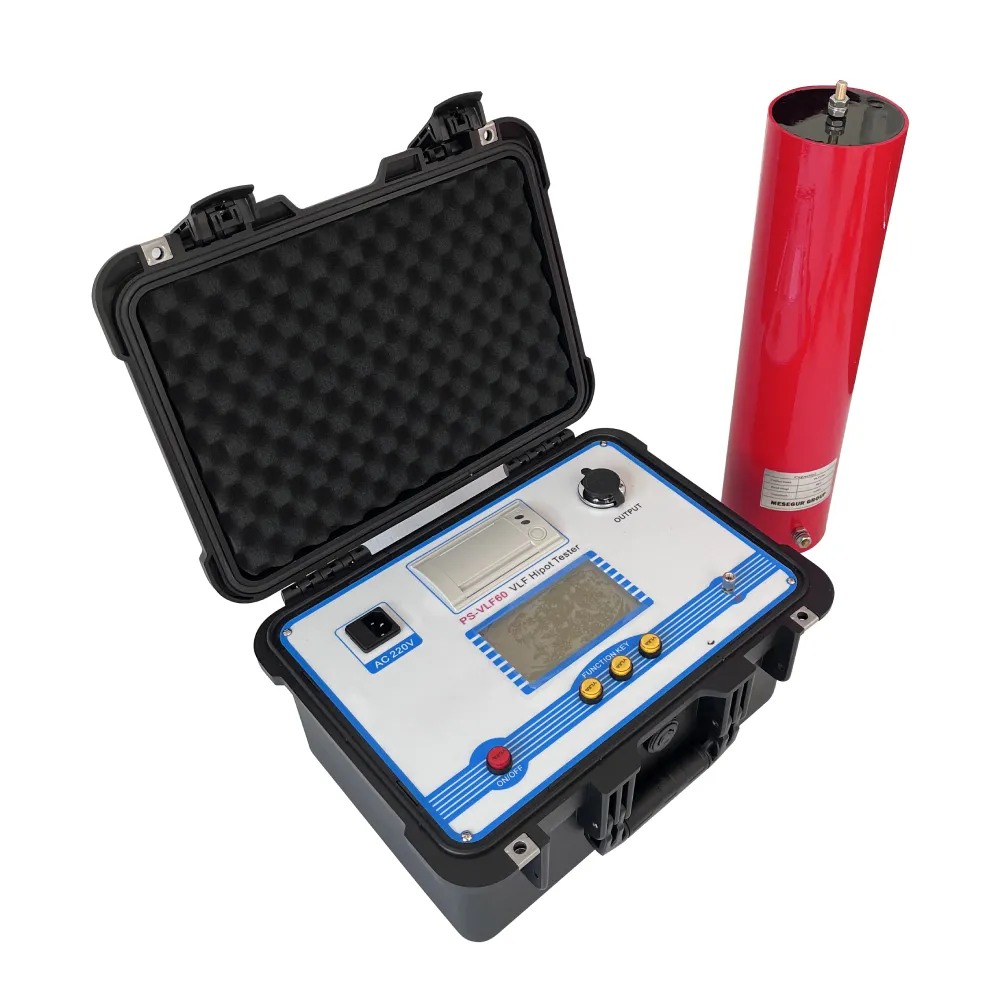
Precise control panel of a VLF Hipot Tester for reliable diagnostics.
Technical Specifications and Advantages of Advanced VLF Hipot Testers
Modern VLF hipot cable testing equipment offers a suite of advanced features and technical specifications that significantly enhance testing efficacy and user safety. The PUSH Electrical 80kV 60kV 30kV High Voltage AC HV VLF Hipot Tester VLF Cable Testing Equipment exemplifies these advancements, providing robust capabilities for demanding industrial applications.
Product Specifications: PUSH Electrical VLF Hipot Tester
| Parameter | Specification |
|---|---|
| Output Voltage Options | 30kV, 60kV, 80kV AC Peak |
| Output Waveform | Sine Wave, Square Wave (user selectable) |
| Test Frequency | 0.1 Hz, 0.05 Hz, 0.02 Hz (adjustable) |
| Load Capacity | Up to 5μF (for 80kV model at 0.1Hz), suitable for long cable runs |
| Measurement Accuracy | Voltage: ± (1.5% reading + 0.05% full scale); Current: ± (1.5% reading + 5μA) |
| Tan Delta Measurement | Integrated with high precision (optional on certain models) |
| Safety Features | Zero-start protection, over-voltage/current protection, high-voltage output display, emergency stop |
| User Interface | Large LCD/Touchscreen display, automated test sequences, data storage |
| Operating Temperature | -10°C to +45°C |
| Dimensions/Weight | Compact, portable design for field use (e.g., 30kV unit ~25kg) |
Technical Advantages:
- Non-Destructive Testing: VLF AC testing, especially when used with tan delta measurements, provides a highly sensitive diagnostic without stressing healthy insulation to the point of failure, preserving cable integrity. This is a key advantage over DC hipot for modern polymeric cables.
- Effective Fault Detection: It is highly effective at identifying critical insulation defects such as water trees, voids, and aging, which are common causes of cable failure in service.
- Portability and Ease of Use: The compact and lightweight design of modern VLF hipot testers makes them ideal for field applications, reducing logistical challenges and setup times. Intuitive user interfaces simplify operation.
- Comprehensive Diagnostic Capabilities: Beyond simple pass/fail, the integration of tan delta measurements allows for a detailed assessment of insulation quality, enabling predictive maintenance and asset management strategies.
- Compliance with Standards: Adherence to international standards like IEEE 400.2 ensures that the testing protocols are recognized and accepted globally, guaranteeing reliable and comparable results.
- Energy Efficiency: Compared to traditional AC hipot testing at power frequency, VLF requires significantly less power, making it more energy-saving and suitable for portable solutions.
Application Scenarios and Target Industries
The versatility and diagnostic power of hipot cable testing make it indispensable across a wide array of industries. These tests are critical for both newly installed cables (acceptance testing) and existing cables (maintenance/diagnostic testing) to ensure long-term reliability and minimize downtime.
Typical Application Scenarios:
- New Cable Installation: Before commissioning, new hipot cables undergo acceptance testing to verify insulation integrity, ensuring no damage occurred during manufacturing, transportation, or installation. This prevents "infant mortality" failures.
- Maintenance and Condition Assessment: Periodically testing in-service cables helps detect insulation degradation over time, especially for older assets. This allows for proactive repair or replacement, preventing unexpected failures.
- Post-Repair Verification: After a cable fault has been repaired (e.g., splice replacement), a hipot cable testing verifies the quality of the repair and ensures the entire cable system is sound before re-energizing.
- Proactive Asset Management: Integrating VLF tan delta and partial discharge measurements provides invaluable data for condition-based maintenance strategies, helping asset managers optimize budgets and prioritize critical infrastructure.
Target Industries:
- Petrochemical: Critical for testing cables in hazardous and demanding environments where reliability is paramount to prevent explosions and maintain continuous operations. Corrosion resistance of the equipment itself is also a key factor here.
- Metallurgy: High-temperature and heavy-load environments stress cables, making routine diagnostic testing crucial for preventing costly downtime in steel mills and smelters.
- Power Generation & Transmission: Essential for testing generator output cables, substation interconnects, and transmission lines, ensuring grid stability and reliable energy supply.
- Water Supply & Drainage: Ensuring the integrity of power cables for pumps and control systems in water treatment plants and distribution networks, where continuous operation is vital for public health.
- Mining: Cables in mining operations are subjected to extreme mechanical stress and harsh conditions; robust hipot cable testing is critical for safety and productivity.
- Renewable Energy (Wind/Solar Farms): Long cable runs for collecting and transmitting power from wind turbines and solar arrays require thorough VLF testing to ensure efficiency and reliability over their extensive lifespans.
In these sectors, the ability to perform accurate, non-destructive tests with advanced VLF technology translates directly into energy saving, reduced maintenance costs, enhanced operational safety, and prolonged service life of critical infrastructure.
Vendor Comparison: Choosing the Right VLF Hipot Tester
Selecting the appropriate VLF hipot tester is a critical decision for any organization involved in cable maintenance or installation. While many manufacturers offer VLF solutions, differences in technical capabilities, reliability, and support can significantly impact long-term value. Below is a comparative overview, positioning PUSH Electrical's offering against generic market alternatives.
VLF Hipot Tester Comparison
| Feature/Vendor | PUSH Electrical (e.g., 80kV Model) | Vendor A (Mid-Range) | Vendor B (Budget) |
|---|---|---|---|
| Max Output Voltage | 80kV AC Peak | 60kV AC Peak | 30kV AC Peak |
| Waveform Options | Sine, Square (selectable) | Sine Wave Only | Sine Wave Only |
| Integrated Tan Delta | Standard/High Precision Optional | Optional, Lower Accuracy | Not Available |
| Max Load Capacity (0.1Hz) | Up to 5μF | Up to 2μF | Up to 1μF |
| User Interface | Intuitive Touchscreen, Automated | LCD with Button Controls | Basic LCD, Manual |
| Data Logging & Analysis | Comprehensive, USB/PC Export | Basic Internal Storage | Limited/None |
| Portability (e.g. 60kV model) | Compact, Single-unit (e.g. ~45kg) | Two-unit, heavier (e.g. ~60kg total) | Single-unit, bulky (e.g. ~35kg) |
| Compliance | IEEE 400.2, IEC 60502-2, CE | Partial IEEE 400.2 | Basic Safety Standards |
PUSH Electrical distinguishes itself through its robust voltage capabilities, versatile waveform options, and advanced diagnostic features like integrated high-precision VLF tan delta cable testing. This commitment to technical excellence and user-friendly design ensures superior performance and long-term reliability for critical infrastructure testing.
Customized Solutions and Application Case Studies
Recognizing that every B2B application has unique requirements, PUSH Electrical offers not just standard products but also customized hipot cable testing solutions. This flexibility extends to adapting voltage ranges, integration with specific data management systems, or tailoring environmental specifications (e.g., enhanced IP ratings for harsh outdoor conditions).
Example Customization Areas:
- Higher Voltage/Current Output: For exceptionally long or high-capacitance hipot cables or specialized HV testing needs.
- Integrated Partial Discharge (PD) Measurement: For advanced diagnostic testing, combining VLF hipot with PD detection provides a more comprehensive insulation assessment.
- Ruggedized Enclosures: For field operations in extreme weather or industrial environments (e.g., mining, offshore platforms).
- Software Integration: Seamless data transfer and compatibility with existing enterprise asset management (EAM) or SCADA systems.
Application Case Studies (Illustrative Examples):
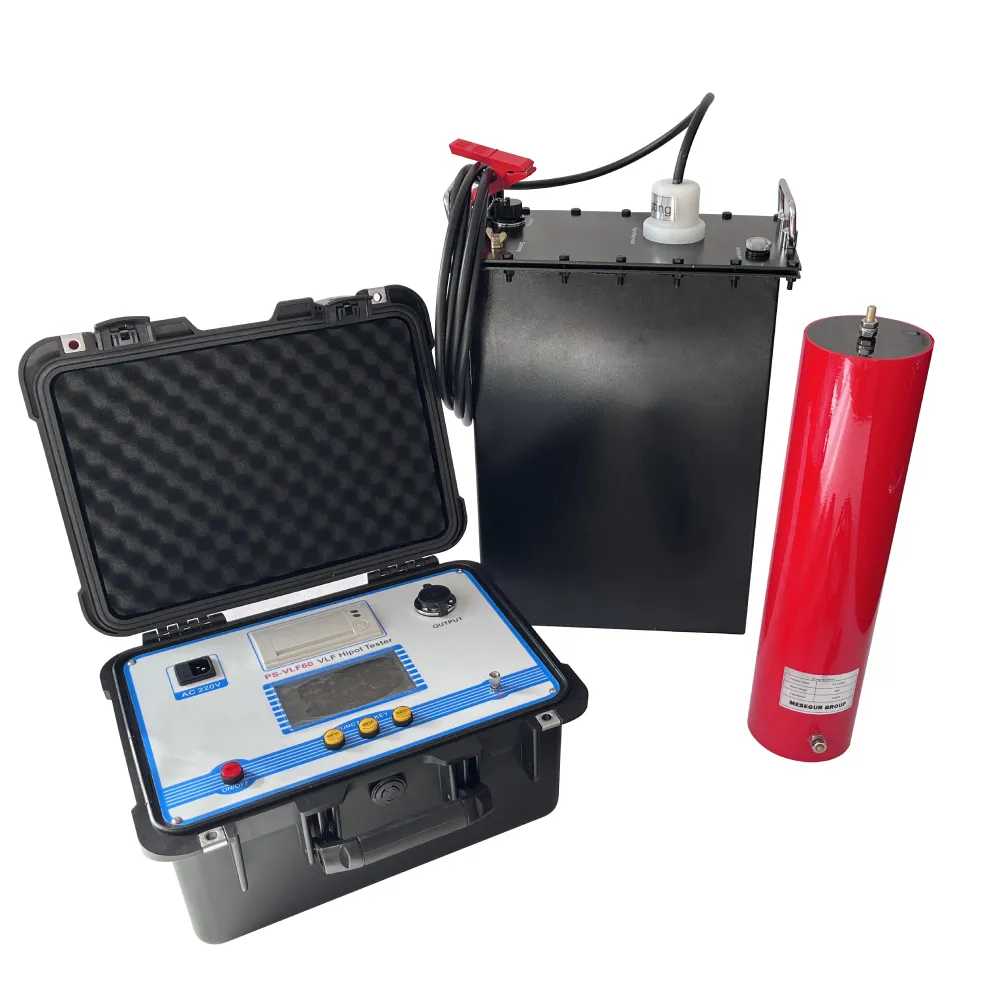
User-friendly interface of a PUSH Electrical VLF Hipot Tester.
Case Study 1: Large Scale Petrochemical Plant
A major petrochemical complex faced frequent unscheduled outages due to aging MV power hipot cables. Traditional DC testing was proving unreliable for modern XLPE insulation. PUSH Electrical deployed an 80kV VLF Hipot Tester with integrated tan delta measurement for their annual preventive maintenance program. Over a six-month period, the plant identified 15 degraded cable sections, primarily due to water trees, which were subsequently replaced. This proactive approach led to a 25% reduction in unscheduled downtime related to cable faults and an estimated $1.2 million in avoided production losses over the next year. The non-destructive nature of VLF testing also prolonged the life of healthy cables, contributing to significant energy saving.
Case Study 2: Municipal Water Infrastructure Upgrade
A city municipality undertaking a major upgrade of its water supply and drainage systems needed to ensure the reliability of newly installed and extensively repaired MV pump feeder cables. Utilizing a PUSH Electrical 60kV VLF tester for post-installation acceptance testing, they were able to verify the integrity of all new hipot cables and splice connections before commissioning. Out of 120 newly installed cable sections, two were found with minor installation defects that would have likely led to early failure. Detecting these issues pre-service saved the municipality estimated $50,000 in emergency repair costs and prevented critical disruptions to water supply services, demonstrating the immediate value of thorough hipot cable testing.
Frequently Asked Questions (FAQ)
Q1: Why is VLF preferred over DC for testing modern MV/HV polymeric cables?
A1: VLF (Very Low Frequency) AC testing is preferred for modern polymeric (XLPE, EPR) cables because it applies an AC voltage, which closely simulates the actual operating stress. DC testing can accumulate space charges in these insulations, potentially leading to false indications or even damage to healthy insulation. VLF testing is non-destructive and highly effective at identifying water trees and other common AC-related insulation defects.
Q2: What is Tan Delta measurement and why is it important for VLF tan delta cable testing?
A2: Tan Delta (dissipation factor) measures the energy loss in the cable's insulation when an AC voltage is applied. A higher or increasing tan delta value indicates insulation degradation, such as the presence of water trees or contamination. It provides a quantitative measure of insulation health beyond a simple pass/fail, enabling predictive maintenance decisions.
Q3: What safety precautions are necessary during hipot cable testing?
A3: Rigorous safety protocols are crucial. This includes complete isolation and grounding of the cable under test, establishing a high-voltage safe perimeter, using appropriate personal protective equipment (PPE), and ensuring trained personnel operate the equipment. Always follow manufacturer guidelines and relevant safety standards (e.g., OSHA, local regulations).
Q4: How long does a VLF hipot test typically take?
A4: Test duration varies based on the standard used (e.g., IEEE 400.2 recommends 30-60 minutes for acceptance testing, longer for diagnostic tests), cable length, and condition. Setup and discharge times also contribute. A typical test for a medium voltage cable might take 1-2 hours in total.
Commitment to Service: Lead Time, Warranty, and Customer Support
PUSH Electrical understands that reliable equipment and exceptional support are vital for B2B operations. We are committed to providing a seamless experience from initial inquiry to long-term product use.
Lead Time & Fulfillment:
Standard PUSH Electrical VLF hipot testers are typically available for shipment within 3-5 business weeks, subject to configuration and current order volume. Customized solutions may require additional lead time, which will be clearly communicated during the quotation process. We work with trusted global logistics partners to ensure timely and secure delivery to your specified location.
Warranty Commitments:
All PUSH Electrical VLF hipot testing equipment comes with a comprehensive 2-year limited warranty, covering defects in materials and workmanship from the date of purchase. Extended warranty options are available for enhanced peace of mind, demonstrating our confidence in the quality and durability of our products for intensive hipot cable testing applications.
Customer Support:
Our dedicated technical support team is available to assist with installation, operation, troubleshooting, and maintenance queries. We offer:
- Online & Phone Support: Expert assistance accessible during business hours.
- Training Programs: On-site or remote training sessions to ensure your team is proficient in using our VLF tester equipment.
- Calibration & Service: Regular calibration and maintenance services to ensure continued accuracy and optimal performance of your testing instruments.
- Spare Parts Availability: A readily available inventory of spare parts to minimize downtime.
Our commitment to customer satisfaction reinforces the trustworthiness and long-term value of investing in PUSH Electrical solutions.
Conclusion
As electrical infrastructure continues to evolve, the demand for reliable and accurate hipot cable testing remains paramount. Advanced VLF Hipot Testers, like those offered by PUSH Electrical, provide the critical tools needed for comprehensive diagnostic and acceptance testing of medium and high voltage cables. By integrating cutting-edge technology, adhering to international standards, and offering robust support, these solutions enable industries to significantly enhance grid reliability, operational safety, and asset longevity. Investing in superior testing equipment is an investment in uninterrupted power, efficient operations, and a safer working environment.
References
- IEEE Std 400.2™-2013, IEEE Guide for Field Testing of Shielded Power Cable Systems Using Very Low Frequency (VLF). Institute of Electrical and Electronics Engineers.
- IEC 60502-2:2014, Power cables with extruded insulation and their accessories for rated voltages from 1 kV (Um = 1.2 kV) up to 30 kV (Um = 36 kV) – Part 2: Rated voltages from 6 kV (Um = 7.2 kV) up to 30 kV (Um = 36 kV). International Electrotechnical Commission.
- G. J. P. L. R. M. C. J. M. B. E. G. J. M. S. C. C. M. M. W. T. C. V. P. A. Z. G. R. V. Z. C. W. Z. Y. W. H. X. H. Z. S. C. M. W. H. H. T. Y. H. C. T. C. "VLF Cable Testing – Principles and Practice." Doble Engineering Company, 2018.
- National Electrical Safety Code (NESC) - ANSI C2. Various editions.
-
Find the Best Loop Impedance Tester for Sale and Ensure Electrical SafetyNewsMar.31,2026
-
Comprehensive Guide to Loop Impedance Meter for Electrical SafetyNewsMar.28,2026
-
Understanding and Choosing a Line Impedance Tester for Optimal Network PerformanceNewsMar.26,2026
-
Comprehensive Guide to Line Earth Loop Impedance Test for Electrical SafetyNewsMar.24,2026
-
Comprehensive Guide to Fault Loop Impedance Meter and Electrical SafetyNewsMar.21,2026
-
Comprehensive Guide to External Loop Impedance Test for Electrical SafetyNewsMar.19,2026


