 English



Karl Fischer Auto Titrator: Fast, Accurate Moisture Analysis
Field Notes on a Workhorse: The Karl Fischer Auto Titrator That’s Punched Above Its Weight
I’ve toured enough labs to know moisture is either a small detail—or the whole ballgame. The PUSH Electrical PS-KF106V1 Volumetric Trace Moisture Tester, built in Baoding (Room 302, Building 5, Baoding Zhongguancun Digital Economy Industrial Park, No. 777 Lixing Street, Jingxiu District, Hebei), is one of those quiet instruments that keep production lines honest. It’s an automatic, fast Karl Fischer volumetric system aligned with ASTM and GB standards. And yes, it’s the kind of unit people forget about until the spec fails. Then it becomes the hero.
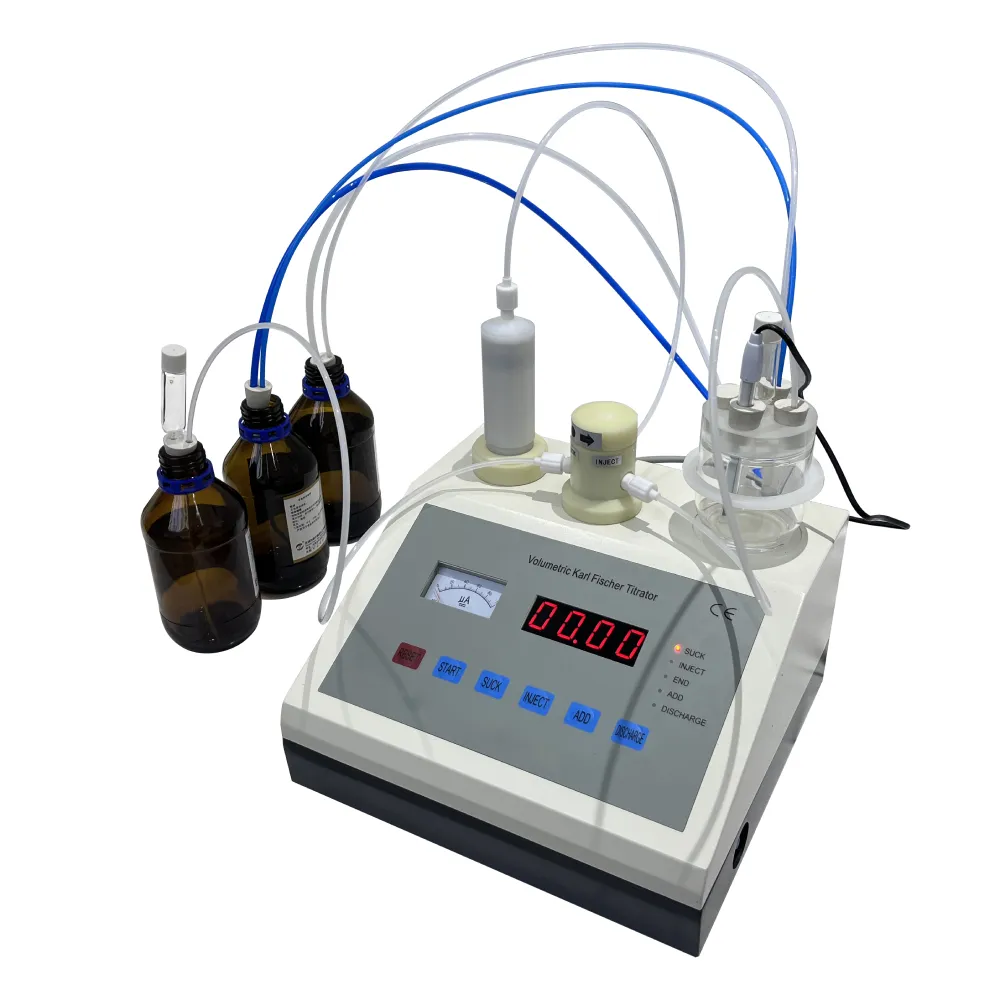
What’s driving the market right now
Three threads keep coming up in conversations: smarter automation, reagent economy, and compliance that’s easy to audit. Battery factories want quick turnarounds; edible oil processors want fewer re-runs; pharma QA wants traceability with minimal keystrokes. The Karl Fischer Auto Titrator sits right at that intersection—if it’s fast, compliant, and repeatable, it wins. Surprisingly, many customers say they also want a calmer user experience: fewer pop-ups, clearer drift checks, and steady endpoints.
PS-KF106V1 at a glance (specs that matter)
| Method | Karl Fischer volumetric titration (iodine-based), automatic endpoint |
| Typical measurement range | ≈ 10 µg H2O to high % levels (real-world use may vary with reagent strength and sample) |
| Detection/endpoint | Bipotentiometric endpoint with drift compensation |
| Standards | ASTM; GB 6238, GB 11146, GB 11133; plus related national/industry methods |
| Typical sample types | Oils, solvents, battery electrolytes, resins, powders (with appropriate solvents) |
| Data & connectivity | Digital storage/export; audit-friendly logs (exact I/O per configuration) |
| Service life | Around 5–7 years in typical QC use with proper maintenance |
Note: exact specifications depend on configuration and reagents; confirm with the vendor.
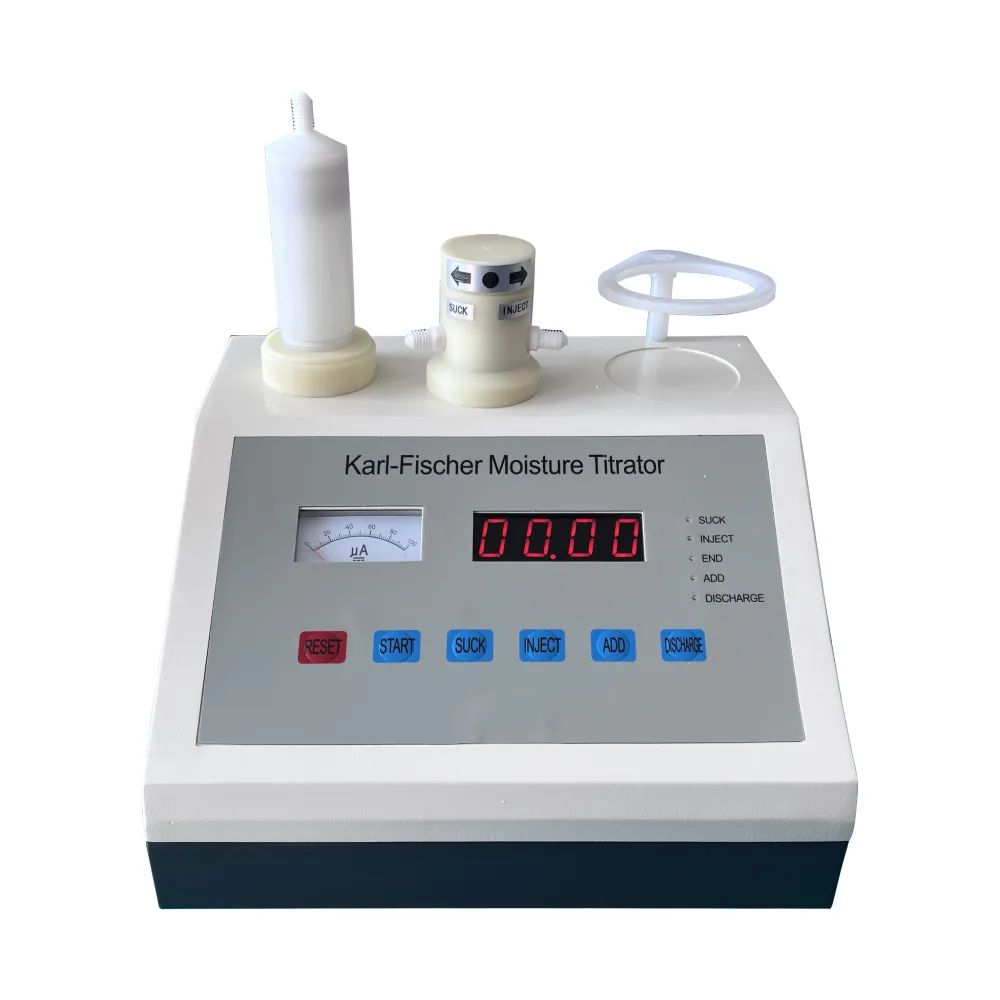
How it actually runs (process flow)
- Materials: KF volumetric reagent (iodine/sulfur dioxide/base in alcohol), solvent (often methanol), certified water standards for verification.
- Method: Cell prep → drift check → titer verification (per ASTM/GB) → sample addition (microliter syringe or sealed vessel) → endpoint detect → report.
- Testing standards: ASTM E203 (general liquids), GB 11146 (petroleum products), GB 6238/GB 11133 (method variants), ISO/USP where applicable.
- Industries: Petrochem, pharma, food oils, coatings, lithium battery electrolytes, transformer oils.
- Service elements: Routine electrode cleaning, reagent exchange, annual verification with certified water standards.
Quick data point: in a typical factory acceptance run (n=6) on a mid-polar solvent spiked ≈100 µg H2O, repeatability often lands near RSD ≈1–2%. To be honest, tough matrices can push that higher—no surprises there.
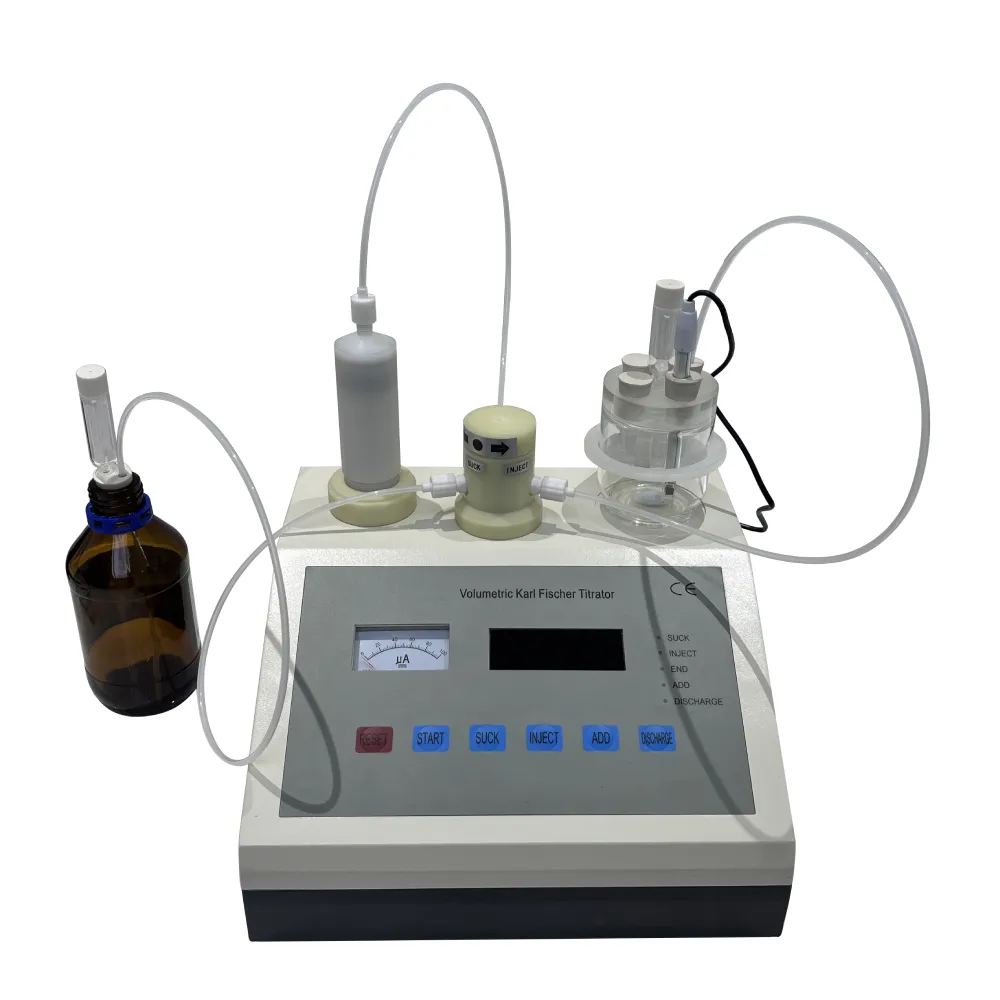
Vendor snapshot (real-world shopping short list)
| Model | Strengths | Considerations |
|---|---|---|
| PUSH PS-KF106V1 | Solid compliance with GB/ASTM; straightforward automation; value-focused | Advanced integrations may require custom setup |
| Metrohm 870-class | Robust ecosystem, accessories, global service footprint | Premium pricing; some features are modular add-ons |
| Mettler Toledo V10S-class | Strong analytics/UI; solid validation tooling | Cost; training curve in regulated setups |
All comparisons are indicative; verify features in current catalogs.
Use cases, customization, and what users say
Battery electrolyte lines adopt the Karl Fischer Auto Titrator for hourly checks; edible oil plants run daily moisture for shelf-life stability; transformer service labs verify insulating liquids per IEC guidance. Customization options typically include solvent-resistant tubing, sealed sample intro, and LIMS-friendly exports. A QC manager told me, “It’s the drift check that makes or breaks our shift change”—and I get it.
Case in point: a coatings facility cut re-tests by ~30% after standardizing on a single KF method and weekly titer verification. Not glamorous, highly effective.
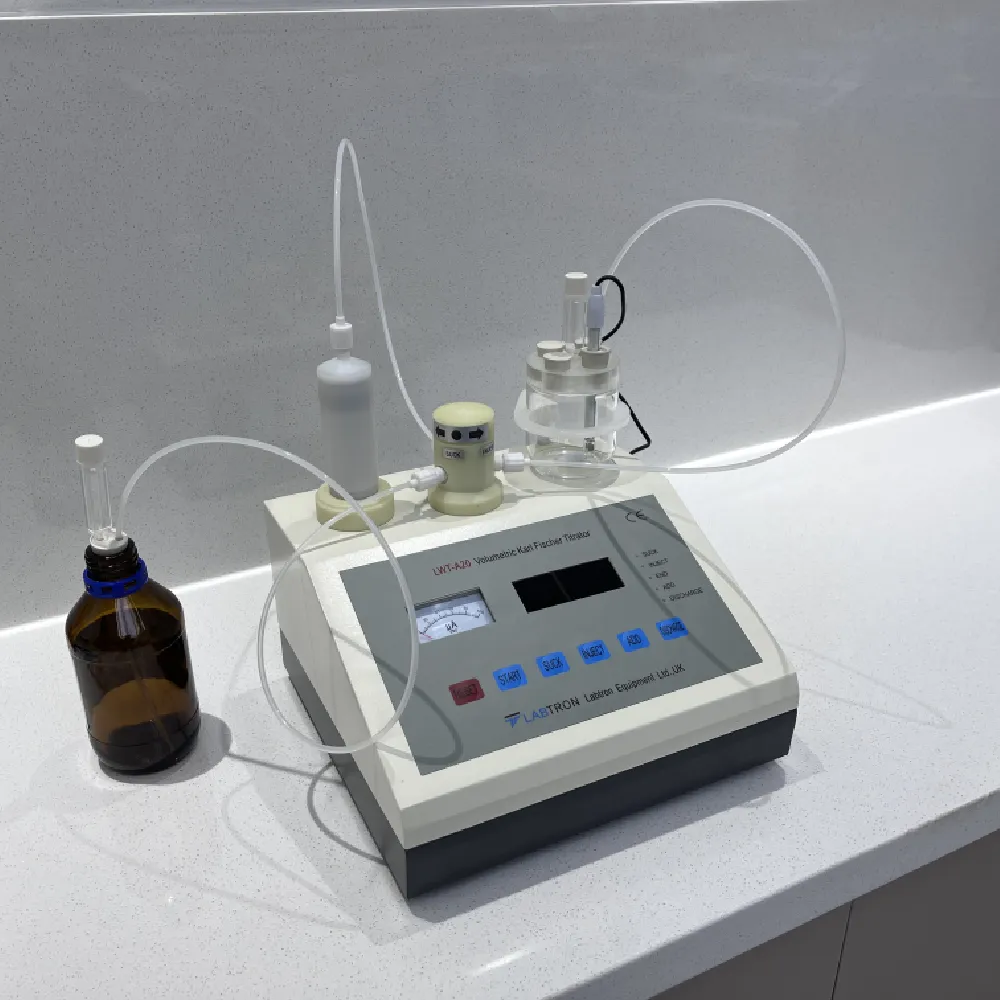
Why choose it
- Standards-ready: ships aligned to ASTM/GB methods.
- Fast learning curve: fewer taps, clearer endpoints.
- Auditable: method and results logging suitable for regulated environments.
- Support: vendor-supplied training, verification kits, and routine service help.
Citations
- ASTM E203 – Standard Test Method for Water Using Volumetric Karl Fischer Titration. https://www.astm.org
- GB/T 11146 – Petroleum products—Determination of water (Karl Fischer method). http://www.sac.gov.cn
- GB/T 6238 and GB/T 11133 – Karl Fischer methods (China National Standards). http://www.sac.gov.cn
- ISO 760 – Determination of water (Karl Fischer method). https://www.iso.org
- USP <921> Water Determination (Karl Fischer). https://www.uspnf.com
-
Find the Best Loop Impedance Tester for Sale and Ensure Electrical SafetyNewsMar.31,2026
-
Comprehensive Guide to Loop Impedance Meter for Electrical SafetyNewsMar.28,2026
-
Understanding and Choosing a Line Impedance Tester for Optimal Network PerformanceNewsMar.26,2026
-
Comprehensive Guide to Line Earth Loop Impedance Test for Electrical SafetyNewsMar.24,2026
-
Comprehensive Guide to Fault Loop Impedance Meter and Electrical SafetyNewsMar.21,2026
-
Comprehensive Guide to External Loop Impedance Test for Electrical SafetyNewsMar.19,2026


