 English



Karl Fischer Auto Titrator – Fast, Accurate Moisture Testing
Inside the Lab: a Practical Take on Karl Fischer Moisture Titration
If you’re shopping for a karl fischer auto titrator, you’ve probably realized two things: accuracy rules, and downtime is costly. I’ve watched labs—from battery electrolytes to edible oils—move from manual tweaks to hands-off automation. It’s not just convenience; it’s audit trails, repeatability, and fewer mysterious drift spikes on a rainy Monday.
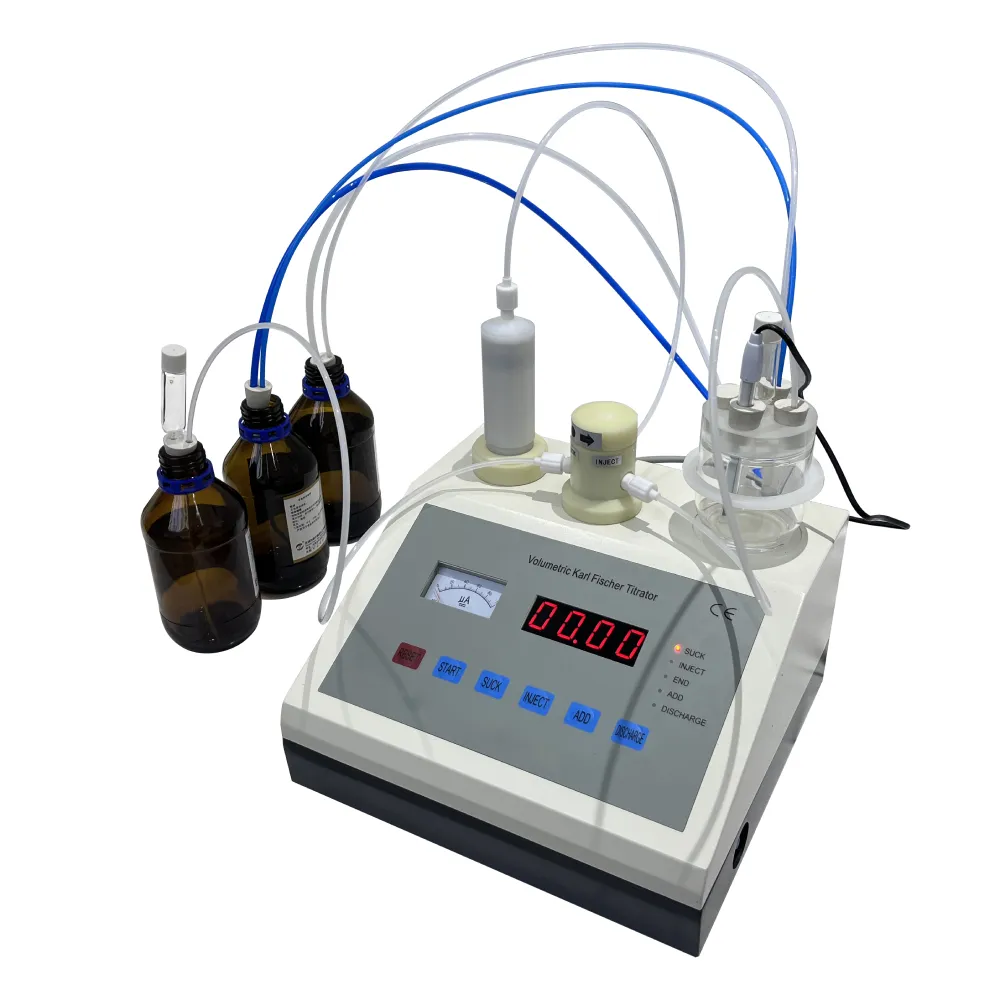
Why the PS-KF106V1 is getting attention
The PUSH Electrical PS-KF106V1 Volumetric Trace Moisture Tester is an automatic Karl Fischer (KF) analyzer designed for production and R&D. It follows ASTM and China GB methods (GB 6238, GB 11146, GB 11133, plus ~20 related national standards). Origin-wise, it’s built in Baoding, Hebei (Room 302, Building 5, Baoding Zhongguancun Digital Economy Industrial Park, No. 777 Lixing Street, Jingxiu District) — a detail some procurement teams actually ask about, to be honest.
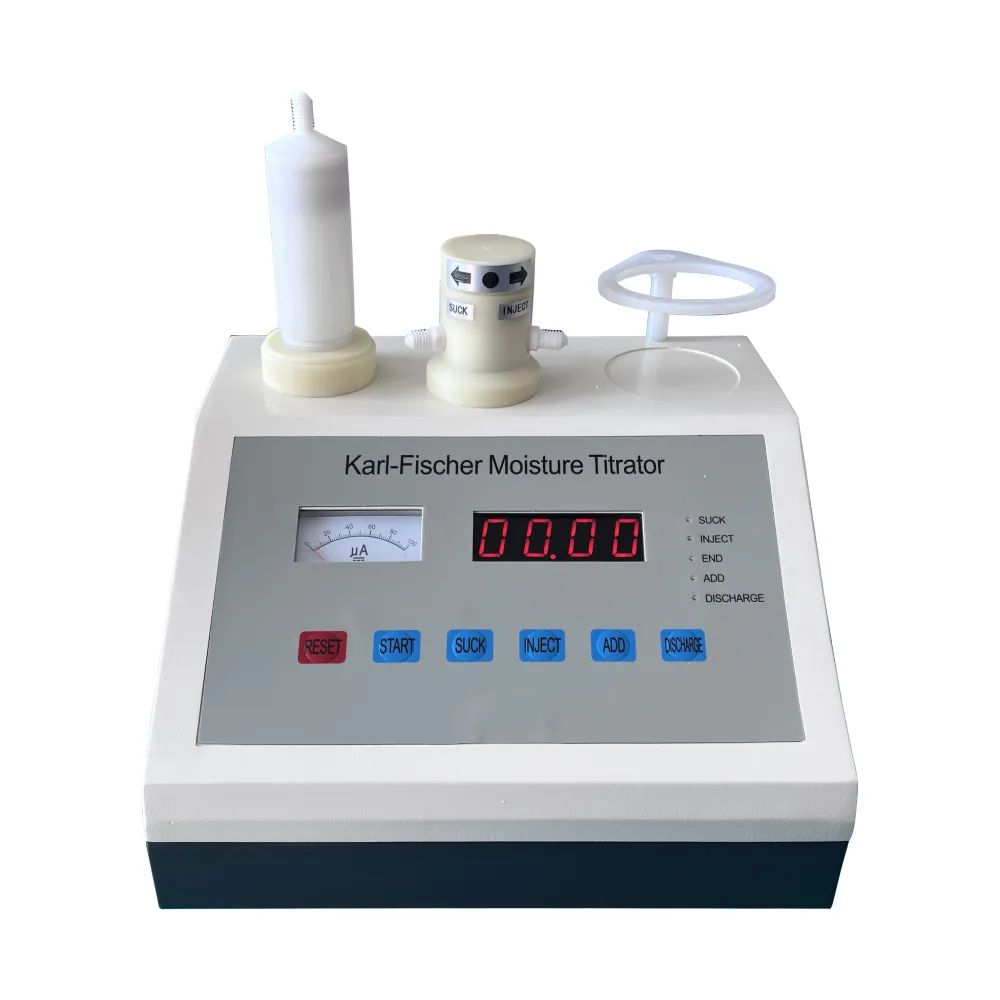
How it works (quick flow)
- Materials: KF volumetric reagent (iodine, SO₂, base in alcohol), certified water standards for titer checks, dry methanol or suitable solvent.
- Method: Bipotentiometric endpoint detection; volumetric KF titration to quantify H₂O.
- Process: Verify dryness → standardize titer → inject sample (syringe or autosampler) → measure drift → reach endpoint → record.
- Standards: ASTM E203 and related methods; GB 6238/11146/11133; ISO 760; pharmacopeial sections for KF.
- Service life: With regular maintenance (reagent refresh, seals, desiccant), KF systems typically run ≈5–8 years; real-world use may vary.
- Industries: Lithium batteries (electrolytes/solvents), petrochem, pharma APIs/excipients, food oils, polymers/resins, specialty gases via extraction.
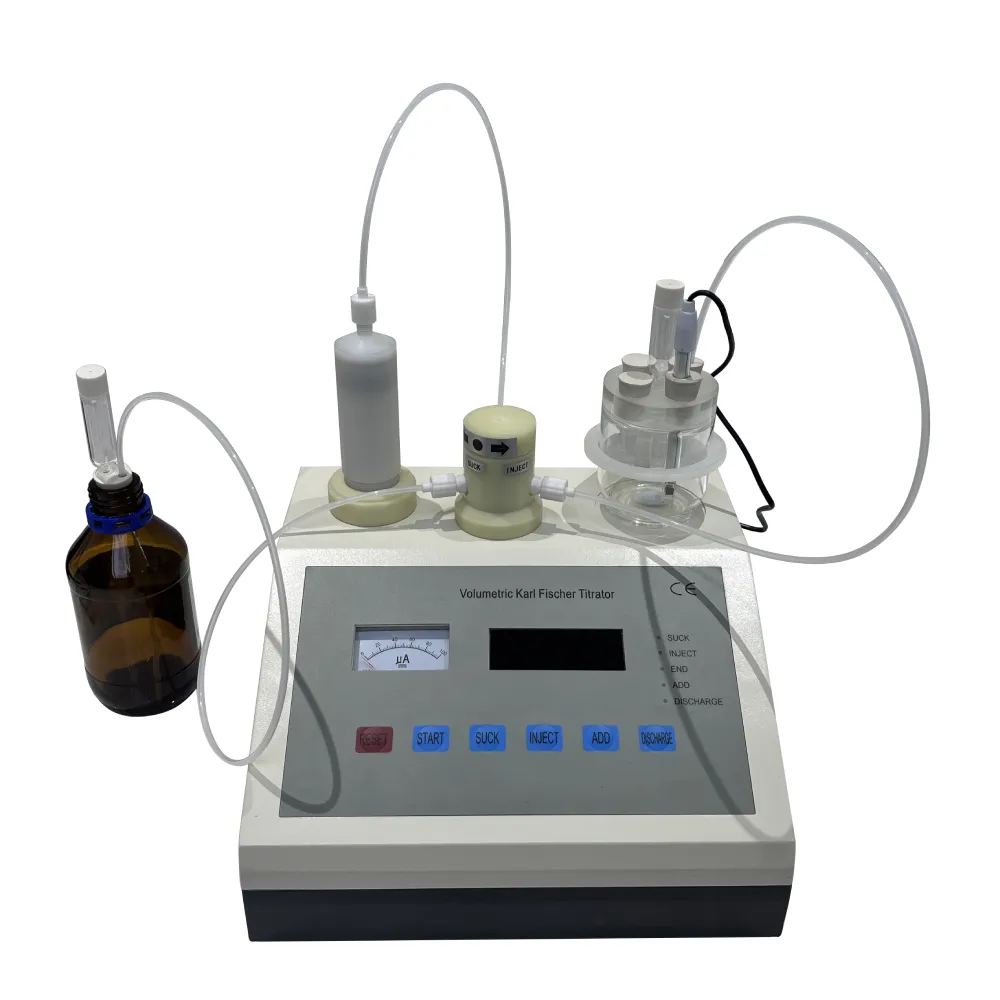
Product specifications (summarized)
| Model | PS-KF106V1 |
| Method | Karl Fischer volumetric titration (automatic) |
| Applicable standards | ASTM; GB 6238 / GB 11146 / GB 11133; ≈20 national methods |
| Typical applications | Trace moisture in solvents, oils, pharmaceuticals, polymers, battery materials |
| Automation | Automatic titration, drift correction, endpoint detection |
| Data | Report print/export options; LIMS-friendly workflows (varies by setup) |
| Origin | Baoding, Hebei, China |
Many customers say they switched to a karl fischer auto titrator to cut operator-to-operator variability. It sounds mundane, yet that’s what protects yields and batch release timelines. And yes, automation helps new hires ramp faster.
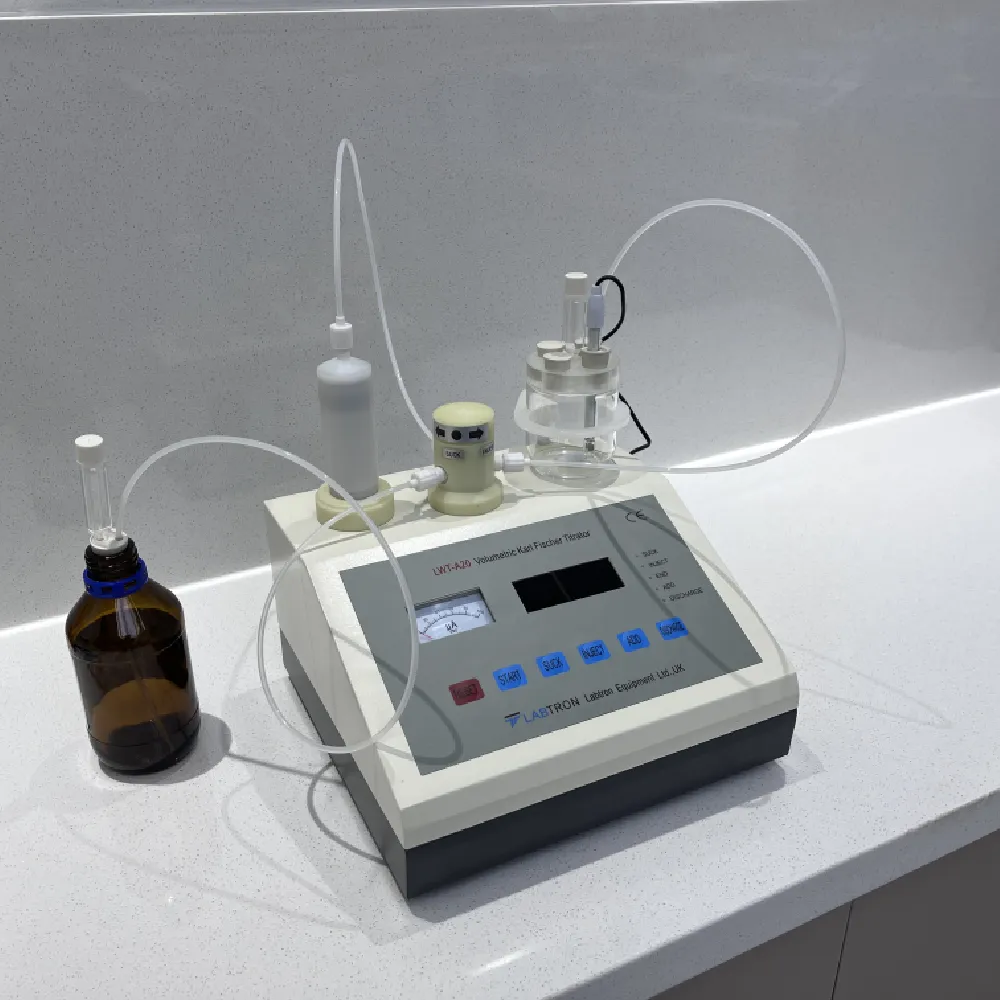
Vendor landscape (quick comparison)
| Vendor/Model | Method | Strengths | Notes |
|---|---|---|---|
| PUSH PS-KF106V1 | Volumetric | Standards-focused, value-centric, straightforward automation | Good fit for routine QC and R&D in mixed-use labs |
| Metrohm (e.g., Titrino plus) | Volumetric | Robust hardware, broad accessories | Typically higher price; rich software ecosystem |
| Mettler Toledo (e.g., V-series) | Volumetric | User-friendly UI, strong documentation | Premium support; price varies by package |
Customization and real-world notes
Labs often request custom sample introduction (sealed vials for hygroscopic powders), reagent management (one-component vs two-component), and data export aligned with LIMS. For sensitive matrices like LiPF₆ electrolyte, I recommend routine blank checks and frequent titer verification—boring but effective.
Case snippet: a battery plant in North China cut moisture variability in carbonate solvents from “all over the map” to a tight band (tens of ppm) after moving to a karl fischer auto titrator with stricter sample handling. Not glamorous, but a win.
Advantages to expect
- Repeatable trace moisture numbers, aligned with ASTM/GB methods.
- Faster operator training; fewer keystrokes, fewer reruns.
- Audit-ready data outputs; easier method transfers across sites.
Certifications/standards note: KF results can be traceable when you calibrate with certified water standards and follow ASTM E203/ISO 760 or applicable GB methods. Always align your SOP with your regulator’s guidance.
Authoritative references
-
Find the Best Loop Impedance Tester for Sale and Ensure Electrical SafetyNewsMar.31,2026
-
Comprehensive Guide to Loop Impedance Meter for Electrical SafetyNewsMar.28,2026
-
Understanding and Choosing a Line Impedance Tester for Optimal Network PerformanceNewsMar.26,2026
-
Comprehensive Guide to Line Earth Loop Impedance Test for Electrical SafetyNewsMar.24,2026
-
Comprehensive Guide to Fault Loop Impedance Meter and Electrical SafetyNewsMar.21,2026
-
Comprehensive Guide to External Loop Impedance Test for Electrical SafetyNewsMar.19,2026


