 English



Kinematic Viscosity Tester—ASTM D445 Fast, Accurate?
PUSH Electrical PS-YN1301: A Pragmatic Take on a Workhorse Kinematic Viscosity Tester
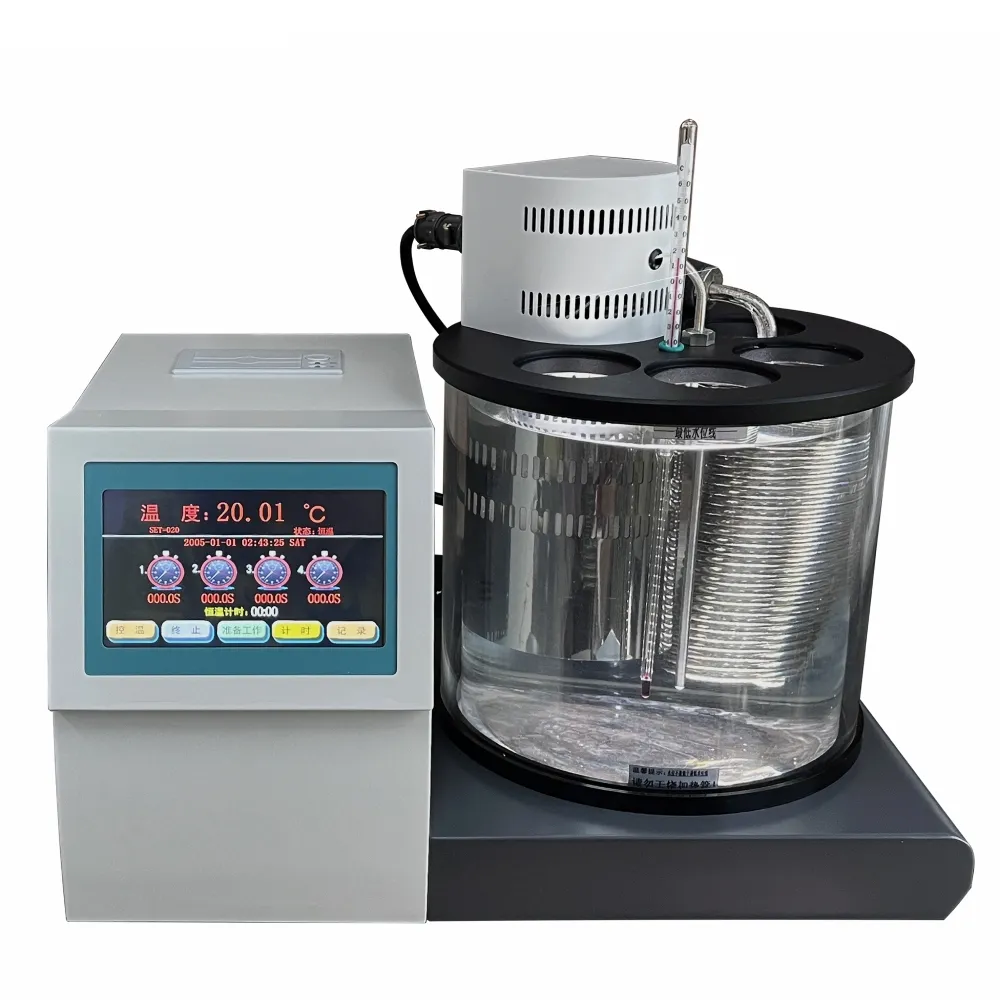
If you work with lubricants, fuels, or base oils, you already know the lab lives and dies by viscosity data. The kinematic viscosity tester from PUSH Electrical (model PS-YN1301) leans into the classic ASTM D445 capillary method—no flashy gimmicks, just stable temperature control and repeatable efflux times. Based on what I’ve seen, it’s the kind of instrument teams pick when they want standard-compliant numbers, day in, day out.
Industry pulse: standard methods still rule
Digital viscometers get headlines, but refinery labs, independent test houses, and OEM validation teams still rely heavily on the kinematic viscosity tester with calibrated glass capillaries. Why? Auditability and comparability. ASTM D445/ISO 3104 results remain the reference language for cross-lab agreements, product release, and warranty claims. In fact, many customers say they keep a capillary bench even when they’ve adopted automated instruments—“trust, but verify,” as one plant chemist told me.
How the PS-YN1301 delivers: process flow, materials, and standards
Method basics: condition bath to target (typically 40 °C or 100 °C), charge an Ubbelohde or Cannon-Fenske viscometer, equilibrate, then time the flow between marks. Kinematic viscosity v = C × t, where C is the tube constant and t is efflux time. The PS-YN1301 keeps this orthodox approach, meeting ASTM D445 for both clear and opaque liquids.
Materials and ancillaries include certified capillary viscometers, reference oils, bath fluids, heptane/toluene or appropriate solvents for cleaning, and lint-free drying. Service life? With regular bath fluid changes and careful capillary handling, around 5–8 years for main assemblies (real-world use may vary).
Typical industries: lube blending, base oil production, power generation, aviation turbine oils, hydraulics, marine, and QA labs handling LSPI-sensitive engine oils or bio-blends. Compliance: ASTM D445/D446, ISO 3104, IP 71, and the widely used GB/T 265 in China.
Core specifications (PS-YN1301)
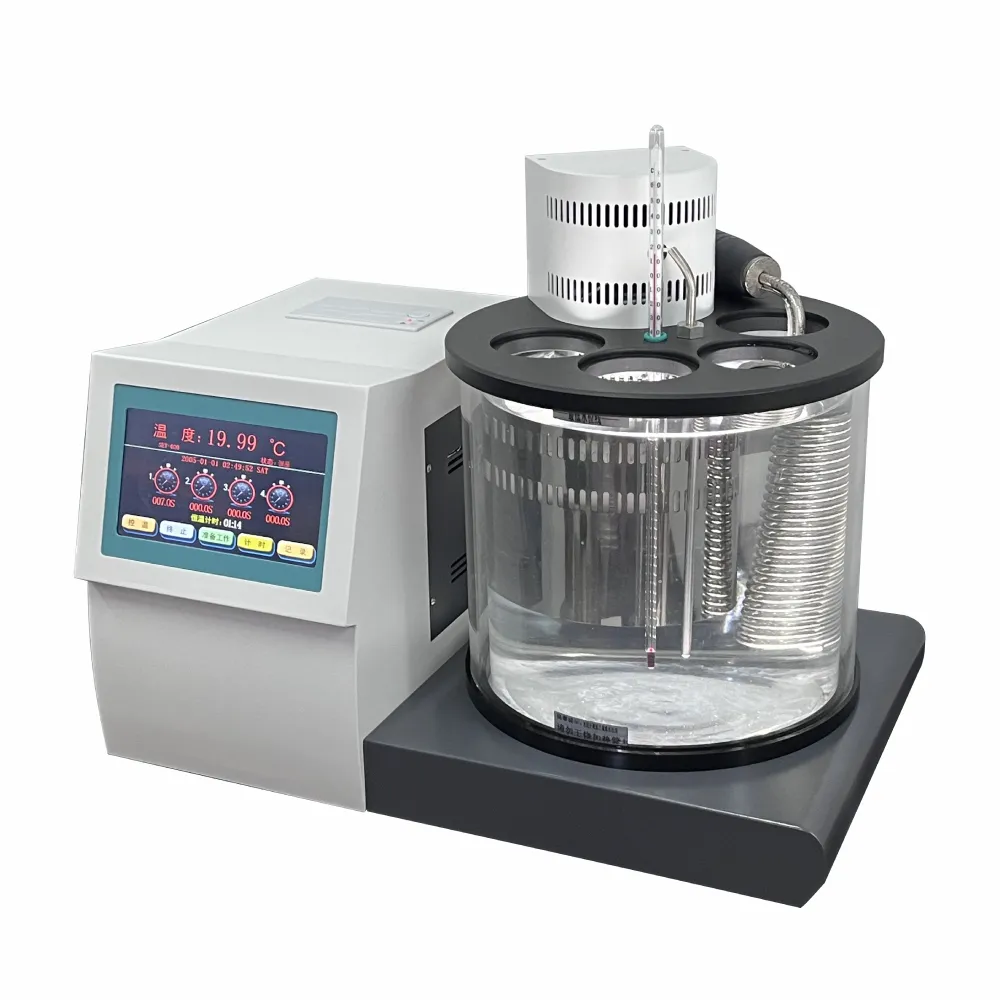
| Temperature range | Ambient +5 °C to ≈ 100 °C (typical) |
| Stability/Uniformity | ≈ ±0.03 °C stability; uniformity around ±0.05 °C |
| Capillary types | Ubbelohde, Cannon-Fenske (ASTM D446 compliant) |
| Timing | Digital timer; resolution ≈ 0.01 s |
| Bath volume | Around 12–20 L (model/config dependent) |
| Compliance | ASTM D445, ISO 3104, IP 71, GB/T 265 |
Note: Specs reflect common configurations; check your PO for final details.
Where it shines: applications and advantages
- Routine QA at 40 °C/100 °C with traceable capillaries.
- Base oil cuts and blend optimization; VI calculations with paired temps.
- Fuel and solvent checks where gravity flow is preferred over rotational methods.
- Advantages: predictable upkeep, globally accepted results, and—surprisingly—straightforward troubleshooting.
Vendor comparison (at a glance)
| Vendor/Model | Compliance | Bath control | Automation | Support |
|---|---|---|---|---|
| PUSH PS-YN1301 | ASTM D445/ISO 3104 | ≈ ±0.03 °C | Manual timing with digital assist | China-based, responsive in APAC |
| Global Brand A (capillary bath) | ASTM/ISO | ≈ ±0.02–0.03 °C | Manual/semi-auto | Global service network |
| Global Brand B (auto viscometry) | ASTM-correlative | Peltier modules | High automation | Global, higher TCO |
TCO and specs vary by option; evaluate against sample matrices and throughput.
Customization and support
PUSH offers tube racks, safety covers, and bath size options, plus documentation packs for ISO 17025 labs. It seems that many customers ask for dual-temp workflows (40/100 °C), and the team can configure those with matching certified capillaries. Origin: Room 302, Building 5, Baoding Zhongguancun DigitalEconomy Industrial Park, No. 777 Lixing Street, Jingxiu District, Baoding Hebei Province.
Mini case study: turbine oil release test
A power plant lab validated a turbine oil lot with the kinematic viscosity tester at 40 °C and 100 °C. Average results: 46.8 mm²/s at 40 °C; 6.9 mm²/s at 100 °C; VI calculated ≈ 104 (triplicate runs, RSD ≈ 0.6%). The lab noted easy bath stabilization and consistent timing—nothing exotic, just reliable. To be honest, that’s what QC needs.
Certifications, QA, and documentation
- Method: ASTM D445/D446, ISO 3104, IP 71, GB/T 265.
- Traceability: certified capillary constants; reference oils with certificates.
- Recommended checks: daily thermometer/bath verification; periodic inter-lab comparisons.
Final word: if your lab wants benchmark-compliant numbers with minimal drama, the PS-YN1301 kinematic viscosity tester gets you there without breaking process discipline.
Authoritative citations
- ASTM D445: Standard Test Method for Kinematic Viscosity of Transparent and Opaque Liquids (and Calculation of Dynamic Viscosity).
- ASTM D446: Standard Specifications and Operating Instructions for Glass Capillary Kinematic Viscometers.
- ISO 3104: Petroleum products — Transparent and opaque liquids — Determination of kinematic viscosity and calculation of dynamic viscosity.
- IP 71 and GB/T 265: National/industry equivalents for kinematic viscosity testing.
-
Find the Best Loop Impedance Tester for Sale and Ensure Electrical SafetyNewsMar.31,2026
-
Comprehensive Guide to Loop Impedance Meter for Electrical SafetyNewsMar.28,2026
-
Understanding and Choosing a Line Impedance Tester for Optimal Network PerformanceNewsMar.26,2026
-
Comprehensive Guide to Line Earth Loop Impedance Test for Electrical SafetyNewsMar.24,2026
-
Comprehensive Guide to Fault Loop Impedance Meter and Electrical SafetyNewsMar.21,2026
-
Comprehensive Guide to External Loop Impedance Test for Electrical SafetyNewsMar.19,2026


