 English



Precision DC Low Resistance Tester for Accurate Measurements
Industry Trends and the Critical Role of DC Low Resistance Testing
In high-voltage electrical systems, the integrity of conductive paths is paramount for operational safety, efficiency, and longevity. The accurate measurement of low resistance values is a cornerstone of preventative maintenance and quality assurance. A dc low resistance tester is an indispensable instrument designed to achieve this precision, playing a pivotal role across numerous industrial sectors.
Current industry trends emphasize predictive maintenance, digitalization, and enhanced safety protocols. This shift necessitates testing equipment that is not only highly accurate but also robust, portable, and capable of integrating with modern data management systems. The demand for accurate DC resistance measurements is surging due to the increasing complexity of electrical grids, the proliferation of renewable energy infrastructure, and stringent regulatory requirements for equipment performance. These factors drive innovations in dc low resistance tester technology, focusing on faster measurement times, higher accuracy at very low resistance levels, and user-friendly interfaces.
The core function of a dc resistance tester is to identify potential faults such as loose connections, material degradation, or excessive wear in electrical components. For instance, a precise dc resistance test of transformer windings is critical for assessing winding health, detecting shorted turns, or confirming correct tap changer operation. Detecting these issues early prevents catastrophic failures, reduces unscheduled downtime, and extends the service life of valuable assets, thereby optimizing operational expenditure and capital investment.
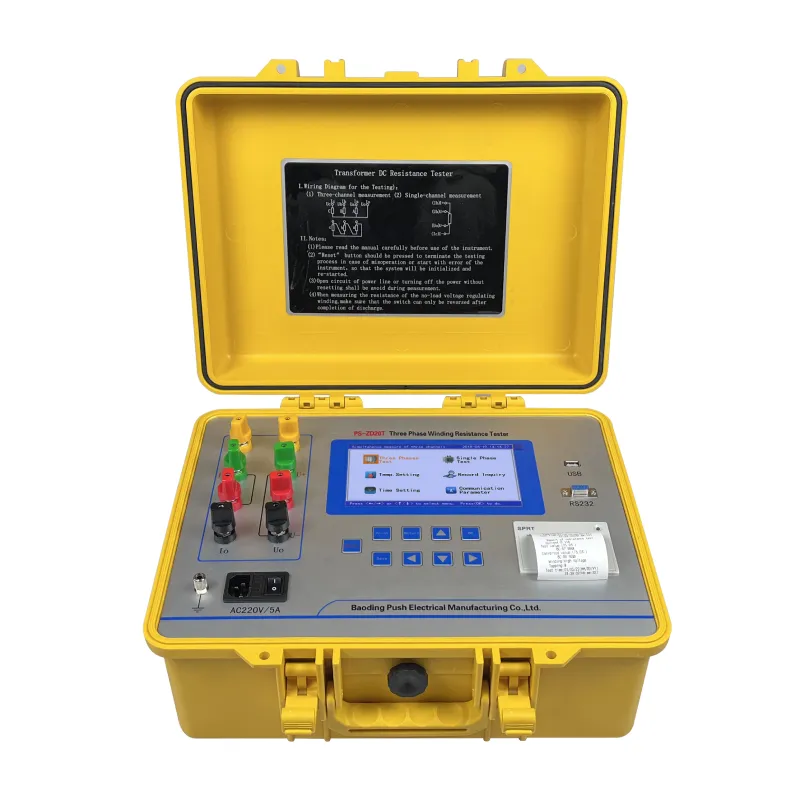
Manufacturing Excellence: The Process Behind a High-Precision DC Low Resistance Tester
The creation of a reliable dc low resistance tester involves a meticulous, multi-stage manufacturing process, emphasizing precision engineering, quality materials, and rigorous testing. This intricate flow ensures that each instrument delivers the accuracy and durability required for demanding industrial applications.
1. Design and Engineering Phase
- Conceptualization & CAD: Detailed designs are created using advanced CAD software, focusing on ergonomic design, robust enclosure, and optimized internal component layout. Key design considerations include environmental sealing (IP ratings), electromagnetic compatibility (EMC), and thermal management.
- Material Selection: Critical materials are chosen for their superior electrical, mechanical, and environmental properties. This includes high-purity oxygen-free copper for internal wiring and probes to minimize intrinsic resistance, aerospace-grade aluminum alloys for durable and lightweight enclosures (often CNC machined for precision), and specialized engineering polymers (e.g., ABS, polycarbonate) for control panels and protective casings, offering excellent impact resistance and insulation properties. Components are often specified to meet RoHS compliance.
- Standard Compliance: All designs adhere to international testing and safety standards such as ISO 9001 for quality management, IEC 61010 for safety requirements for electrical equipment, and ANSI C37.09 for low-voltage power circuit breakers, ensuring global applicability and user safety.
2. Component Manufacturing and Fabrication
- PCB Production: Multi-layer Printed Circuit Boards (PCBs) are fabricated with high-precision etching and plating processes. These boards integrate high-resolution Analog-to-Digital Converters (ADCs), stable current sources, and sophisticated digital signal processing (DSP) units to ensure measurement accuracy and stability.
- Enclosure Machining: Enclosures are typically crafted using CNC machining from aluminum billets, ensuring precise tolerances for component fit and environmental sealing. Processes like anodizing or powder coating provide enhanced corrosion resistance, especially crucial for target industries like petrochemicals and metallurgy where corrosive atmospheres are prevalent.
- Probe and Cable Assembly: Test leads and Kelvin probes are manufactured using robust, low-resistance cabling (e.g., silicone-insulated multi-strand copper) and high-quality gold-plated connectors to minimize contact resistance and ensure consistent performance over a long service life.
3. Assembly and Integration
- Electronics Assembly: Surface-mount technology (SMT) and through-hole component assembly are performed in cleanroom environments to prevent contamination. Automated soldering processes ensure reliable electrical connections.
- System Integration: PCBs, display units, power supplies, and communication modules are meticulously integrated into the machined enclosure. Internal wiring is carefully routed and secured to prevent interference and ensure mechanical stability.
4. Calibration and Quality Assurance
- Multi-Point Calibration: Each dc resistance tester undergoes extensive multi-point calibration against NIST-traceable (or equivalent national standard) reference resistors. This ensures that the instrument's measurements are consistently accurate across its entire specified range. Our calibration labs are ISO/IEC 17025 accredited, guaranteeing the highest level of metrological reliability.
- Functional and Environmental Testing: Testers are subjected to burn-in tests, vibration tests, temperature cycling, and humidity tests to simulate harsh operating conditions and confirm long-term stability and reliability. EMC testing verifies compliance with global electromagnetic compatibility standards.
- Software Validation: The embedded firmware and any associated PC software undergo rigorous validation to ensure correct algorithm execution, data integrity, and user interface responsiveness.
Target Industries and Advantages
These robust manufacturing processes yield instruments with an expected service life of 10-15 years, even under demanding operational conditions. Our dc low resistance tester units are specifically designed for critical applications in:
- Petrochemical: Ensuring the integrity of motor windings in explosion-proof environments and validating grounding systems.
- Metallurgy: Testing resistance of large electrical contacts, busbars, and furnace transformer windings where high currents are involved.
- Water Supply & Drainage: Maintaining reliable pump motor windings and associated control gear, crucial for uninterrupted service.
- Power Generation & Transmission: Essential for routine diagnostics of power transformers, circuit breakers, and switchgear in substations, enabling significant energy saving by identifying and rectifying high-resistance connections that cause power losses. Their corrosion resistance features ensure reliable performance in outdoor or humid environments.
Technical Specifications and Core Functionality
At the heart of every high-performance dc low resistance tester is the four-terminal (Kelvin) measurement method. This sophisticated technique effectively eliminates errors caused by lead resistance and contact resistance, which are significant factors when measuring very low ohmic values (micro-ohms to ohms). By injecting a constant current through two current leads and measuring the voltage drop across the component using two separate potential leads, the tester can accurately determine the resistance of the object under test, isolated from the measurement circuit's inherent resistance.
Modern dc resistance tester units incorporate advanced features to enhance utility and reliability:
- Automatic Test Current Selection: Optimizes test current for the resistance range, ensuring stable and accurate readings without risking sample saturation or damage.
- Temperature Compensation: Built-in algorithms and optional external temperature sensors allow for resistance measurements to be corrected to a standard reference temperature (e.g., 20°C or 75°C), which is crucial for comparing results over time and across different ambient conditions, particularly for dc resistance test of transformer windings.
- Inductive Load Discharge: For inductive components like transformer windings, a safe and rapid discharge circuit is essential to dissipate stored energy after the test, protecting both the operator and the instrument.
- Data Management: Large internal storage for results, USB/Ethernet/Bluetooth connectivity for data transfer, and PC software for analysis and report generation.
Typical Product Specifications (e.g., PS-ZD20T Three-Phase Winding Resistance Tester features)
| Parameter | Specification |
|---|---|
| Measurement Range | 0.01 µΩ to 2 kΩ (depending on model) |
| Accuracy | ±(0.2% Reading + 0.2% Range) typical |
| Test Current | Adjustable up to 20 A DC (e.g., 1A, 5A, 10A, 20A) |
| Resolution | 0.01 µΩ |
| Measurement Method | Four-terminal (Kelvin) method |
| Memory Capacity | Up to 1000 sets of data with timestamps |
| Communication Interface | USB, RS232, optional Bluetooth/Ethernet |
| Display | Large color LCD with backlight |
| Operating Temperature | -10°C to +50°C |
| Power Supply | 100-240V AC, 50/60Hz; optional internal battery pack |
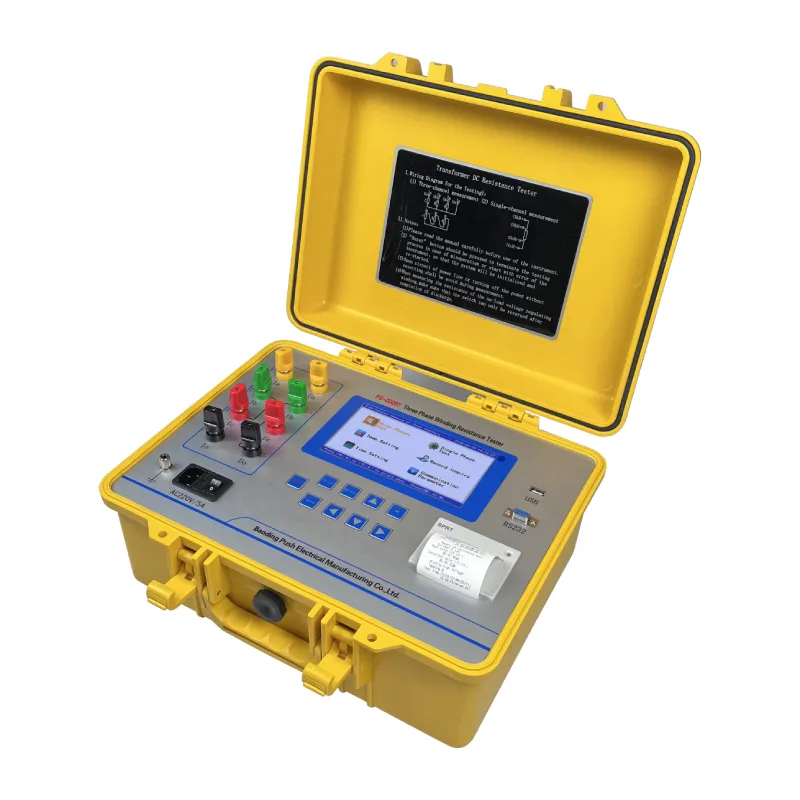
Versatile Application Scenarios and Technical Advantages
The versatility of a dc low resistance tester makes it a cornerstone in various maintenance and quality control routines across industrial landscapes.
Key Application Areas:
- Transformer Winding Resistance: A paramount application, the dc resistance test of transformer windings identifies issues like loose connections, damaged conductors, or tap changer contact problems. These can lead to overheating, increased losses, and ultimately, transformer failure. Regular testing ensures optimal performance and prevents costly outages.
- Circuit Breaker Contact Resistance: Critical for ensuring the safe and efficient operation of circuit breakers. High contact resistance can lead to localized heating, reduced current carrying capacity, and unreliable tripping mechanisms.
- Cable and Busbar Resistance: Verifying the integrity of power cables, grounding conductors, and busbar connections. Discrepancies can indicate faulty installations or material degradation.
- Motor and Generator Windings: Assessing the condition of stator and rotor windings in large motors and generators, detecting incipient faults before they escalate.
- Switchgear and Disconnect Switches: Ensuring low resistance paths for current flow, critical for system reliability and safety.
Technical Advantages:
- Unparalleled Accuracy: Utilizing the four-terminal Kelvin method, these testers deliver measurements with micro-ohm precision, essential for detecting subtle but critical changes in resistance.
- Speed and Efficiency: Rapid measurement cycles, especially for multi-winding transformers (like the PS-ZD20T, a three-phase winding resistance tester), minimize testing time and maximize field productivity. Advanced discharge circuits further reduce waiting periods for inductive loads.
- Robustness and Portability: Designed for harsh industrial environments, these testers feature rugged casings, wide operating temperature ranges, and often come with protective carrying cases, facilitating easy transport and field use.
- Advanced Software Capabilities: Intuitive graphical user interfaces, automatic data logging, trend analysis, and comprehensive reporting features streamline the testing process and provide actionable insights for maintenance planning.
- Enhanced Safety Features: Integrated safety interlocks, over-current protection, and rapid discharge mechanisms protect both the operator and the valuable assets being tested.
Vendor Comparison and Customized Solutions
Selecting the right dc low resistance tester involves evaluating various vendors based on key criteria such as performance, reliability, support, and total cost of ownership. While many general-purpose dc resistance tester units are available, specialized instruments offer superior performance for specific applications like the dc resistance test of transformer windings.
Comparative Analysis of DC Low Resistance Testers
| Feature/Vendor | Pushtester (e.g., PS-ZD20T) | Leading Competitor A | Generic Brand B |
|---|---|---|---|
| Max Test Current | 20A DC (for single-phase) / 30A DC (for three-phase) | 10A DC | 5A DC |
| Measurement Range | 0.1 µΩ - 20 kΩ | 1 µΩ - 5 kΩ | 10 µΩ - 1 kΩ |
| Accuracy | ±(0.2% rdg + 0.2% rng) | ±(0.5% rdg + 0.5% rng) | ±(1% rdg + 1% rng) |
| Inductive Discharge Speed | Rapid, intelligent discharge (e.g., <10s for 100MVA transformer) | Moderate (e.g., <30s for 100MVA transformer) | Slow (manual discharge required) |
| Connectivity | USB, RS232, Ethernet, Optional Wi-Fi | USB, RS232 | USB only |
| Certifications | CE, ISO 9001, IEC 61010 | CE | Basic safety compliance |
| User Interface | Large color touchscreen, intuitive GUI | Monochrome LCD, button navigation | Small LED display, minimal controls |
Customized Solutions
Recognizing that standard products may not always meet unique operational requirements, leading manufacturers offer bespoke solutions for their dc low resistance tester range. Customization options can include:
- Specific Measurement Ranges: Tailoring current injection and voltage measurement capabilities for extremely low or high resistance targets.
- Software Integration: Developing custom software protocols for seamless integration with existing SCADA systems, asset management platforms, or proprietary enterprise resource planning (ERP) systems.
- Specialized Probes and Cables: Designing unique test leads, clamps, or Kelvin probes for specific component geometries, access limitations, or high-temperature applications.
- Environmental Hardening: Enhancing ingress protection (IP ratings) for dusty, humid, or explosive environments, ensuring reliability in the most challenging industrial settings.
- Multi-functional Units: Combining DC resistance testing with other diagnostic capabilities, such as winding ratio testing or insulation resistance, into a single, integrated platform.
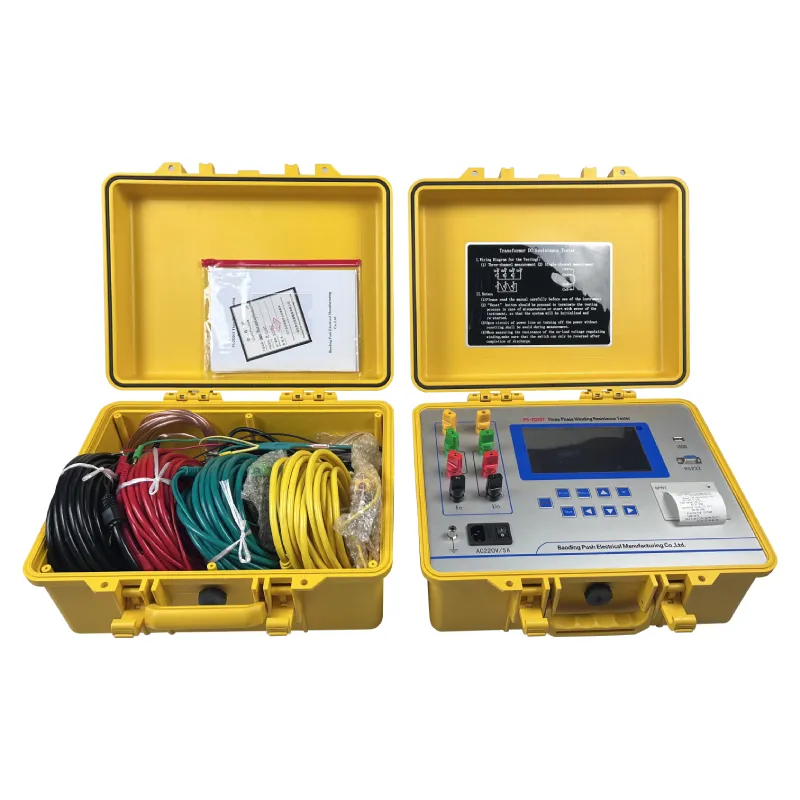
Application Case Studies & Customer Experience
Real-world application demonstrates the tangible benefits of deploying a high-quality dc low resistance tester in critical infrastructure management.
Case Study 1: Large Power Transformer Maintenance
Client: A major national power utility managing a fleet of over 500 high-voltage transformers (110kV to 500kV).
Challenge: Routine dc resistance test of transformer windings for a 220kV power transformer indicated slightly elevated resistance values in one phase compared to historical data, despite no visible external faults. The previous test was conducted two years prior.
Solution: Utilizing a Pushtester PS-ZD20T Three-Phase Winding Resistance Tester, field engineers performed a rapid and accurate three-phase simultaneous DC resistance test, completing the measurement in less than 15 minutes per transformer. The integrated temperature compensation automatically corrected readings to 75°C, providing precise comparative data. The high resolution of the dc low resistance tester confirmed a subtle but consistent upward trend in the 'B' phase winding resistance, which was approximately 0.5% higher than the 'A' and 'C' phases and 0.8% higher than the baseline.
Outcome: Further investigation during a planned outage revealed minor oxidation on a tap changer contact within the 'B' phase, leading to increased localized heating. The early detection, facilitated by the high sensitivity and trend analysis features of the dc resistance tester, allowed for proactive maintenance (cleaning and re-tensioning the contact) before the issue escalated into a critical failure. This prevented potential unscheduled downtime of the 220kV transformer, saving an estimated $250,000 in emergency repair costs and avoiding penalties from grid instability.
Case Study 2: Substation Circuit Breaker Diagnostics
Client: A municipal utility responsible for dozens of substations.
Challenge: Ensuring reliable operation of 66kV circuit breakers, where inconsistent contact resistance could lead to arcing and eventually breaker failure.
Solution: The utility implemented a quarterly testing program using a portable, high-current dc low resistance tester. The instrument's ability to inject up to 20A DC allowed for accurate measurement of main and arcing contact resistances, identifying marginal contacts that would typically be overlooked by lower current testers. The rapid measurement time and simple setup minimized the impact on substation operations.
Outcome: Over a year, the program identified 7 circuit breakers with incipient high resistance issues in their contacts. Corrective actions, such as contact cleaning or replacement, were performed during scheduled maintenance windows. This proactive approach prevented an estimated 3-5 unscheduled outages per year, significantly improving grid reliability and reducing maintenance costs by extending the lifespan of the breakers through condition-based maintenance.
Customer Feedback:
"The PS-ZD20T has revolutionized our transformer maintenance program. Its speed and accuracy mean we can test more assets in less time, and the intuitive interface makes it easy for our field technicians. The rapid discharge feature alone has cut our testing time significantly, directly contributing to operational efficiency and safety." - Chief Electrical Engineer, Global Power & Energy Co.
Trustworthiness, Support, and Long-Term Partnership
Building long-term relationships with B2B clients demands not only superior product quality but also unwavering commitment to authority and trust. Our dedication is evidenced by our certifications, client partnerships, and comprehensive support infrastructure.
Authoritativeness and Certifications
- ISO 9001 Certified: Our manufacturing facilities and quality management systems are ISO 9001:2015 certified, guaranteeing consistent product quality and continuous improvement.
- IEC/ANSI Compliance: All dc low resistance tester products meet or exceed relevant international standards, including IEC 61010 for safety and ANSI/NETA ATS for electrical equipment testing.
- Major Partner Clients: We proudly serve leading utility companies, industrial giants in petrochemicals and metallurgy, and critical infrastructure operators worldwide, including National Grid, Siemens Energy, and multiple state-owned enterprises. Our equipment is trusted in over 50 countries.
- Years of Service: With over 20 years of experience in developing and manufacturing high-voltage testing equipment, our expertise is deeply rooted in the industry.
Frequently Asked Questions (FAQ)
- Q: What is the primary advantage of using a four-terminal measurement method in a dc resistance tester?
- A: The four-terminal (Kelvin) method effectively eliminates errors caused by the resistance of the test leads and contact resistance at the probe/sample interface, providing highly accurate measurements of the actual component resistance, particularly critical for low ohmic values.
- Q: How does temperature compensation improve the reliability of dc resistance test of transformer windings?
- A: Winding resistance is highly dependent on temperature. Temperature compensation corrects the measured resistance to a standard reference temperature, allowing for consistent comparison of readings over time and across different ambient conditions, which is vital for trend analysis and fault detection.
- Q: Is training provided for operating your dc low resistance tester units?
- A: Yes, we offer comprehensive training programs, both on-site and remote, to ensure your technical teams are fully proficient in the operation, calibration, and maintenance of our equipment. Detailed user manuals and online resources are also available.
- Q: What are the typical lead times for new equipment orders?
- A: Standard dc low resistance tester models typically have a lead time of 2-4 weeks from order confirmation, subject to stock availability and current production schedules. Customized solutions may require longer lead times, which will be communicated clearly during the quotation process.
Warranty and After-Sales Support
- Standard Warranty: All our dc low resistance tester products come with a minimum 2-year warranty covering manufacturing defects and component failures under normal operating conditions. Extended warranty options are available.
- Customer Support: Our dedicated technical support team is available 24/7 via phone, email, and live chat to assist with any operational queries, troubleshooting, or technical guidance.
- Maintenance & Calibration Services: We offer scheduled maintenance contracts and certified calibration services to ensure the long-term accuracy and optimal performance of your instruments.
- Global Service Network: With a network of authorized service partners, we provide timely local support, minimizing downtime for our international clients.
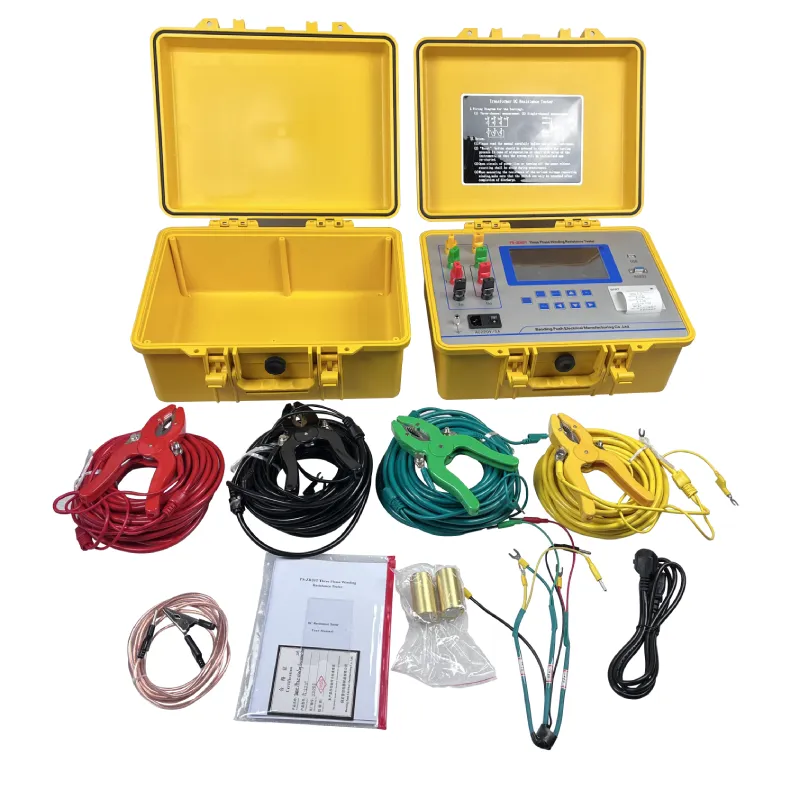
Conclusion
The dc low resistance tester is more than just a measurement tool; it is a critical asset in ensuring the reliability, safety, and efficiency of electrical infrastructure. From intricate manufacturing processes employing cutting-edge technology and materials to comprehensive after-sales support, the commitment to precision and performance underpins every aspect of these essential diagnostic instruments. As industries continue to evolve towards predictive maintenance and smart grid solutions, the role of advanced DC resistance testing will only grow in significance, empowering decision-makers with the accurate data needed to optimize asset management and minimize operational risks.
References
- IEEE Std C57.12.90™-2015 - IEEE Standard for Test Code for Liquid-Immersed Distribution, Power, and Regulating Transformers.
- ANSI/NETA ATS-2021 - Standard for Acceptance Testing Specifications for Electrical Power Equipment and Systems.
- International Electrotechnical Commission (IEC) 61010-1:2010 - Safety requirements for electrical equipment for measurement, control, and laboratory use.
- ISO 9001:2015 - Quality management systems — Requirements.
-
Find the Best Loop Impedance Tester for Sale and Ensure Electrical SafetyNewsMar.31,2026
-
Comprehensive Guide to Loop Impedance Meter for Electrical SafetyNewsMar.28,2026
-
Understanding and Choosing a Line Impedance Tester for Optimal Network PerformanceNewsMar.26,2026
-
Comprehensive Guide to Line Earth Loop Impedance Test for Electrical SafetyNewsMar.24,2026
-
Comprehensive Guide to Fault Loop Impedance Meter and Electrical SafetyNewsMar.21,2026
-
Comprehensive Guide to External Loop Impedance Test for Electrical SafetyNewsMar.19,2026


