 Inglese



-
 Afrikaans
 -
 Albanian
 -
 Amharic
 -
 Arabic
 -
 Armenian
 -
 Azerbaijani
 -
 Basque
 -
 Belarusian
 -
 Bengali
 -
 Bosnian
 -
 Bulgarian
 -
 Catalan
 -
 Cebuano
 -
 China
China -
 China (Taiwan)
 -
 Corsican
 -
 Croatian
 -
 Czech
Czech -
 Danish
 -
 Dutch
Dutch -
 English
 -
 Esperanto
 -
 Estonian
 -
 Finnish
 -
 French
 -
 Frisian
 -
 Galician
 -
 Georgian
 -
 German
 -
 Greek
Greek -
 Gujarati
 -
 Haitian Creole
 -
 hausa
hausa -
 hawaiian
 -
 Hebrew
 -
 Hindi
Hindi -
 Miao
Miao -
 Hungarian
 -
 Icelandic
 -
 igbo
igbo -
 Indonesian
 -
 irish
irish -
 Italian
 -
 Japanese
 -
 Javanese
 -
 Kannada
 -
 kazakh
 -
 Khmer
Khmer -
 Rwandese
 -
 Korean
 -
 Kurdish
 -
 Kyrgyz
 -
 Lao
Lao -
 Latin
Latin -
 Latvian
 -
 Lithuanian
 -
 Luxembourgish
 -
 Macedonian
 -
 Malgashi
 -
 Malay
Malay -
 Malayalam
 -
 Maltese
 -
 Maori
Maori -
 Marathi
 -
 Mongolian
 -
 Myanmar
 -
 Nepali
 -
 Norwegian
 -
 Norwegian
 -
 Occitan
 -
 Pashto
 -
 Persian
 -
 Polish
 -
 Portuguese
 -
 Punjabi
 -
 Romanian
 -
 Russian
 -
 Samoan
 -
 Scottish Gaelic
 -
 Serbian
 -
 Sesotho
 -
 Shona
Shona -
 Sindhi
 -
 Sinhala
 -
 Slovak
 -
 Slovenian
 -
 Somali
 -
 Spanish
 -
 Sundanese
 -
 Swahili
 -
 Swedish
 -
 Tagalog
 -
 Tajik
Tajik -
 Tamil
Tamil -
 Tatar
Tatar -
 Telugu
 -
 Thai
Thai -
 Turkish
 -
 Turkmen
 -
 Ukrainian
 -
 Urdu
Urdu -
 Uighur
 -
 Uzbek
Uzbek -
 Vietnamese
 -
 Welsh
Welsh -
 Bantu
Bantu -
 Yiddish
 -
 Yoruba
 -
 Zulu
Zulu
The Indispensable Role of an Oil Viscosity Measuring Instrument in Industrial Operations
In the vast landscape of industrial machinery, from intricate hydraulic systems to heavy-duty internal combustion engines, the performance and longevity of critical components hinge significantly on the properties of lubricants and process fluids. Among these properties, viscosity stands paramount, acting as the bedrock for understanding fluid behavior under various operational stresses. An oil viscosity measuring instrument is not merely a piece of equipment; it is a sentinel guarding against premature wear, inefficient energy consumption, and catastrophic equipment failures. Its role transcends simple measurement, extending into predictive maintenance, quality control, and R&D. Imagine a high-performance jet engine operating with lubrication that has drifted beyond its optimal viscosity range. The consequences could range from increased friction and heat generation, leading to rapid component degradation, to complete system breakdown, incurring astronomical repair costs and operational downtime. Studies indicate that inadequate lubrication, often tied to incorrect viscosity, accounts for over 30% of all machinery failures in industrial settings. This staggering figure underscores the economic imperative of precise viscosity monitoring. Whether dealing with engine oils, hydraulic fluids, gear oils, or even specific process fluids in chemical manufacturing, an accurate understanding of viscosity is non-negotiable. Modern industrial environments demand instruments that can provide rapid, reliable, and repeatable measurements, often in challenging conditions, enabling operators and engineers to make informed decisions that safeguard assets and optimize processes. Without a dependable oil viscosity measuring instrument, organizations are essentially operating blind, leaving their most valuable machinery vulnerable to preventable issues that can ripple through an entire production chain, impacting profitability and safety.
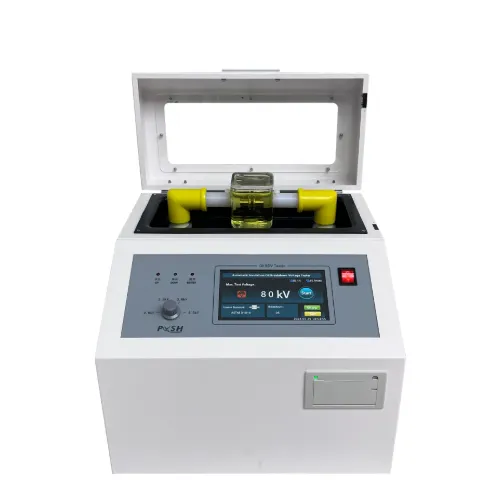
Understanding the Critical Science: How Viscosity Impacts Performance and Longevity
Viscosity, defined as a fluid's resistance to flow, is a dynamic property intricately linked to temperature, pressure, and shear rate. Its scientific underpinning is complex, involving molecular interactions and fluid dynamics, yet its practical implications are strikingly direct. For lubricants, viscosity dictates the thickness of the oil film that separates moving parts. Too low a viscosity, and the film may break down, leading to metal-to-metal contact, increased friction, and accelerated wear – a phenomenon known as boundary lubrication failure. Conversely, too high a viscosity can result in excessive drag, increased power consumption (up to 10-15% in some hydraulic systems), and poor heat dissipation, potentially leading to thermal degradation of the oil itself. Consider a large industrial gearbox: if the gear oil's viscosity is outside its specified range, the gears may either not be adequately protected, suffering pitting and scuffing, or the gearbox may consume excessive energy just to overcome the internal resistance of the oil. This translates directly to higher operational costs and reduced equipment lifespan. Moreover, the aging and degradation of oil through oxidation, contamination, or thermal stress often manifest as changes in viscosity. Monitoring these changes provides critical insights into the oil's remaining useful life (RUL) and signals the need for oil changeouts or preventative maintenance actions. For instance, a sudden drop in viscosity might indicate fuel dilution in an engine oil, while an increase could point to oxidation or contamination by solid particles. Accurately measuring these shifts allows for proactive intervention, preventing minor issues from escalating into major operational catastrophes. The impact extends beyond simple lubrication; in many process industries, fluid viscosity directly influences mixing efficiency, pumping costs, and product quality. For example, in the production of paints, polymers, or food products, maintaining precise viscosity ensures consistent texture, flow, and final product characteristics. In fact, a study by ExxonMobil found that optimizing lubricant viscosity could lead to a 6% reduction in energy consumption in certain industrial applications, highlighting the significant financial benefits of precise viscosity control.
Unveiling Technical Superiority: Advancements in Oil Viscosity Measurement
Modern advancements have transformed oil viscosity measurement from a cumbersome laboratory procedure into a sophisticated, often automated, and highly precise process. Contemporary viscometers leverage cutting-edge technology to offer unparalleled accuracy, speed, and versatility, addressing the complex demands of today's industrial landscape. One significant leap forward has been the development of portable and inline viscometers. Traditional laboratory-based methods, while accurate, require sample collection, transport, and often lengthy analysis times, leading to delays in critical decision-making. Portable devices, utilizing technologies like vibrational viscometry or mini-rotational viscometry, can provide real-time or near real-time data directly at the point of use, enabling immediate action. This drastically reduces the time from data acquisition to insight, cutting diagnostic cycles by as much as 80% in some cases. Inline viscometers, integrated directly into process lines, offer continuous, real-time monitoring, providing a constant stream of data that can be fed into SCADA or DCS systems. This allows for dynamic process control, where parameters can be adjusted instantaneously based on viscosity fluctuations, leading to optimized production efficiency and product consistency. Another key technical advantage lies in enhanced temperature control and compensation. Viscosity is highly sensitive to temperature; even a few degrees can significantly alter a measurement. Advanced instruments incorporate sophisticated temperature sensors and precise heating/cooling elements, often maintaining sample temperature within ±0.1°C, ensuring highly reproducible results regardless of ambient conditions. Furthermore, intelligent software interfaces and data logging capabilities are now standard. These features allow for automated data collection, trend analysis, alarm generation for out-of-spec conditions, and seamless integration with existing enterprise asset management (EAM) systems. Calibration routines are often automated or semi-automated, simplifying maintenance and ensuring instrument accuracy over its operational lifespan. Many devices also offer multi-range capabilities, allowing a single instrument to cover a broad spectrum of viscosity measurements, from very thin solvents to highly viscous heavy oils, minimizing the need for multiple specialized instruments. These technical superiorities collectively translate into reduced operational costs, improved product quality, enhanced safety, and extended equipment life, showcasing the profound impact of modern viscometry on industrial efficacy.
Navigating the Market: A Comparative Analysis of Leading Viscometer Solutions
Selecting the optimal viscometer for oil applications demands a thorough understanding of available technologies and manufacturers, each offering distinct advantages tailored to specific industrial needs. The market is populated by various types of viscometers, broadly categorized into rotational, capillary, and vibrational (oscillating) technologies, with each having its own operational principles and ideal use cases. Rotational viscometers, such as Brookfield-style viscometers, measure viscosity by detecting the torque required to rotate a spindle immersed in the fluid at a constant speed. They are highly versatile, capable of measuring a wide range of viscosities, and are excellent for both Newtonian and non-Newtonian fluids. Capillary viscometers (e.g., Ubbelohde or Cannon-Fenske) determine kinematic viscosity by measuring the time it takes for a fluid to flow through a narrow tube under gravity. They offer high precision, especially for Newtonian fluids, and are often used for quality control and calibration. Vibrational viscometers use an oscillating element, measuring the damping effect of the fluid on the oscillation. These are particularly robust, excellent for real-time process monitoring (inline applications), and can handle opaque or contaminated samples effectively. Beyond technology, manufacturers differentiate themselves through instrument features, robustness, user interface, and post-sales support. Evaluating these aspects is crucial for a long-term investment. Below is a comparative overview of typical characteristics across different instrument types and representative offerings:
|
Feature/Instrument Type |
Rotational Viscometer (e.g., Lab & Portable) |
Capillary Viscometer (e.g., Automated Lab) |
Vibrational Viscometer (e.g., Inline & Portable) |
|
Measurement Principle |
Shear stress from rotating spindle |
Flow time through a capillary tube |
Damping of oscillating element |
|
Viscosity Type Measured |
Dynamic (cP, mPa·s) |
Kinematic (cSt, mm²/s) |
Dynamic (cP, mPa·s) |
|
Typical Viscosity Range |
0.1 - 100,000,000 cP |
0.3 - 30,000 cSt |
0.3 - 50,000 cP |
|
Primary Application |
R&D, QC, broad range of fluids, non-Newtonian |
Precision QC, reference measurements, Newtonian fluids |
Process control, real-time monitoring, field use, dirty samples |
|
Accuracy (Typical) |
±1% of range |
±0.1% to ±0.5% |
±1% to ±2% of reading |
|
Temperature Control |
Integrated/External baths, high precision |
Highly critical, precise baths required |
Integrated sensors, often compensated |
|
Ease of Use |
Moderate to High, depends on automation |
Moderate, automated systems improve ease |
High, especially for inline/portable units |
|
Maintenance Requirements |
Spindle cleaning, calibration checks |
Capillary cleaning, regular calibration |
Minimal, robust design, occasional calibration |
|
Sample Volume Required |
Small (e.g., 8-15 mL) to larger (e.g., 500 mL) |
Very small (e.g., 5-15 mL) |
Very small (e.g., <1 mL for micro-VISC) to continuous flow |
|
Cost Range (Approx.) |
Mid to High (USD 3,000 - 30,000+) |
High (Automated: USD 10,000 - 50,000+) |
Mid to High (Portable: USD 5,000 - 15,000+; Inline: USD 10,000 - 40,000+) |
When making a selection, consider the fluid type (Newtonian vs. non-Newtonian), the required accuracy and repeatability, the operational environment (lab, field, process line), budget constraints, and the need for automation or portability. For instance, a quality control lab for engine oil blending might prioritize a highly accurate automated capillary viscometer for kinematic viscosity, while a refinery might invest in multiple robust inline vibrational viscometers for continuous monitoring of heavy crude oil processing. Understanding these nuances ensures that the chosen instrument aligns perfectly with specific application demands, yielding optimal performance and data integrity.
Crafting Precision: Bespoke Viscometry Solutions for Unique Industrial Challenges
While off-the-shelf viscometers offer substantial capabilities, many industrial operations face unique challenges that necessitate customized viscosity measurement solutions. These bespoke instruments are not merely modifications; they are often engineered from the ground up or heavily adapted to meet stringent requirements concerning extreme temperatures, corrosive environments, hazardous materials, specific shear rate requirements, or highly viscous and abrasive fluids. For example, in the deep-sea oil and gas industry, measuring the viscosity of drilling muds or subsea hydraulic fluids at pressures exceeding 20,000 psi and temperatures fluctuating from near-freezing to over 200°C requires specialized high-pressure, high-temperature (HPHT) viscometers. Standard instruments would fail or provide inaccurate readings under such extreme conditions. Custom solutions involve robust materials like Hastelloy or Inconel for wetted parts, advanced pressure compensation mechanisms, and intrinsically safe designs for hazardous area classifications (e.g., ATEX or IECEx). Similarly, in the polymer processing industry, certain molten plastics or resins exhibit highly non-Newtonian behavior and require viscosity measurements at extremely high shear rates to accurately predict their processability. This often involves specialized rheometers or high shear viscometers with custom geometries or flow channels designed to replicate actual processing conditions, which standard viscometers cannot achieve. Another area for customization is fluid handling. For highly abrasive slurries or fluids containing large particulates, standard viscometer designs might quickly wear out or become clogged. Bespoke solutions incorporate features like large-bore capillaries, bypass loops with self-cleaning mechanisms, or non-contact measurement principles to ensure continuous and reliable operation. Furthermore, integration with existing process control systems can be a significant customization. While many modern viscometers offer standard communication protocols (e.g., 4-20mA, Modbus, Ethernet/IP), some complex industrial setups require custom software interfaces, proprietary communication bus integration, or specific data formatting for seamless operation within a legacy control system. Customization also extends to form factor – from ultra-compact sensors for tight spaces to rugged, explosion-proof enclosures for harsh outdoor environments. By working closely with experienced viscometer manufacturers or specialized engineering firms, industries can develop measurement tools that precisely match their unique operational parameters, mitigating risks, improving process control, and ultimately enhancing product quality and operational safety in environments where standard solutions simply fall short. This level of tailored engineering not only provides accurate data but also ensures the longevity and reliability of the measurement system itself, delivering long-term value that far outweighs the initial investment in customization.
Real-World Impact: Diverse Applications of Advanced Oil Viscosity Measurement
The practical application of advanced oil viscosity measurement instruments spans a multitude of industries, demonstrating their critical role in ensuring efficiency, safety, and product quality. In the automotive and transportation sector, precise viscosity measurement of engine oils, transmission fluids, and hydraulic fluids is paramount. For example, during oil analysis for heavy-duty truck fleets, a sudden decrease in engine oil viscosity can indicate fuel dilution, a serious issue that degrades lubricant film strength and can lead to engine bearing failure. Conversely, an increase might signal oxidation or soot loading, impairing oil flow and potentially causing sludge buildup. Regular monitoring using portable viscometers allows maintenance teams to schedule timely oil changes or investigate engine issues before they become catastrophic, saving fleets millions in repair costs and downtime. In marine applications, real-time viscosity monitoring of bunker fuel on large vessels is essential. Fuel viscosity directly impacts combustion efficiency and emissions. Inline viscometers integrated into fuel lines ensure that the fuel delivered to the engine is within specifications for optimal atomization, leading to significant fuel savings (up to 2-3%) and reduced air pollution. This also prevents costly damage to fuel injection systems. The petrochemical industry relies heavily on viscosity data for process control and product quality. In refinery operations, the viscosity of crude oil, intermediate products, and final refined products (like bitumen or lubricants) must be precisely controlled. For instance, in asphalt production, controlling the viscosity ensures the correct flow properties during paving, directly impacting road quality and durability. Inline viscometers provide continuous feedback, allowing operators to adjust blending ratios or temperature to maintain desired viscosity targets, preventing off-spec batches that could lead to significant financial losses. In the food and beverage sector, viscosity is a key determinant of product texture, consistency, and pumpability. Products like ketchup, yogurt, chocolate, and even juices require strict viscosity control. A beverage company might use a viscometer to ensure that a fruit juice concentrate is diluted to the exact specified viscosity for bottling, guaranteeing consistent taste and mouthfeel for consumers. Pharmaceutical manufacturing also leverages viscometry for quality assurance of syrups, suspensions, and intravenous solutions, where precise viscosity affects dosage accuracy and patient compliance. These diverse case studies underscore that whether it's preventing engine failure, optimizing fuel consumption, ensuring product integrity, or complying with stringent industry standards, the advanced oil viscosity measuring instrument is an indispensable tool, delivering tangible benefits across the industrial spectrum.
Maximizing Operational Excellence with Your Chosen Oil Viscosity Measuring Instrument
The journey towards operational excellence in any industry involving fluids begins with accurate and reliable viscosity measurement. Having delved into the scientific importance, technological advancements, market options, customized solutions, and real-world applications, it becomes clear that selecting and effectively utilizing an oil viscosity measuring instrument is a strategic imperative. To truly maximize the value derived from this investment, several critical considerations must be prioritized. Firstly, ongoing calibration and regular maintenance are non-negotiable. Even the most sophisticated viscometer can drift over time or perform poorly if not properly maintained. Adhering to manufacturer-recommended calibration schedules, utilizing certified reference oils, and establishing robust internal verification protocols ensure the continued accuracy and reliability of measurements. This commitment to maintenance directly translates into trustworthy data, which is the foundation of informed decision-making. Secondly, operator training is vital. While modern instruments are increasingly user-friendly, a comprehensive understanding of proper sample handling, measurement techniques, and data interpretation is crucial to avoid common errors that can lead to misleading results. Well-trained personnel can extract the maximum potential from the instrument and identify anomalies that might otherwise be overlooked. Furthermore, integrating viscosity data with other operational parameters and analytical techniques (e.g., elemental analysis, FTIR, particle counting) can provide a holistic view of fluid health and machinery condition. This integrated approach elevates data from mere numbers to actionable insights, enabling advanced predictive maintenance strategies. The future of viscosity measurement is likely to see further integration of IoT capabilities, AI-driven data analysis, and even more compact, robust, and autonomous devices. These advancements promise even greater efficiency and predictive power. Ultimately, the right oil viscosity measuring instrument, when properly implemented and maintained, transforms a reactive maintenance approach into a proactive, data-driven strategy. It empowers organizations to extend asset life cycles, reduce unplanned downtime, optimize energy consumption, and consistently deliver high-quality products. Embracing these advanced tools and methodologies is not just about keeping pace with industrial demands; it's about setting a new standard for operational performance and securing a competitive edge in a rapidly evolving global market.
Frequently Asked Questions About Oil Viscosity Measuring Instruments
Q: What is the primary purpose of an oil viscosity measuring instrument?
A: The primary purpose is to accurately determine a fluid's resistance to flow (viscosity), which is critical for assessing lubricant performance, predicting machinery wear, ensuring fluid quality, and optimizing industrial processes.
Q: What are the main types of viscometers used for oil, and how do they differ?
A: The main types are rotational (measures torque to rotate a spindle), capillary (measures flow time through a tube), and vibrational (measures damping of an oscillating element). They differ in principle, the type of viscosity measured (dynamic vs. kinematic), and their suitability for different applications (e.g., lab, inline, portable, Newtonian vs. non-Newtonian fluids).
Q: Why is temperature control so important in oil viscosity measurement?
A: Viscosity is highly sensitive to temperature; even small variations can significantly alter the measurement. Precise temperature control ensures consistent, repeatable, and accurate results that can be compared against specifications.
Q: Can an oil viscosity measuring instrument detect oil degradation or contamination?
A: Yes, significant changes in viscosity (increase or decrease) are often direct indicators of oil degradation (e.g., oxidation, thermal breakdown) or contamination (e.g., fuel dilution, water ingress, particle buildup). Monitoring these changes helps in proactive maintenance.
Q: Are there portable options for measuring oil viscosity in the field?
A: Absolutely. Modern technology has led to the development of compact, rugged portable viscometers that allow for on-site, rapid viscosity checks, which are invaluable for predictive maintenance and troubleshooting in remote locations or directly on machinery.
Q: How often should an oil viscosity measuring instrument be calibrated?
A: Calibration frequency depends on the instrument type, usage intensity, and manufacturer recommendations. Generally, it's recommended to calibrate annually, or more frequently if high accuracy is critical, if the instrument is used extensively, or if results seem inconsistent. Using certified reference oils is crucial for calibration.
Q: What is the difference between dynamic and kinematic viscosity?
A: Dynamic viscosity (measured in centipoise, cP) represents a fluid's internal resistance to flow. Kinematic viscosity (measured in centistokes, cSt) is the dynamic viscosity divided by the fluid's density. Both are important, but kinematic viscosity is often preferred for lubricants as it relates to how easily an oil flows under gravity. Most oil specifications are given in kinematic viscosity.
-
Find the Best Loop Impedance Tester for Sale and Ensure Electrical SafetyNotiziaMar.31,2026
-
Comprehensive Guide to Loop Impedance Meter for Electrical SafetyNotiziaMar.28,2026
-
Understanding and Choosing a Line Impedance Tester for Optimal Network PerformanceNotiziaMar.26,2026
-
Comprehensive Guide to Line Earth Loop Impedance Test for Electrical SafetyNotiziaMar.24,2026
-
Comprehensive Guide to Fault Loop Impedance Meter and Electrical SafetyNotiziaMar.21,2026
-
Comprehensive Guide to External Loop Impedance Test for Electrical SafetyNotiziaMar.19,2026


