 English



Comprehensive Guide to Battery Impedance Measurement and Its Applications
Battery Impedance Measurement: A Comprehensive Guide
Understanding battery impedance measurement is crucial for assessing battery health, performance, and lifespan. This article will delve into the significance of impedance, the methods used for its measurement, and its applications across various industries. We’ll explore how accurate impedance data can optimize battery management, improve reliability, and prevent unexpected failures. Accurate measurements lead to better decision making when dealing with battery systems.

What is Battery Impedance and Why Measure It?
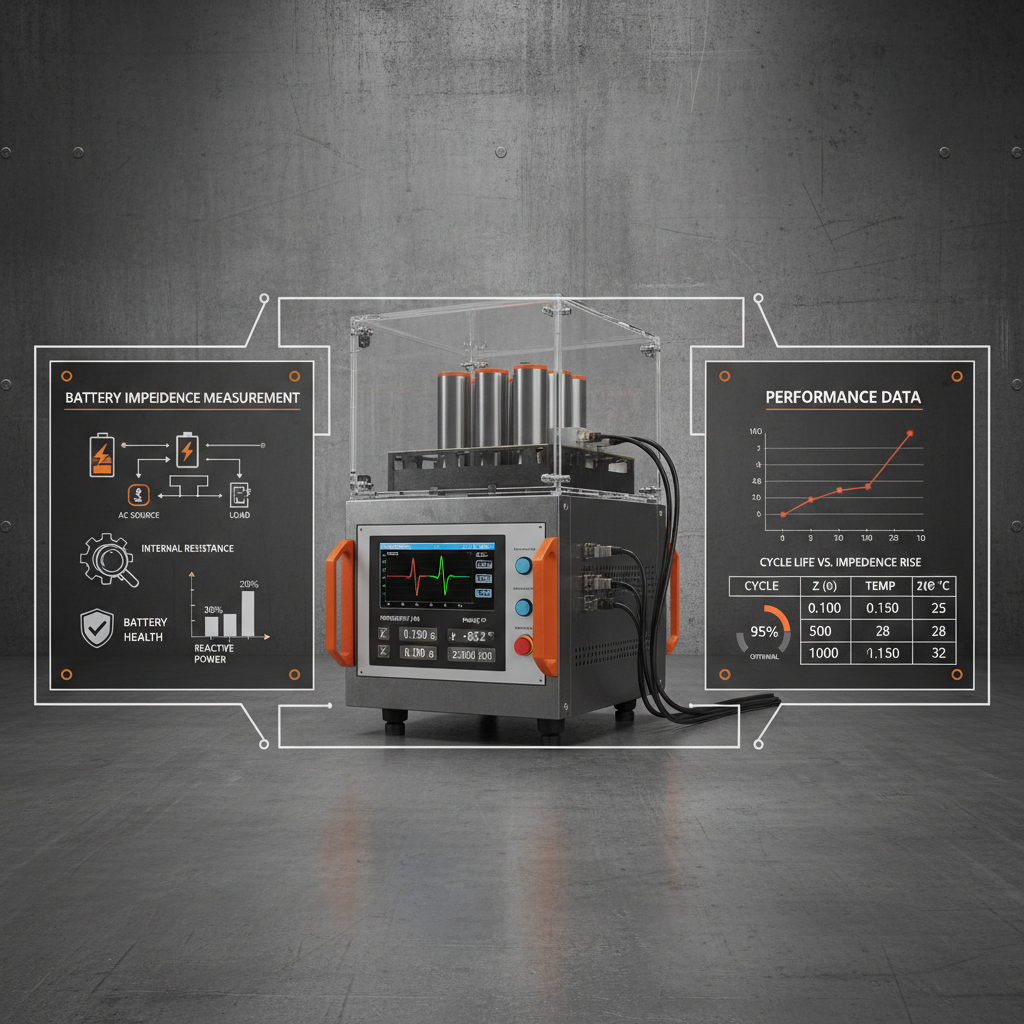
Battery impedance is the total opposition a battery presents to alternating current (AC). It’s a complex parameter comprising both resistance and reactance, and its value changes with frequency, temperature, and state of charge. A low impedance indicates a healthy battery capable of delivering high currents efficiently. As a battery ages, its impedance increases due to chemical changes within the cells. Measuring impedance provides a non-destructive way to assess the internal health of a battery, detecting issues like electrode corrosion, electrolyte degradation, and separator failure. Regular impedance measurements are key to preventative maintenance and maximizing battery life. Push Tester offers advanced solutions for precise battery impedance measurements.
Key Benefits of Impedance Measurement: Early detection of battery degradation, Optimization of battery charging/discharging profiles, Improved system reliability, Extended battery lifespan, Prevention of unexpected failures.
Methods for Battery Impedance Measurement
Several techniques are used to measure battery impedance. The most common include:
- AC Impedance Spectroscopy (EIS): This method applies a small AC signal across a range of frequencies and analyzes the battery's response. EIS provides a detailed impedance profile revealing valuable information about internal battery processes.
- DC Impedance Measurement: This method uses a DC pulse to measure the voltage drop across the battery, which is then used to calculate impedance. It is often used for quick assessments but provides less detailed information than EIS.
- Four-Terminal Sensing: This technique uses separate pairs of electrodes for sourcing current and measuring voltage, minimizing the effects of lead resistance for more accurate readings.
Each method has its advantages and disadvantages regarding accuracy, cost, and complexity. The optimal method depends on the specific application and the level of detail required.
Impedance Measurement Techniques Compared:
• EIS: High accuracy, detailed information, complex setup.
• DC Impedance: Simple, fast, lower accuracy.
• Four-Terminal Sensing: Improved accuracy, requires specialized equipment.
Applications of Battery Impedance Measurement
Battery impedance measurement finds applications in a wide range of fields including:
- Electric Vehicles (EVs): Assessing battery pack health, optimizing charging strategies, and predicting remaining range.
- Renewable Energy Storage: Monitoring the performance of battery systems used for storing solar and wind energy.
- Uninterruptible Power Supplies (UPS): Ensuring the reliability of backup power systems.
- Portable Electronics: Evaluating the performance of batteries in smartphones, laptops, and other devices.
- Industrial Battery Systems: Managing large battery banks used in factories and warehouses.
In all these applications, accurate impedance data is crucial for maintaining optimal battery performance and preventing costly downtime.
Choosing the Right Impedance Measurement Tool
Selecting the appropriate tool for battery impedance measurement depends on your specific needs and budget. Consider factors such as accuracy, frequency range, ease of use, and data analysis capabilities. Push Tester offers a range of advanced testers designed for accurate and reliable impedance measurements. Their instruments are known for their user-friendly interface and comprehensive data analysis features.
Conclusion: The Power of Informed Battery Management
Regular battery impedance measurement is a proactive step towards maximizing battery life, improving system reliability, and preventing costly failures. By understanding the internal health of your batteries, you can optimize performance, reduce downtime, and ensure the longevity of your energy storage systems. Invest in the right tools and techniques to unlock the full potential of your batteries.
Frequently Asked Questions (FAQs)
What factors can influence battery impedance?
Several factors affect battery impedance, including temperature, state of charge (SOC), age, and the internal chemical processes within the battery. Lower temperatures generally increase impedance, while higher temperatures can decrease it. Impedance also changes as the battery charges and discharges. Over time, chemical degradation and corrosion increase impedance as the battery ages. Understanding these influences is crucial for interpreting impedance measurements accurately and making informed decisions about battery health.
How often should I measure battery impedance?
The frequency of impedance measurements depends on the application and the criticality of the battery system. For critical applications like EVs and UPS systems, monthly or quarterly measurements are recommended. For less critical applications, semi-annual or annual measurements may suffice. More frequent measurements are beneficial when monitoring batteries undergoing high stress or operating in extreme conditions. Establishing a regular measurement schedule helps track changes over time and identify potential issues early on.
What do high impedance readings indicate?
High impedance readings generally indicate a decline in battery health. This could be due to several factors, including electrode corrosion, electrolyte degradation, separator damage, or the formation of internal resistance. A significant increase in impedance suggests the battery's ability to deliver current is compromised, and its capacity may be reduced. High impedance can also lead to increased heat generation during charging and discharging. It's a clear sign that the battery may need to be replaced or refurbished.
-
Find the Best Loop Impedance Tester for Sale and Ensure Electrical SafetyNewsMar.31,2026
-
Comprehensive Guide to Loop Impedance Meter for Electrical SafetyNewsMar.28,2026
-
Understanding and Choosing a Line Impedance Tester for Optimal Network PerformanceNewsMar.26,2026
-
Comprehensive Guide to Line Earth Loop Impedance Test for Electrical SafetyNewsMar.24,2026
-
Comprehensive Guide to Fault Loop Impedance Meter and Electrical SafetyNewsMar.21,2026
-
Comprehensive Guide to External Loop Impedance Test for Electrical SafetyNewsMar.19,2026


