 English



-
 Afrikaans
 -
 Albanian
 -
 Amharic
 -
 Arabic
 -
 Armenian
 -
 Azerbaijani
 -
 Basque
 -
 Belarusian
 -
 Bengali
 -
 Bosnian
 -
 Bulgarian
 -
 Catalan
 -
 Cebuano
 -
 China
China -
 China (Taiwan)
 -
 Corsican
 -
 Croatian
 -
 Czech
Czech -
 Danish
 -
 Dutch
Dutch -
 English
 -
 Esperanto
 -
 Estonian
 -
 Finnish
 -
 French
 -
 Frisian
 -
 Galician
 -
 Georgian
 -
 German
 -
 Greek
Greek -
 Gujarati
 -
 Haitian Creole
 -
 hausa
hausa -
 hawaiian
 -
 Hebrew
 -
 Hindi
Hindi -
 Miao
Miao -
 Hungarian
 -
 Icelandic
 -
 igbo
igbo -
 Indonesian
 -
 irish
irish -
 Italian
 -
 Japanese
 -
 Javanese
 -
 Kannada
 -
 kazakh
 -
 Khmer
Khmer -
 Rwandese
 -
 Korean
 -
 Kurdish
 -
 Kyrgyz
 -
 Lao
Lao -
 Latin
Latin -
 Latvian
 -
 Lithuanian
 -
 Luxembourgish
 -
 Macedonian
 -
 Malgashi
 -
 Malay
Malay -
 Malayalam
 -
 Maltese
 -
 Maori
Maori -
 Marathi
 -
 Mongolian
 -
 Myanmar
 -
 Nepali
 -
 Norwegian
 -
 Norwegian
 -
 Occitan
 -
 Pashto
 -
 Persian
 -
 Polish
 -
 Portuguese
 -
 Punjabi
 -
 Romanian
 -
 Russian
 -
 Samoan
 -
 Scottish Gaelic
 -
 Serbian
 -
 Sesotho
 -
 Shona
Shona -
 Sindhi
 -
 Sinhala
 -
 Slovak
 -
 Slovenian
 -
 Somali
 -
 Spanish
 -
 Sundanese
 -
 Swahili
 -
 Swedish
 -
 Tagalog
 -
 Tajik
Tajik -
 Tamil
Tamil -
 Tatar
Tatar -
 Telugu
 -
 Thai
Thai -
 Turkish
 -
 Turkmen
 -
 Ukrainian
 -
 Urdu
Urdu -
 Uighur
 -
 Uzbek
Uzbek -
 Vietnamese
 -
 Welsh
Welsh -
 Bantu
Bantu -
 Yiddish
 -
 Yoruba
 -
 Zulu
Zulu
Common Mistakes to Avoid When Using a Distillation Range Tester
A distillation range tester is an essential tool for ensuring the purity and consistency of liquids in industries such as pharmaceuticals, cosmetics, food, and chemical research. However, improper use can lead to inaccurate results, wasted resources, and compromised product quality.
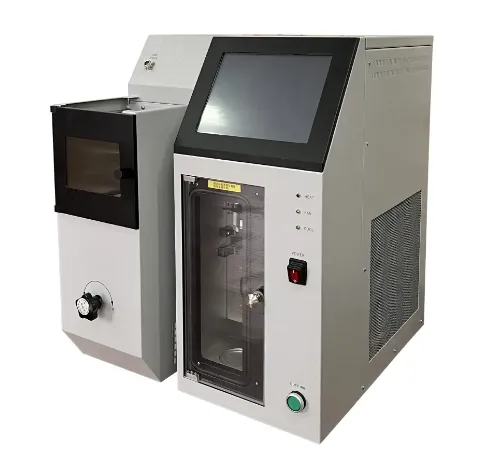
Whether you're working with a micro distillation apparatus, operating a water distillation plant for a laboratory, using a mini distillation unit, or managing a steam distillation unit, avoiding common mistakes can help you achieve precise and reliable results. Let’s explore the most frequent errors and how to prevent them.
Incorrect Setup of the Micro Distillation Apparatus
A micro distillation apparatus is commonly used for small-scale experiments, essential oil extraction, and specialized chemical analysis. However, improper assembly or calibration can lead to errors in boiling point measurements, affecting product quality.
Common mistakes when using a micro distillation apparatus:
- Not sealing joints properly, leading to vapor loss and inaccurate readings.
- Using contaminated glassware, which can interfere with the boiling point determination.
- Failing to calibrate the temperature sensor,resulting in incorrect distillation range readings.
How to avoid these mistakes:
- Ensure all connections are airtight to prevent leaks.
- Always clean and dry glassware before use.
- Regularly check and calibrate your temperature probes for precise measurements.
Properly setting up your micro distillation apparatus ensures accurate distillation range testing, saving time and resources.
Neglecting Maintenance in a Water Distillation Plant for Laboratories
A water distillation plant for a laboratory is designed to purify water for experiments, medical applications, and industrial processes. However, poor maintenance can lead to contamination and unreliable results from your distillation range tester.
Common mistakes in laboratory water distillation:
- Ignoring residue buildup, which affects purity levels.
- Using poor-quality water, leading to scaling and inefficient operation.
- Failing to check for leaks, which reduces distillation efficiency.
How to prevent these issues:
- Regularly clean and descale your water distillation plantto maintain efficiency.
- Use filtered water to prevent excessive scaling in the system.
- Inspect connections and seals to prevent leaks and contamination.
By maintaining your water distillation plant, you ensure that distillation range testing produces accurate results and high-purity distilled water.
Overloading the Mini Distillation Unit
A mini distillation unit is ideal for small-scale applications, such as pilot production and laboratory research. However, overloading the system can cause inaccurate boiling point readings and reduce efficiency.
Common mistakes in mini distillation units:
- Filling the unit beyond capacity, leading to inefficient separation.
- Ignoring pressure and temperature limits, causing overheating or incomplete distillation.
- Not allowing the system to stabilize before taking measurements, resulting in fluctuating results.
How to avoid these problems:
- Follow the manufacturer’s guidelines for proper fill levels.
- Monitor temperature and pressure carefully to maintain optimal conditions.
- Let the system reach equilibrium before recording distillation range test
Using a mini distillation unit correctly ensures that your distillation range tester provides reliable and reproducible results.
Improper Steam Control in a Steam Distillation Unit
A steam distillation unit is widely used for extracting essential oils and heat-sensitive compounds. However, poor control of steam pressure and temperature can lead to inconsistent distillation range measurements.
Common errors in steam distillation:
- Applying too much steam, causing overheating and loss of volatile components.
- Using too little steam, leading to incomplete extraction and poor separation.
- Not monitoring condensation rates, affecting the yield and purity of the final product.
How to fix these issues:
- Adjust steam pressure gradually to optimize the separation process.
- Use a distillation range testerto verify the correct boiling points for efficient extraction.
- Monitor the condensation rate to ensure proper collection of the distillate.
By carefully controlling steam in your steam distillation unit, you can achieve precise distillation range measurements and maintain high-quality output.
Using a distillation range tester correctly is crucial for achieving accurate and efficient distillation, whether in a micro distillation apparatus, a water distillation plant for a laboratory, a mini distillation unit, or a steam distillation unit. Avoiding common mistakes such as improper setup, poor maintenance, overloading, and steam mismanagement can significantly improve your results.
Looking for high-quality distillation testing equipment? Visit our website today to find the best solutions for your laboratory, industrial, or commercial needs!
-
Find the Best Loop Impedance Tester for Sale and Ensure Electrical SafetyNewsMar.31,2026
-
Comprehensive Guide to Loop Impedance Meter for Electrical SafetyNewsMar.28,2026
-
Understanding and Choosing a Line Impedance Tester for Optimal Network PerformanceNewsMar.26,2026
-
Comprehensive Guide to Line Earth Loop Impedance Test for Electrical SafetyNewsMar.24,2026
-
Comprehensive Guide to Fault Loop Impedance Meter and Electrical SafetyNewsMar.21,2026
-
Comprehensive Guide to External Loop Impedance Test for Electrical SafetyNewsMar.19,2026


