 English



-
 Afrikaans
 -
 Albanian
 -
 Amharic
 -
 Arabic
 -
 Armenian
 -
 Azerbaijani
 -
 Basque
 -
 Belarusian
 -
 Bengali
 -
 Bosnian
 -
 Bulgarian
 -
 Catalan
 -
 Cebuano
 -
 China
China -
 China (Taiwan)
 -
 Corsican
 -
 Croatian
 -
 Czech
Czech -
 Danish
 -
 Dutch
Dutch -
 English
 -
 Esperanto
 -
 Estonian
 -
 Finnish
 -
 French
 -
 Frisian
 -
 Galician
 -
 Georgian
 -
 German
 -
 Greek
Greek -
 Gujarati
 -
 Haitian Creole
 -
 hausa
hausa -
 hawaiian
 -
 Hebrew
 -
 Hindi
Hindi -
 Miao
Miao -
 Hungarian
 -
 Icelandic
 -
 igbo
igbo -
 Indonesian
 -
 irish
irish -
 Italian
 -
 Japanese
 -
 Javanese
 -
 Kannada
 -
 kazakh
 -
 Khmer
Khmer -
 Rwandese
 -
 Korean
 -
 Kurdish
 -
 Kyrgyz
 -
 Lao
Lao -
 Latin
Latin -
 Latvian
 -
 Lithuanian
 -
 Luxembourgish
 -
 Macedonian
 -
 Malgashi
 -
 Malay
Malay -
 Malayalam
 -
 Maltese
 -
 Maori
Maori -
 Marathi
 -
 Mongolian
 -
 Myanmar
 -
 Nepali
 -
 Norwegian
 -
 Norwegian
 -
 Occitan
 -
 Pashto
 -
 Persian
 -
 Polish
 -
 Portuguese
 -
 Punjabi
 -
 Romanian
 -
 Russian
 -
 Samoan
 -
 Scottish Gaelic
 -
 Serbian
 -
 Sesotho
 -
 Shona
Shona -
 Sindhi
 -
 Sinhala
 -
 Slovak
 -
 Slovenian
 -
 Somali
 -
 Spanish
 -
 Sundanese
 -
 Swahili
 -
 Swedish
 -
 Tagalog
 -
 Tajik
Tajik -
 Tamil
Tamil -
 Tatar
Tatar -
 Telugu
 -
 Thai
Thai -
 Turkish
 -
 Turkmen
 -
 Ukrainian
 -
 Urdu
Urdu -
 Uighur
 -
 Uzbek
Uzbek -
 Vietnamese
 -
 Welsh
Welsh -
 Bantu
Bantu -
 Yiddish
 -
 Yoruba
 -
 Zulu
Zulu
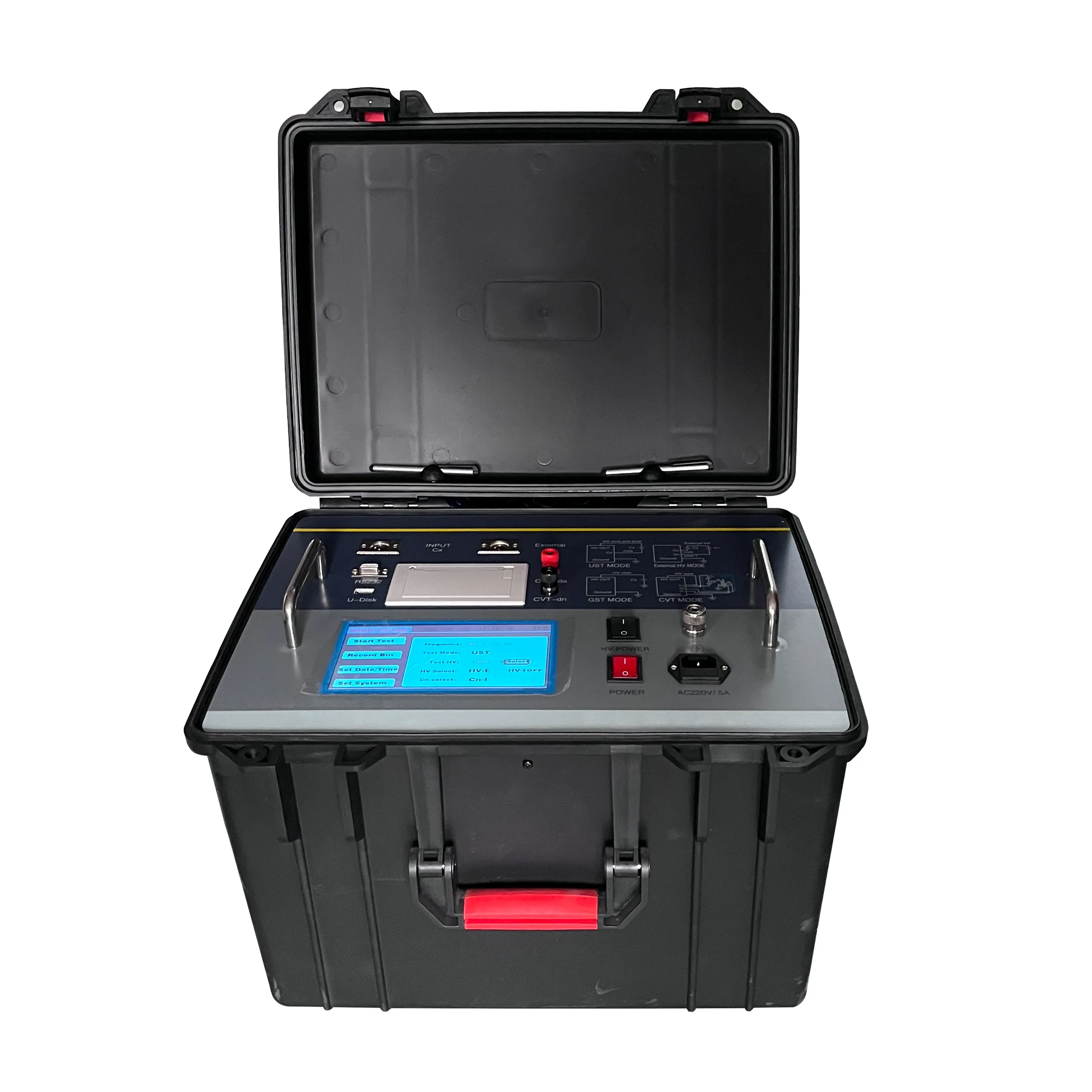
High Voltage Dielectric Loss Tester
A high voltage dielectric loss tester is a specialized instrument used to measure the insulation performance of high voltage electrical equipment. It is primarily used to detect the dielectric loss factor (tanδ) and capacitance (C) of power equipment to assess the health of the insulation materials. The dielectric loss factor reflects the dielectric loss of the insulation materials in power equipment and is an important parameter for evaluating the insulation performance. Here are detailed aspects of the high voltage dielectric loss tester:
Working Principle
The high voltage dielectric loss tester applies high voltage to the insulation material of the device under test, generates current, and measures the phase angle and magnitude of this current to calculate the dielectric loss factor and capacitance. The specific principles include:
- High Voltage Source: The tester provides a stable high voltage signal, usually ranging from several kilovolts to tens of kilovolts.
- Measuring Circuit: Through a precise measuring circuit, it measures the leakage current generated under high voltage.
- Phase Comparison: By comparing the phase difference between voltage and current, it calculates the dielectric loss factor.
- Data Processing: Using a built-in computer or an externally connected computing device, it processes and records the test data.
Application Areas
- Transformers: Detects the dielectric loss of transformer windings and insulating oil to assess their insulation status.
- Power Cables: Detects the dielectric loss of cable insulation, especially important in quality testing of high voltage cables.
- Instrument Transformers: Detects the dielectric loss of instrument transformers to ensure their accuracy and safety.
- Power Capacitors: Detects the dielectric loss and capacitance of capacitors to evaluate their performance and reliability.
Features
- High Precision: Utilizes advanced measurement technology to precisely measure the dielectric loss factor and capacitance.
- High Voltage Output: Provides high voltage, capable of simulating the actual operating conditions of power equipment to ensure the reliability of measurement results.
- Automated Operation: Some instruments have automatic adjustment and data recording functions, simplifying the operation process and improving work efficiency.
- Multifunctionality: Some models of the tester can also perform other insulation tests, such as DC resistance testing and insulation resistance testing.
Usage Steps
- Connect the Device: Connect the high voltage output terminal of the tester to the high voltage end of the device under test and the ground terminal to the ground end of the device under test.
- Set Parameters: Set the test voltage and other parameters according to the specifications of the device under test and testing requirements.
- Perform the Test: Start the tester, apply high voltage, and record the measurement results.
- Analyze Results: Evaluate the insulation condition of the device under test based on the measured dielectric loss factor and capacitance.
Precautions
- Safety Operation: High voltage testing involves high voltage; strict adherence to safety protocols and wearing appropriate protective gear is required to ensure personal safety.
- Environmental Conditions: The test should be conducted in a dry and clean environment to avoid environmental factors affecting the measurement results.
- Equipment Calibration: Regularly calibrate the tester to ensure the accuracy and consistency of measurement results.
- Data Recording: Save test data for long-term trend analysis, helping to predict the operational status and maintenance needs of the equipment.
The high voltage dielectric loss tester is an essential tool for ensuring the safe and reliable operation of power equipment, widely used in various aspects of the power system. Regular testing and maintenance can effectively prevent insulation failures in power equipment, extend the service life of the equipment, and improve the overall reliability of the power system.
-
Find the Best Loop Impedance Tester for Sale and Ensure Electrical SafetyNewsMar.31,2026
-
Comprehensive Guide to Loop Impedance Meter for Electrical SafetyNewsMar.28,2026
-
Understanding and Choosing a Line Impedance Tester for Optimal Network PerformanceNewsMar.26,2026
-
Comprehensive Guide to Line Earth Loop Impedance Test for Electrical SafetyNewsMar.24,2026
-
Comprehensive Guide to Fault Loop Impedance Meter and Electrical SafetyNewsMar.21,2026
-
Comprehensive Guide to External Loop Impedance Test for Electrical SafetyNewsMar.19,2026


