 English



-
 Afrikaans
 -
 Albanian
 -
 Amharic
 -
 Arabic
 -
 Armenian
 -
 Azerbaijani
 -
 Basque
 -
 Belarusian
 -
 Bengali
 -
 Bosnian
 -
 Bulgarian
 -
 Catalan
 -
 Cebuano
 -
 China
China -
 China (Taiwan)
 -
 Corsican
 -
 Croatian
 -
 Czech
Czech -
 Danish
 -
 Dutch
Dutch -
 English
 -
 Esperanto
 -
 Estonian
 -
 Finnish
 -
 French
 -
 Frisian
 -
 Galician
 -
 Georgian
 -
 German
 -
 Greek
Greek -
 Gujarati
 -
 Haitian Creole
 -
 hausa
hausa -
 hawaiian
 -
 Hebrew
 -
 Hindi
Hindi -
 Miao
Miao -
 Hungarian
 -
 Icelandic
 -
 igbo
igbo -
 Indonesian
 -
 irish
irish -
 Italian
 -
 Japanese
 -
 Javanese
 -
 Kannada
 -
 kazakh
 -
 Khmer
Khmer -
 Rwandese
 -
 Korean
 -
 Kurdish
 -
 Kyrgyz
 -
 Lao
Lao -
 Latin
Latin -
 Latvian
 -
 Lithuanian
 -
 Luxembourgish
 -
 Macedonian
 -
 Malgashi
 -
 Malay
Malay -
 Malayalam
 -
 Maltese
 -
 Maori
Maori -
 Marathi
 -
 Mongolian
 -
 Myanmar
 -
 Nepali
 -
 Norwegian
 -
 Norwegian
 -
 Occitan
 -
 Pashto
 -
 Persian
 -
 Polish
 -
 Portuguese
 -
 Punjabi
 -
 Romanian
 -
 Russian
 -
 Samoan
 -
 Scottish Gaelic
 -
 Serbian
 -
 Sesotho
 -
 Shona
Shona -
 Sindhi
 -
 Sinhala
 -
 Slovak
 -
 Slovenian
 -
 Somali
 -
 Spanish
 -
 Sundanese
 -
 Swahili
 -
 Swedish
 -
 Tagalog
 -
 Tajik
Tajik -
 Tamil
Tamil -
 Tatar
Tatar -
 Telugu
 -
 Thai
Thai -
 Turkish
 -
 Turkmen
 -
 Ukrainian
 -
 Urdu
Urdu -
 Uighur
 -
 Uzbek
Uzbek -
 Vietnamese
 -
 Welsh
Welsh -
 Bantu
Bantu -
 Yiddish
 -
 Yoruba
 -
 Zulu
Zulu
Hipot Tester Calibration and Accuracy Guidelines
For businesses involved in large-scale electrical infrastructure, maintaining the reliability of testing equipment is non-negotiable. Hipot testers, high potential test for cable systems, and VLF testers form the backbone of quality assurance in high-voltage environments. This article explores calibration best practices, accuracy optimization, and wholesale solutions for industrial-grade testing tools, ensuring compliance and safety across bulk operations.
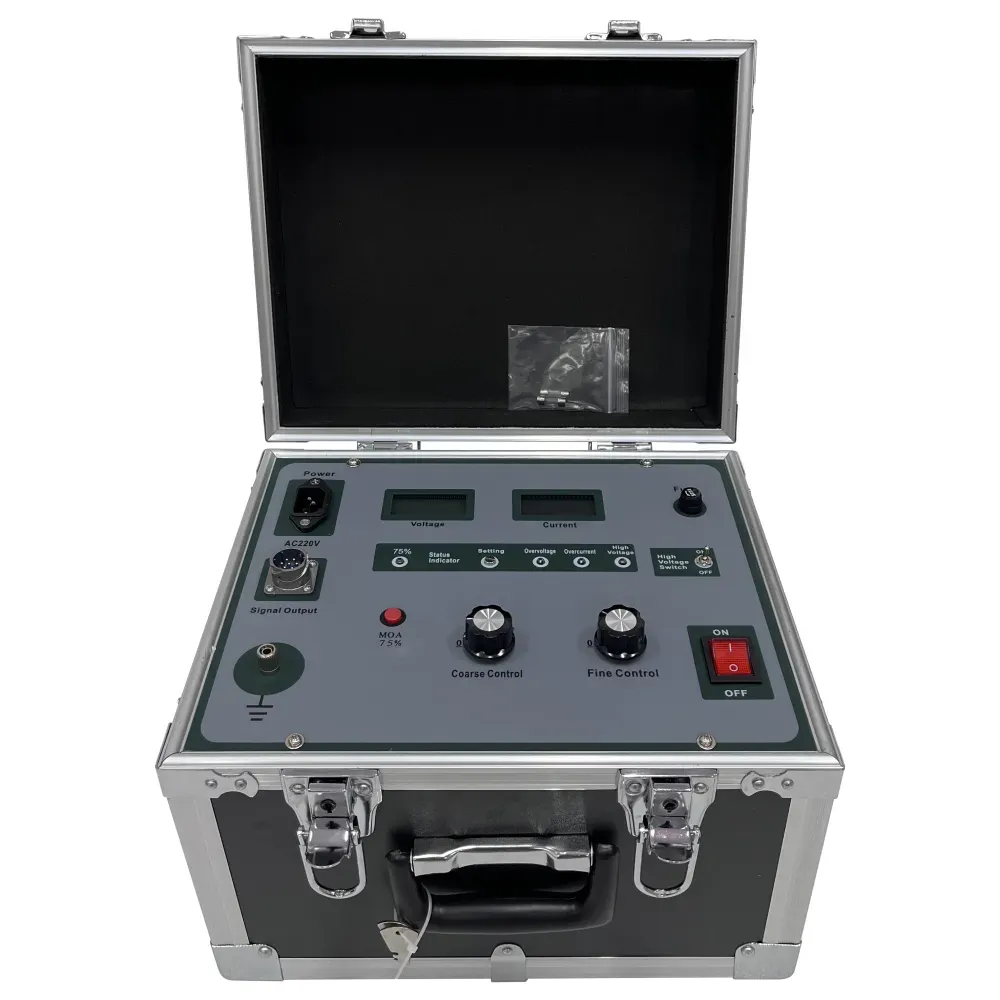
Ensuring Precision in High Potential Test for Cable with Calibrated Equipment
Accurate high potential test for cable systems rely on rigorously calibrated hipot testers to detect insulation weaknesses without overstressing components. For wholesale suppliers, offering pre-calibrated equipment ensures clients can immediately deploy tests for medium- or high-voltage cables, minimizing downtime.
Integrating hipot and insulation resistance tester functionalities into a single system streamlines workflows for large-scale projects. For example, combining DC hipot tests with insulation resistance measurements allows technicians to assess both dielectric strength and insulation degradation in one cycle. Wholesale providers should emphasize modular designs that support customization, such as adjustable voltage ranges or automated leakage current logging for DC hipot test acceptable leakage current monitoring.
Hipot and Insulation Resistance Tester Integration for Comprehensive Diagnostics
Modern hipot and insulation resistance testers are indispensable for bulk cable manufacturers and utility providers. These devices validate insulation integrity under stress while measuring resistance values. For wholesale clients, systems with dual-test capabilities reduce equipment costs and simplify training—key selling points for enterprises managing sprawling electrical networks.
When paired with VLF testers, these tools offer a holistic view of cable health. Very Low Frequency (VLF) testing replicates real-world AC stress on aged cables, while hipot testers evaluate immediate dielectric performance. Wholesale bundles that include both hipot testers and VLF testers cater to industries like renewable energy, where underground and submarine cables require frequent diagnostics. Highlighting compliance with ASTM D3032 or CENELEC HD 620 standards can further reassure bulk buyers of regulatory adherence.
Optimizing VLF Tester Performance in High-Voltage Environments
VLF testers are critical for aging infrastructure, but their accuracy hinges on proper calibration. Wholesale suppliers should prioritize units with self-diagnostic features, such as automatic waveform analysis or temperature compensation. For example, a 35 kV VLF tester used in substation maintenance must deliver stable outputs even in humid conditions—a common demand in bulk procurement contracts.
Calibration protocols for VLF testers should align with ISO/IEC 17025 guidelines, ensuring traceability for audits. Bulk buyers often seek turnkey solutions, including calibration certificates and on-site training. Emphasize scalability: modular VLF testers that support add-ons like partial discharge sensors or dc hipot test acceptable leakage current modules provide long-term value for growing enterprises.
Setting Thresholds for DC Hipot Test Acceptable Leakage Current in Bulk Operations
Determining dc hipot test acceptable leakage current limits is vital for safety and compliance.Wholesale hipot testers with programmable current limits enable clients to align tests with regional regulations or project-specific criteria.
Advanced models feature real-time leakage current graphing, helping technicians identify trends like gradual insulation breakdown. For high-volume users, such as data center developers, automated reporting tools reduce administrative overhead. Highlighting fail-safes—such as auto-shutdown upon exceeding DC hipot test acceptable leakage current thresholds—strengthens your value proposition for risk-averse industries.
FAQs about Hipot Tester
How often should hipot testers be calibrated in bulk industrial use?
Change according to the usage rate environment.
Can hipot and insulation resistance testers be used on the same cable simultaneously?
Yes,integrated systems allow sequential testing without reconnecting cables, ideal for large-scale diagnostics.
What distinguishes VLF testers from standard AC hipot testers?
VLF testers apply lower frequencies to minimize capacitive losses, making them suited for long underground cables.
How is DC hipot test acceptable leakage current calculated for HV systems?
Thresholds depend on cable length and voltage.
Why opt for wholesale hipot tester bundles over individual units?
Bundles reduce costs, ensure compatibility, and simplify maintenance—critical for enterprises managing hundreds of test points.
-
Find the Best Loop Impedance Tester for Sale and Ensure Electrical SafetyNewsMar.31,2026
-
Comprehensive Guide to Loop Impedance Meter for Electrical SafetyNewsMar.28,2026
-
Understanding and Choosing a Line Impedance Tester for Optimal Network PerformanceNewsMar.26,2026
-
Comprehensive Guide to Line Earth Loop Impedance Test for Electrical SafetyNewsMar.24,2026
-
Comprehensive Guide to Fault Loop Impedance Meter and Electrical SafetyNewsMar.21,2026
-
Comprehensive Guide to External Loop Impedance Test for Electrical SafetyNewsMar.19,2026


