 English



TTR Tester: Accurate Transformer Turns Ratio Meter
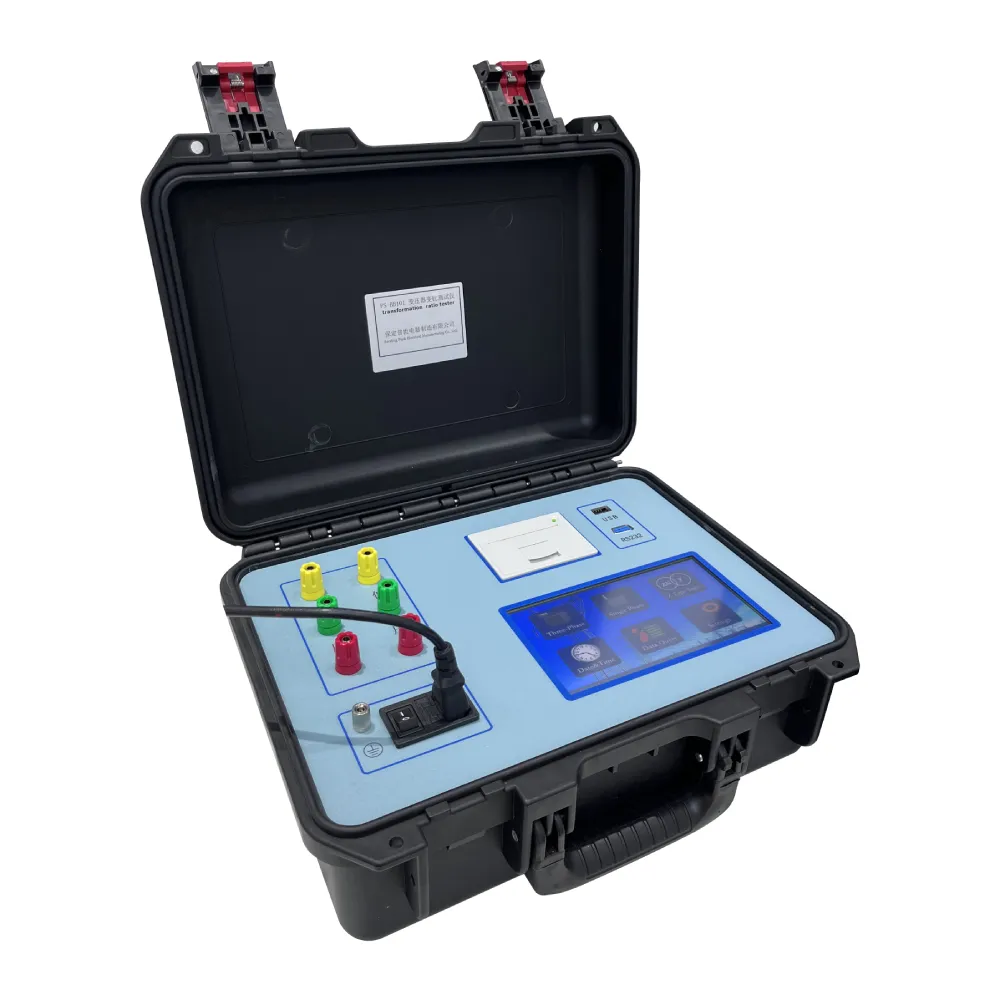
In the intricate world of electrical power systems, the reliability of transformers is paramount. A transformer's failure can lead to catastrophic outages and significant financial losses. At the heart of preventative maintenance lies the ttr test (Transformer Turns Ratio test), a crucial diagnostic procedure. This comprehensive guide delves into the world of the ttr tester, exploring everything from industry trends and technical parameters to the advanced capabilities of the PUSH electrical PS-BB103B Transformer Turns Ratio Tester.
Industry Trends: The Rising Demand for Precision TTR Electrical Testing
The global energy landscape is undergoing a massive transformation. The integration of renewable energy sources, the modernization of aging power grids, and the push towards predictive maintenance strategies have intensified the need for highly accurate and reliable diagnostic tools. The market for transformer monitoring systems, including the transformer turns ratio test set, is projected to grow significantly. Industry data suggests a CAGR of over 7% in the test and measurement equipment market, driven by grid infrastructure investments.
This growth is fueled by the understanding that a ttr test on transformer is one of the most effective methods to detect issues like shorted turns, open windings, incorrect winding connections, and problems with tap changers. Early detection of these faults prevents major failures, extends the transformer's lifespan, and ensures the stability of the entire power distribution network. The modern turns ratio meter is no longer just a measurement device; it's an intelligent tool with data logging, wireless connectivity, and analytical capabilities, aligning perfectly with Industry 4.0 principles.
Technical Deep Dive: Understanding the TTR Test of Transformer
The core function of a ttr transformer turns ratio test is to measure the ratio of the number of turns in the primary winding to that in the secondary winding. This ratio is a fundamental design characteristic of a transformer. The principle is straightforward: an AC voltage of a known value is applied to one winding (usually the high-voltage winding), and the induced voltage is measured across the other winding. The ratio of these voltages is approximately equal to the turns ratio.
A deviation from the nameplate turns ratio (typically beyond a ±0.5% tolerance as per IEEE C57.12.90 standards) indicates a potential problem. For instance, a lower-than-expected ratio might suggest shorted turns. The ttr test in transformer diagnostics is therefore a fundamental check performed during manufacturing, commissioning, and routine maintenance.
Key Parameters for a Modern Turns Ratio Tester
When selecting a transformer turns ratio meter, several technical parameters are critical for ensuring accurate and efficient testing. Here is a general comparison of what to look for in the market:
| Parameter | Typical Industry Standard | PUSH PS-BB103B Advantage | Why It Matters |
|---|---|---|---|
| Ratio Measurement Range | 0.9 - 10,000 | 0.8 - 20,000 (Wide Range) | Ensures compatibility with a vast array of transformers, from distribution to large power transformers. |
| Accuracy | ±0.2% to ±0.5% | Up to ±0.1% | High accuracy is critical for detecting subtle winding degradations and ensuring compliance with strict standards. |
| Test Voltage | 10V, 40V, 100V AC | Variable: 10V, 24V, 40V, 100V, 200V AC | Multiple voltage levels allow for safe and effective testing on different transformer sizes and types without core saturation. |
| Data Storage | 50-200 readings | >1000 test groups | Ample storage is essential for large-scale testing projects and maintaining historical data for trend analysis. |
| Display | Monochrome LCD | Large Color Touchscreen LCD | Provides a user-friendly interface, better data visualization, and easier operation in various lighting conditions. |
| Vector Group Detection | Limited or manual | Automatic Detection | Saves significant time and reduces human error by automatically identifying the transformer's winding configuration. |
| Interface | RS232 | USB, Bluetooth (Optional) | Modern interfaces facilitate easy data transfer to PCs for reporting and analysis. |
Manufacturing Excellence: The PUSH PS-BB103B Production Process
The reliability of a turns ratio tester is a direct reflection of its manufacturing quality. At PUSH electrical, we adhere to the most stringent quality control protocols, from raw material sourcing to final calibration. Our process ensures that every PS-BB103B unit delivers unparalleled accuracy and durability in the field.
Manufacturing & Quality Control Flowchart
Component Sourcing
Sourcing of high-grade electronic components and premium ABS+PC composite for the rugged, impact-resistant casing.
Precision CNC Machining
CNC machining for internal frames and terminal blocks ensures perfect alignment and robust connections. Brass terminals for superior conductivity and corrosion resistance.
PCB Assembly & Soldering
Automated SMT assembly for Printed Circuit Boards (PCBs) followed by rigorous inspection to ensure flawless circuitry, the brain of the ttr tester.
Calibration & ISO 9001 Compliance
Multi-point calibration against traceable national standards. The entire process is certified under the ISO 9001 quality management system.
Final Assembly & Testing
Final assembly, firmware installation, and a comprehensive suite of functional tests, including extreme temperature and vibration checks, simulating harsh field conditions.
Key Attributes of the PS-BB103B:
- Material Excellence: The enclosure is made from a high-strength ABS+PC polymer blend, offering superior protection against drops and environmental exposure. Terminals are crafted from high-conductivity, corrosion-resistant brass.
- Manufacturing Craftsmanship: The core structure relies on precision CNC machining for a perfect fit, enhancing the device's longevity. Our PCB manufacturing uses advanced surface-mount technology (SMT) for maximum reliability.
- Detection Standards: Every unit is calibrated to exceed the requirements of IEEE C57.12.90 and manufactured in an ISO 9001:2015 certified facility.
- Expected Lifespan: Designed for a service life of over 10 years with proper care and periodic calibration.
- Applicable Industries: Power utilities, transformer manufacturers, petrochemical plants, metallurgical facilities, railway electrical systems, and industrial maintenance service providers.
- Application Advantage: The portable, battery-powered design and high noise immunity make it ideal for challenging substation environments, ensuring quick and accurate ttr electrical testing without needing a power outlet. Its high efficiency reduces testing time, leading to significant operational savings.
Competitive Landscape: PUSH PS-BB103B vs. The Market
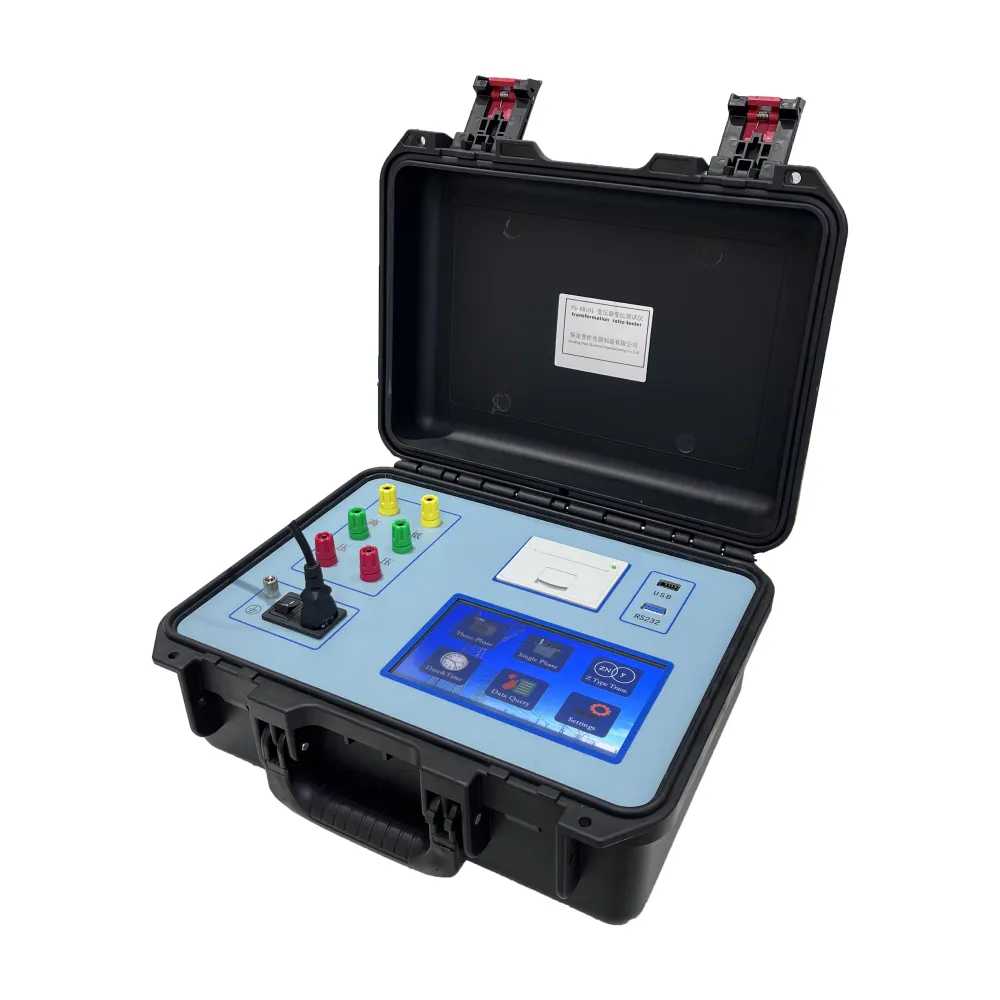
While several brands offer a transformer turns ratio test set, the PUSH electrical PS-BB103B is engineered to provide a superior combination of performance, durability, and value. Below is a comparative analysis highlighting its key advantages.
Feature Comparison: PS-BB103B vs. Generic TTR Tester
PS-BB103B Application by Industry
Customized Solutions and Application Cases
We understand that every testing scenario is unique. While the PS-BB103B is a comprehensive solution, we offer consultation to ensure it meets your specific needs. This includes providing specialized test lead sets for unique transformer terminal configurations and offering extended software support for integration into existing asset management systems.
Application Case Study 1: Utility Company Enhances Predictive Maintenance
Challenge: The utility was experiencing an increasing number of unexpected transformer failures in its aging distribution network. Their existing maintenance was reactive, and their older testing equipment was slow and lacked data logging capabilities.
Solution: They implemented a new predictive maintenance program centered around the PS-BB103B ttr tester. The device's speed, high accuracy, and large data storage allowed their field crews to test more transformers per day and build a historical database. During a routine ttr test of power transformer, the PS-BB103B detected a 1.2% ratio deviation on a critical 138kV unit, well outside the 0.5% tolerance. This deviation was not detectable with their older equipment.
Outcome: The early detection prompted further investigation, which revealed incipient inter-turn shorting. The transformer was scheduled for repair instead of failing catastrophically, saving an estimated $1.5 million in replacement costs and preventing a major power outage. The utility reported a 30% increase in testing efficiency and a significant reduction in unplanned downtime.
Application Case Study 2: Transformer Manufacturer Improves Quality Control
Challenge: A manufacturer of specialized transformers for the metallurgical industry needed to guarantee that every unit met extremely tight turns ratio specifications. Manual testing was prone to errors and a bottleneck in their production line.
Solution: The PS-BB103B was integrated into their final quality control (QC) station. Its automatic vector group detection and high-precision (±0.1%) measurement mode provided the certainty they needed. The ability to quickly save and export test reports with a unique serial number for each transformer streamlined their documentation process for ISO 9001 audits.
Outcome: The manufacturer reduced their final testing time per unit by over 50%. Customer rejections due to ratio errors dropped to zero within the first six months of implementation. The detailed reports provided by the transformer turns ratio meter enhanced customer trust and served as a valuable quality certificate for each product shipped.
Building Trust: Our Commitment to Quality and Support
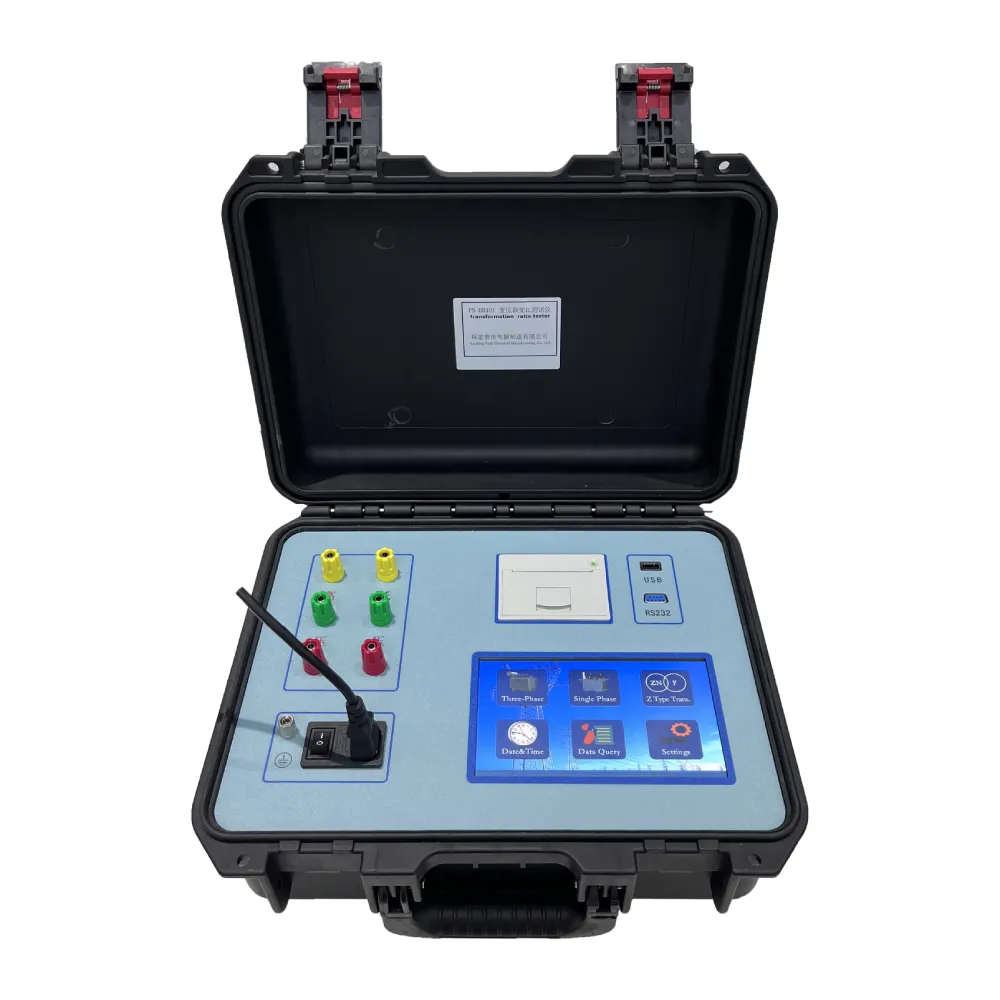
Choosing PUSH electrical means investing in a partnership built on trust, reliability, and unparalleled customer support. We stand behind our products with robust guarantees and services.
Comprehensive Warranty
The PS-BB103B comes with a comprehensive 3-year manufacturer's warranty covering any defects in materials or workmanship.
Guaranteed Delivery Cycle
We maintain a streamlined supply chain, ensuring a standard delivery cycle of 7-10 business days for most regions worldwide.
Lifetime Technical Support
Our team of expert engineers is available for lifetime technical support, assisting with application questions, data interpretation, and troubleshooting.
Frequently Asked Questions (FAQ)
A TTR tester, or Transformer Turns Ratio tester, measures the ratio of turns between the primary and secondary windings of a transformer. This is a critical diagnostic test because the turns ratio is a fundamental design parameter. An incorrect ratio can indicate serious problems like shorted turns, open windings, or incorrect tap changer positions, which can lead to transformer failure. Regular ttr tests are essential for quality control, commissioning, and predictive maintenance.
The PUSH PS-BB103B is built for toughness. Its outer casing is constructed from a high-impact ABS+PC (Acrylonitrile Butadiene Styrene + Polycarbonate) polymer blend, which provides excellent resistance to physical shock and a wide range of temperatures. The critical test lead terminals are made from high-conductivity, corrosion-resistant brass to ensure reliable connections and long service life, even in humid or industrial atmospheres.
The PUSH PS-BB103B is designed and calibrated to meet and exceed the specifications outlined in IEEE C57.12.90 - IEEE Standard Test Code for Liquid-Immersed Distribution, Power, and Regulating Transformers. This is the globally recognized standard for transformer testing procedures, including the turns ratio test. Furthermore, our manufacturing facility operates under a strict ISO 9001:2015 certified quality management system, ensuring consistency and quality in every unit produced.
The variable test voltage is a crucial feature. A lower voltage (e.g., 10V) is typically used for testing current transformers (CTs) or potential transformers (PTs) to avoid core saturation and potential damage. Higher voltages (e.g., 100V, 200V) are used for distribution and power transformers to provide a stronger signal, which improves the signal-to-noise ratio and ensures more accurate and stable readings, especially in high-interference environments like substations. The PS-BB103B's wide range of selectable voltages makes it a highly versatile tool.
The PS-BB103B is specifically designed to test transformers with tap changers. The user can perform a test on each tap position sequentially. The device measures the ratio for each tap and calculates the percentage deviation from the nominal ratio. This allows technicians to verify the correct operation of the tap changer mechanism and identify issues such as contact wear or incorrect connections across the entire operating range of the transformer.
We offer a standard global delivery cycle of 7-10 business days, facilitated by our efficient logistics partners. Every PUSH PS-BB103B transformer turns ratio tester comes with a comprehensive 3-year warranty against any manufacturing defects. We also provide dedicated post-warranty service and calibration options to ensure your investment is protected for its entire service life.
Absolutely. The PS-BB103B is equipped with a USB port for easy data transfer. It can store over 1000 groups of test data internally. This data can be downloaded to a PC using our complimentary software. The software allows you to generate professional test reports, archive results for historical trend analysis, and export the data in common formats like CSV or PDF for use with other asset management platforms.
Authoritative References & Further Reading
Our commitment to expertise is grounded in established industry knowledge. For those looking to deepen their understanding of transformer diagnostics, we recommend the following resources:
- "A review of transformer condition monitoring," IEEE Transactions on Power Delivery. This journal often features articles on the latest diagnostic techniques, reinforcing the importance of fundamental tests like the TTR. Visit IEEE Power Delivery Journal
- Electrical Engineering Portal (EEP): "The fundamentals of transformer turns ratio (TTR) testing." An excellent online resource that provides practical guides and technical articles on electrical testing. Read on EEP
- CIGRÉ Technical Brochures: CIGRÉ is a leading global community for power systems expertise. Their publications on transformers often discuss the role of ratio measurements in lifetime assessment. A relevant search on their e-library can provide in-depth analysis. Explore CIGRÉ e-library
-
Find the Best Loop Impedance Tester for Sale and Ensure Electrical SafetyNewsMar.31,2026
-
Comprehensive Guide to Loop Impedance Meter for Electrical SafetyNewsMar.28,2026
-
Understanding and Choosing a Line Impedance Tester for Optimal Network PerformanceNewsMar.26,2026
-
Comprehensive Guide to Line Earth Loop Impedance Test for Electrical SafetyNewsMar.24,2026
-
Comprehensive Guide to Fault Loop Impedance Meter and Electrical SafetyNewsMar.21,2026
-
Comprehensive Guide to External Loop Impedance Test for Electrical SafetyNewsMar.19,2026


