 English



Transformer Capacitance & Tan Delta Test Kit | Accurate & Reliable
Industry Trends in Transformer Diagnostics
Key industry trends include:
- Digitalization and IoT Integration: The adoption of smart sensors and IoT platforms allows for real-time monitoring and data analytics, enhancing the efficacy of diagnostic tests. Future tan delta system will likely integrate more seamlessly with SCADA systems.
- Aging Infrastructure: A significant portion of the world's transformer fleet is aging, necessitating more frequent and sophisticated diagnostic testing to prevent catastrophic failures. The tan delta test is crucial for identifying early signs of insulation degradation.
- Sustainability and Efficiency: Optimizing asset performance and extending lifespan through robust testing practices contributes to sustainability goals by reducing the need for premature replacements and improving grid efficiency. Accurate dielectric loss test results help in this.
- Standardization and Compliance: Increased emphasis on international standards (e.g., IEC 60076, IEEE C57.12.90) for testing and maintenance ensures uniformity and reliability across different regions.
Understanding Capacitance and Tan Delta: Technical Parameters
* Capacitance (C): In a transformer, the insulation system forms a capacitor. The capacitance measurement reflects the physical condition of the insulation, including its geometry and the presence of any shorted turns or significant displacement of active parts. A significant change in capacitance over time can indicate severe insulation deterioration or mechanical issues.
* Tan Delta (δ) or Dissipation Factor (DF): Also known as the dielectric loss factor, tan delta is the tangent of the dielectric loss angle. It quantifies the energy dissipated as heat within the insulation when an AC voltage is applied. In an ideal capacitor, there would be no energy loss, and the current would lead the voltage by exactly 90 degrees. However, in real insulation, some energy is lost due to leakage currents, conduction, and polarization losses. The phase angle deviates from 90 degrees, and the tangent of this deviation (tan delta) provides a direct measure of the insulation's quality.
Tan delta of transformer values increase with insulation degradation, moisture content, and contamination. A high tan delta value signals potential issues that could lead to insulation breakdown. This is why the dielectric loss test is so critical. Similarly, the tan delta of CT (Current Transformers) is also a crucial diagnostic, indicating the health of instrument transformer insulation.
Typical Tan Delta Values for Transformer Insulation
| Insulation Condition | Typical Tan Delta (at 20°C, 50/60Hz) | Interpretation |
|---|---|---|
| New, Dry, and Clean | < 0.5% | Excellent insulation, minimal losses. |
| Good Condition, Slightly Aged | 0.5% - 1.5% | Acceptable, normal aging for in-service transformers. |
| Moderate Deterioration / Slight Moisture | 1.5% - 3.0% | Indicates some aging or moisture; warrants closer monitoring. |
| Significant Deterioration / High Moisture | > 3.0% - 5.0% | Insulation is compromised; requires immediate attention, potential drying or replacement. |
| Severe Deterioration / Breakdown Risk | > 5.0% | High risk of failure; immediate action required, possibly removal from service. |
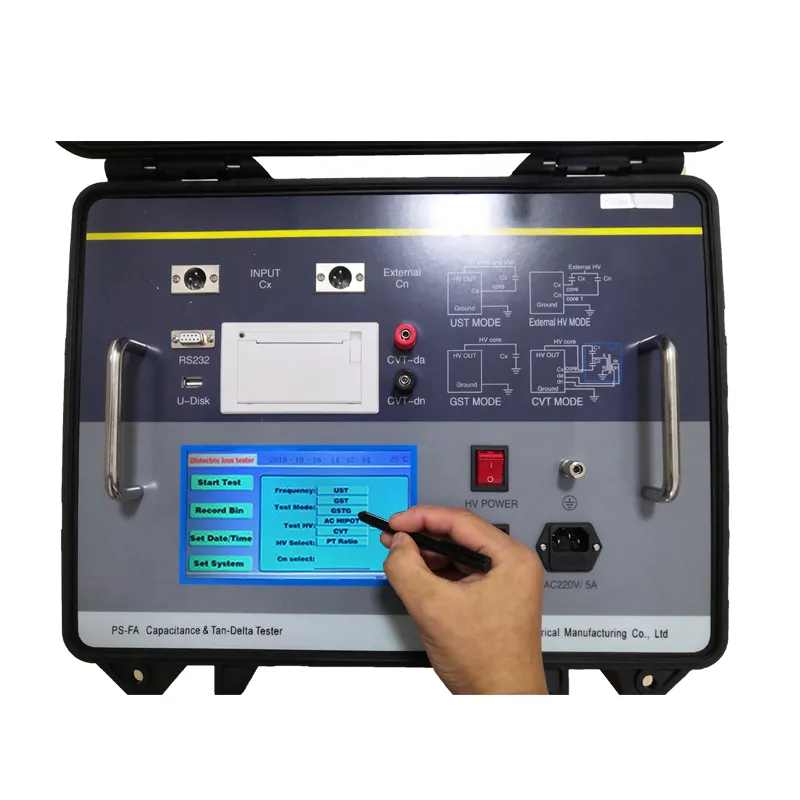
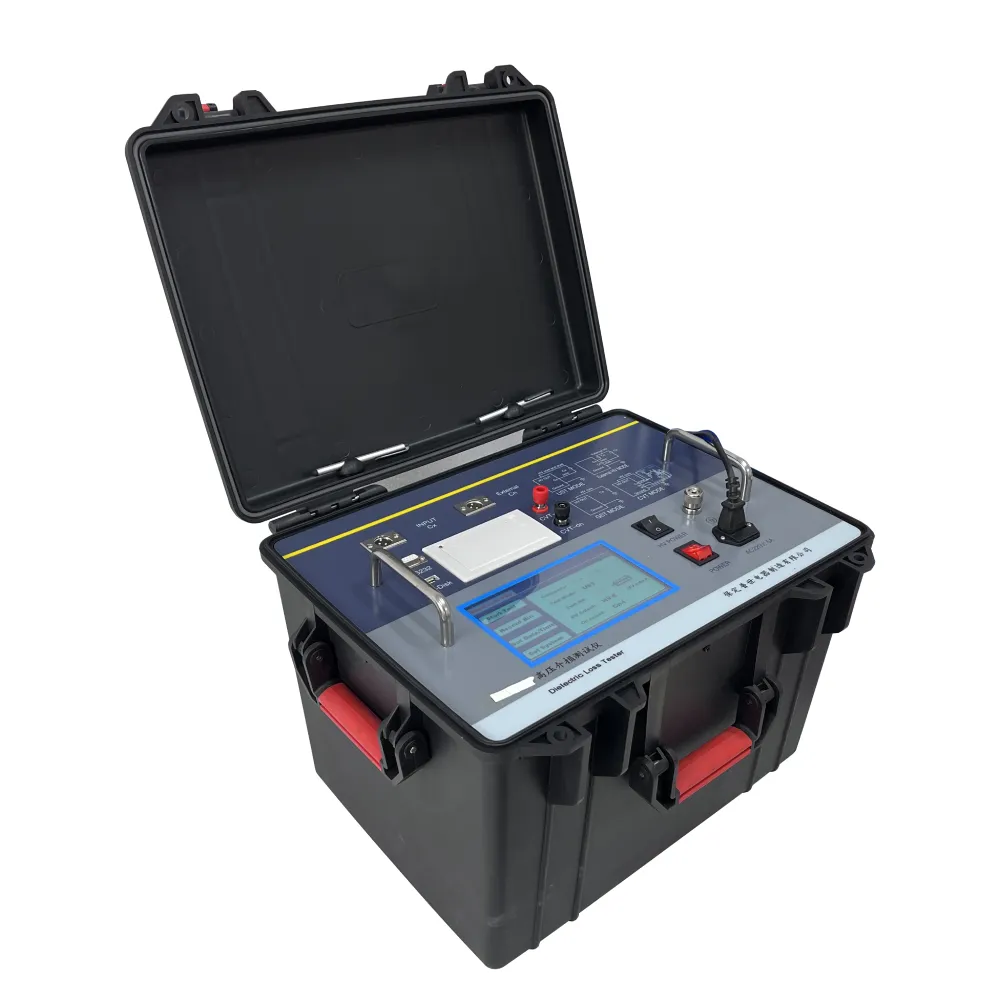
Introducing the PUSH Electrical PS-JSB01 Transformer Dielectric Loss Analysis Tan Delta Tester
The Process of Performing a Capacitance and Tan Delta Test
1. Safety First: Preparation and Isolation (Following IEEE 510/NFPA 70E)
- Ensure the transformer is de-energized, isolated from all power sources, and properly grounded. Apply lockout/tagout procedures.
- Clean the transformer bushings thoroughly to prevent surface leakage currents from affecting measurements.
- Connect the necessary cables from the tan delta test kit to the transformer terminals (high voltage, low voltage, and tank ground).
- UST (UnGrounded Specimen Test): Measures the dielectric loss of the insulation between the high-voltage winding and ground (tank/core). This is a common setup for insulation systems.
- GST (Grounded Specimen Test): Measures the dielectric loss of the insulation between high voltage and low voltage windings, where the low voltage winding is grounded.
- GSTg (Grounded Specimen Test with Guard): Utilizes a guard circuit to eliminate the effects of external leakage currents, ensuring only the insulation under test is measured, providing highly accurate results. This is crucial for precise dielectric loss test.
- Select the desired test voltage (e.g., 2.5 kV, 5 kV, 10 kV) as per international standards (e.g., IEC 60076-3 for insulation levels). The PS-JSB01 offers a wide AC voltage output range for flexibility.
- Initiate the test sequence. The PS-JSB01 automatically applies the test voltage, measures the current, voltage, and phase angle, and calculates the capacitance, tan delta, and power factor.
- The system is equipped with advanced anti-interference technology, allowing accurate measurements even in substations with strong electromagnetic fields.
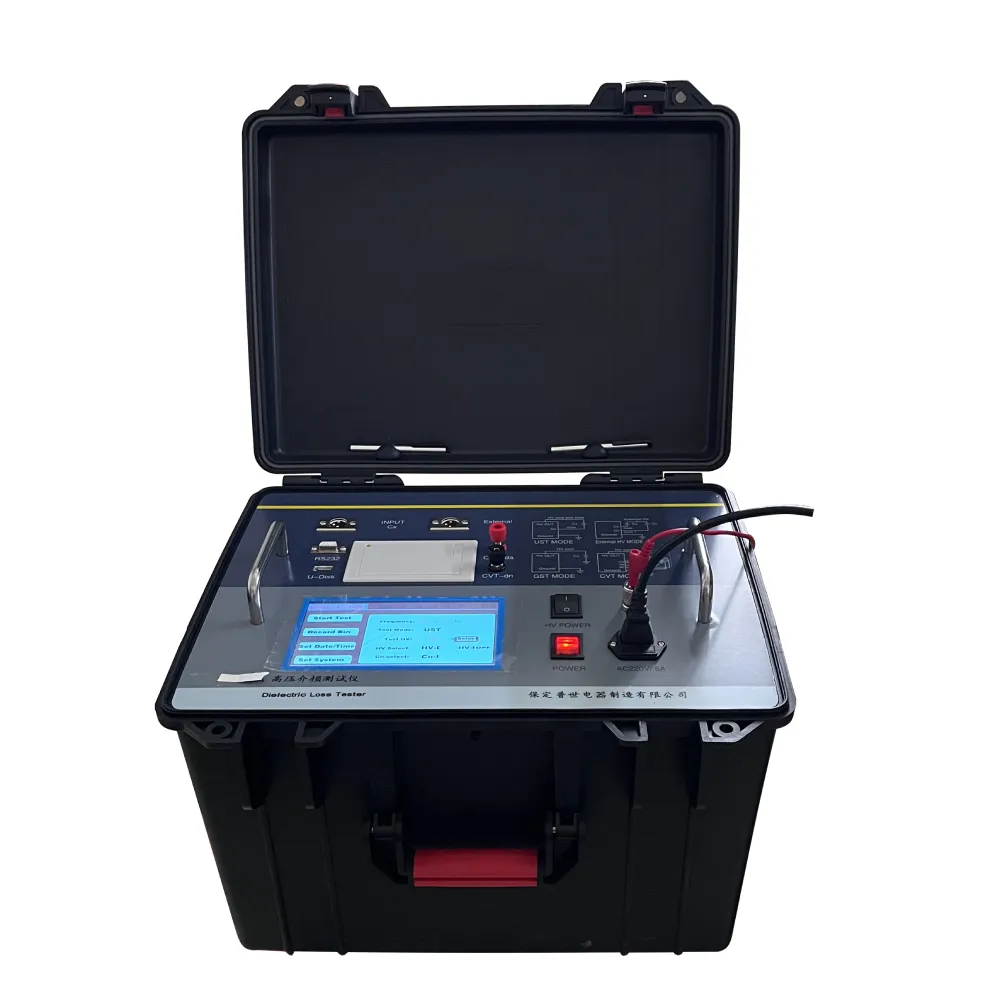
- The PS-JSB01 displays results instantly on its large LCD screen. Data can be stored internally and downloaded for further analysis.
- Compare the measured values with historical data and established industry standards (e.g., typically a tan delta increase of 50-100% from initial values is a cause for concern).
- Analyze trends over time. A consistent upward trend in tan delta indicates insulation degradation.
- Consider external factors like temperature (results should be corrected to 20°C for consistency) and humidity.
Technical Advantages of PUSH Electrical PS-JSB01
- High Precision and Accuracy: With a dielectric loss measurement accuracy of ±(reading×1%+0.0004), it provides exceptionally reliable data for critical insulation assessments. This level of precision is vital for subtle changes in dissipation factor dielectric.
- Wide Measurement Range: It boasts a capacitance measurement range of 3pF~60000pF and a dielectric loss range of 0.001%~100%, accommodating a broad spectrum of transformers and insulation conditions.
- Strong Anti-Interference Capability: Equipped with advanced frequency conversion technology and filtering algorithms, the PS-JSB01 can perform accurate measurements even in substations with high electromagnetic interference, ensuring reliable data acquisition in real-world scenarios.
- Automated Operation: The device features intelligent automation, including automatic boosting, automatic measurement, and automatic storage, significantly reducing testing time and human error.
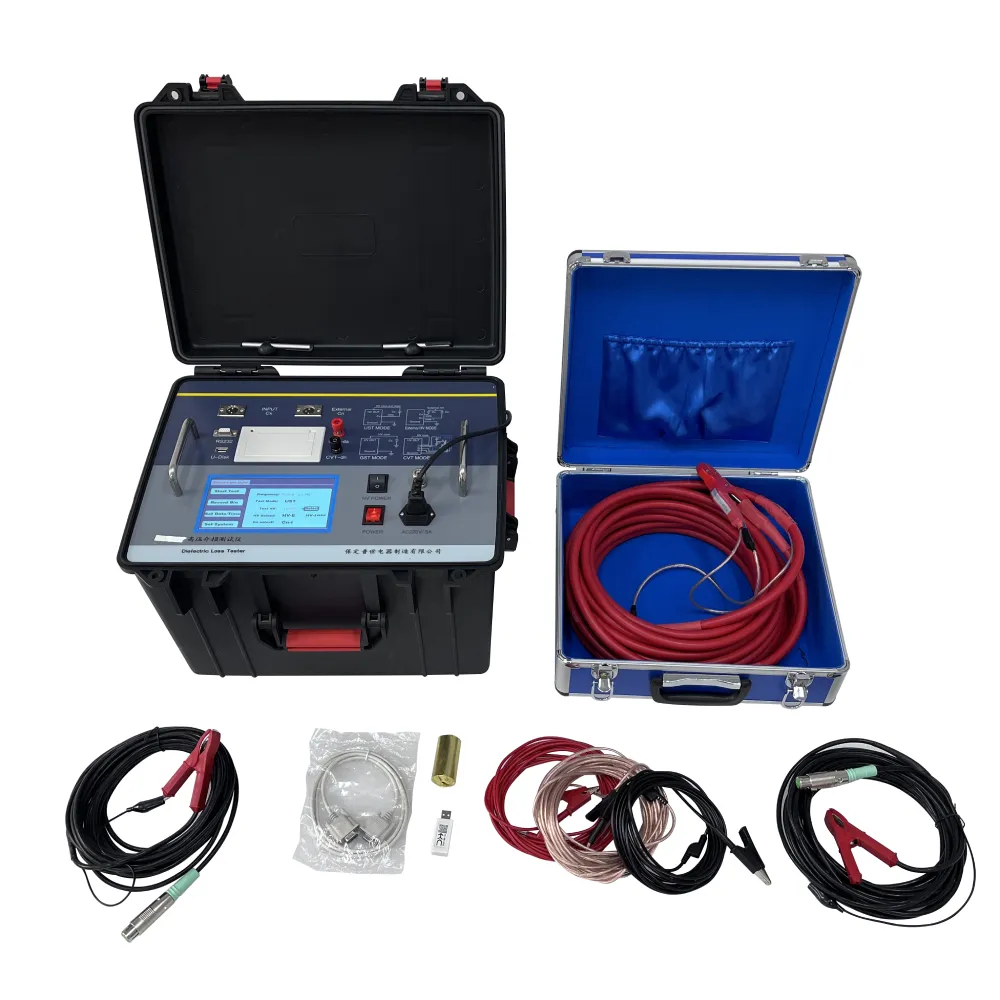
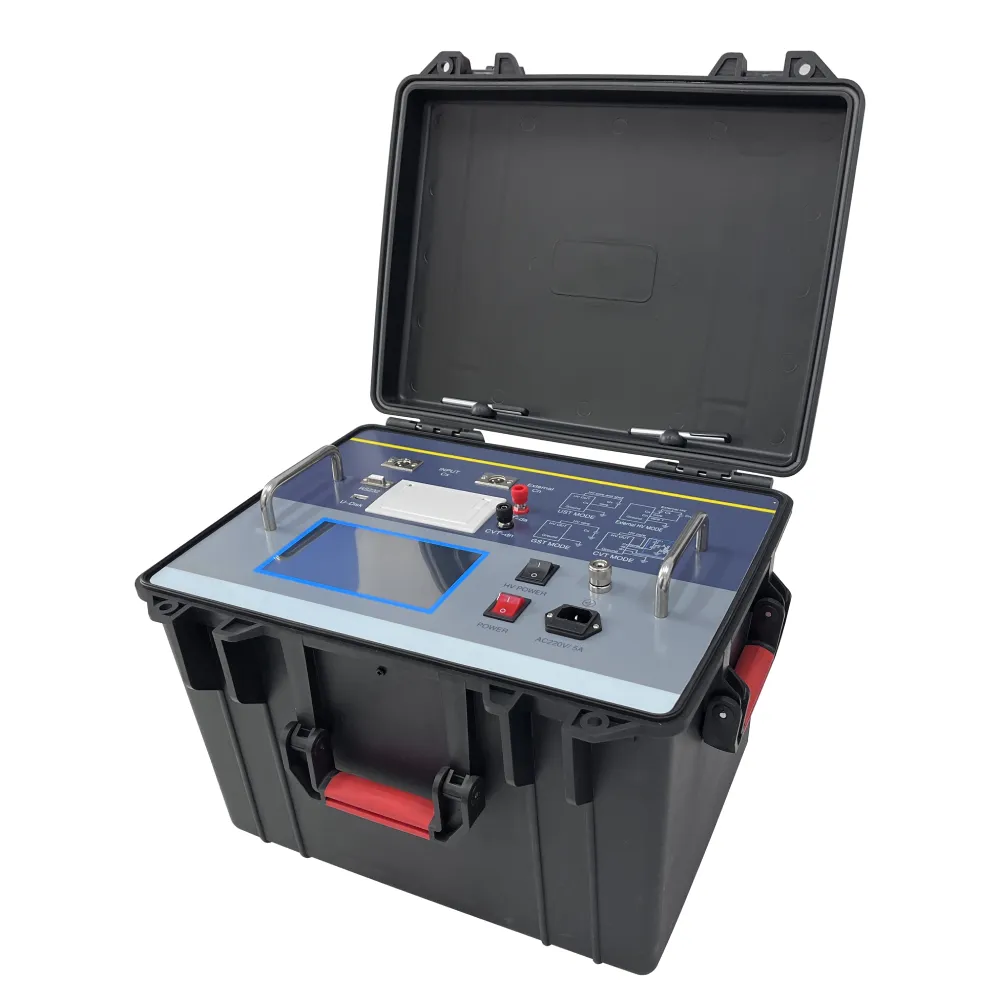
- Portability and Durability: Despite its powerful capabilities, the PS-JSB01 is designed for portability (approx. 20kg), housed in a robust case, making it suitable for field use. The manufacturing process for this device itself adheres to stringent quality controls, utilizing high-grade, durable materials. Key components undergo precision CNC machining to ensure exact tolerances, critical for consistent performance. The casing is often made of robust composite materials or high-strength aluminum, ensuring product longevity and resistance to environmental factors, which contributes to an extended use lifetime under typical industrial conditions.
- Multi-functional: Beyond just capacitance and tan delta test of transformer, it can also perform current testing, and voltage testing (AC and DC) for a comprehensive dielectric test assessment. It bridges the gap between traditional dc dielectric test and modern AC testing.
Manufacturer Comparison: PUSH Electrical vs. Competitors
Transformer Dielectric Loss Tester Comparison Table
| Feature/Parameter | PUSH Electrical PS-JSB01 | Competitor A (Premium) | Competitor B (Economy) |
|---|---|---|---|
| Dielectric Loss Accuracy | ±(reading×1%+0.0004) | ±(reading×1.5%+0.0005) | ±(reading×2.5%+0.001) |
| Capacitance Accuracy | ±(reading×1%+1pF) | ±(reading×1.5%+2pF) | ±(reading×2%+5pF) |
| Voltage Output Range (AC) | 0.5kV ~ 10kV (Up to 12kV optional) | 0.5kV ~ 10kV | 1kV ~ 10kV |
| Dielectric Loss Range | 0.001% ~ 100% | 0.005% ~ 50% | 0.01% ~ 30% |
| Frequency Output | 45Hz/55Hz (auto/manual), 50Hz, 60Hz, 45Hz~65Hz (variable) | 50Hz/60Hz only | 50Hz or 60Hz fixed |
| Anti-Interference | Dedicated frequency conversion technology, advanced filtering | Standard filtering | Limited filtering |
| Weight | Approx. 20 kg | Approx. 25 kg | Approx. 18 kg |
| Display | Large Color LCD Touchscreen | Monochrome LCD | Small Segment Display |
| Data Storage | Internal + USB Export | Internal only | Limited internal |
| Price Point | Competitive Premium | High Premium | Budget |
| Applicable Industries | Power Utilities, Petrochemical, Metallurgy, Water Supply & Drainage, Railways, Renewable Energy, Manufacturing | ||
| Manufacturing Process (PUSH Electrical) | ISO 9001 certified. High-grade industrial components, precision CNC machining for critical parts, stringent quality control, robust enclosure. Designed for long service life (>15 years with proper maintenance). | ||
Customization Solutions & Application Scenarios
- Integrated Test Systems: For large utilities, we can provide solutions that integrate the PS-JSB01 with other diagnostic tools, forming a holistic transformer health monitoring system.
- Software Integration: Customized software solutions for data management, trending analysis, and reporting, compatible with enterprise asset management (EAM) systems.
- On-site Training and Technical Support: Our experts provide thorough training on operation, data interpretation, and maintenance, ensuring your team is fully proficient. We also offer ongoing technical support and calibration services.
- Extended Warranty & Service Contracts: Tailored service agreements to provide peace of mind and maximize the operational lifespan of your investment.
- Power Utilities: Essential for routine diagnostic maintenance of power transformers, distribution transformers, and CT/PTs in substations to prevent unexpected outages and extend asset life.
- Industrial Plants (Petrochemical, Metallurgy, Manufacturing): Critical for ensuring the reliability of large industrial transformers that power continuous production processes, where downtime is extremely costly. Its robust design is well-suited for the demanding environments found in metallurgy and petrochemical facilities.
- Renewable Energy Installations: Testing transformers associated with solar farms, wind turbines, and hydroelectric plants to ensure stable power generation and grid integration.
- Railways and Transportation: Maintenance of traction transformers and substation transformers supporting railway electrification.
- Original Equipment Manufacturers (OEMs): For quality control and factory acceptance testing of new transformers before deployment.
Application Cases and Customer Experience
Case Study 1: Large Utility Transformer Fleet Assessment
A major national power utility, facing an aging fleet of large power transformers, needed a reliable and efficient way to assess insulation health. They deployed multiple PUSH Electrical PS-JSB01 units. Within six months, the utility identified 7 transformers with critically high tan delta of transformer values, indicating severe moisture contamination or insulation degradation. Proactive maintenance actions, including oil purification and insulation drying, were performed on these units, preventing potential failures that could have resulted in multi-million dollar damages and widespread outages. The PS-JSB01's ease of use and automated reporting significantly streamlined their assessment process.
Case Study 2: Industrial Petrochemical Complex
An international petrochemical complex, operating critical process transformers, sought to minimize unscheduled downtime. After integrating the PS-JSB01 into their preventative maintenance program, they were able to conduct regular dielectric loss test on their entire transformer fleet. Our customer reported: "The PUSH Electrical PS-JSB01 has become an indispensable tool for our plant. Its robust design holds up in our challenging environment, and the precise dissipation factor dielectric measurements have allowed us to pinpoint insulation issues before they escalate, saving us significant production losses and maintenance costs." This demonstrates the practical experience our customers have with the product.
Ensuring Trustworthiness: FAQ, Delivery, Warranty & Support
Q1: What is the normal operating temperature range for the PUSH Electrical PS-JSB01?
A1: The PS-JSB01 is designed to operate reliably in a wide temperature range, typically from -10°C to +50°C. For optimal performance and accuracy, it's recommended to store and operate the device within this range. Results should always be temperature-corrected to 20°C for consistency with industry standards.
Q2: How often should the PS-JSB01 be calibrated?
A2: We recommend annual calibration by PUSH Electrical or an authorized service center to ensure continued measurement accuracy and compliance with ISO/IEC 17025 standards. Regular calibration ensures the reliability of your capacitance and tan delta test of transformer results.
Q3: Can the PS-JSB01 perform tests on other high-voltage equipment besides transformers?
A3: Yes, while primarily designed for transformers, the PS-JSB01 is versatile enough to perform dielectric test and tan delta test on other high-voltage electrical apparatus such as circuit breakers, bushings, cables, and CTs/PTs (tan delta of CT) within its voltage and capacitance measurement ranges.
Q4: What safety features are incorporated into the PS-JSB01?
A4: The PS-JSB01 includes multiple safety features, such as overcurrent protection, overvoltage protection, short-circuit protection, grounding detection, emergency stop button, and an automatic discharge function after testing to ensure operator safety during high-voltage operations. It adheres to IEC 61010 safety standards.
Q5: What are the typical dimensions and weight for transport?
A5: The PUSH Electrical PS-JSB01 typically measures around 480mm × 360mm × 340mm (L×W×H) and weighs approximately 20kg, making it highly portable for field applications. It usually comes with a ruggedized carrying case.
Q6: Is on-site technical training available?
A6: Yes, PUSH Electrical offers comprehensive on-site technical training programs tailored to your team's needs, covering setup, operation, data interpretation, and basic troubleshooting of the PS-JSB01. This ensures your personnel gain the expertise needed for effective capacitance and tan delta test of transformer execution.
Q7: What is the difference between AC dielectric tester and DC dielectric test?
A7: An AC dielectric tester (like the PS-JSB01) applies alternating current to measure properties like capacitance, tan delta (dielectric loss factor), and power factor, which are crucial for assessing insulation quality under operational AC stress. A dc dielectric test (or insulation resistance test) applies direct current and primarily measures insulation resistance, indicating overall insulation health and detecting gross defects but not providing as much insight into aging or moisture as AC tests do. The dielectric resistance test is often a preliminary check, while dielectric loss test with AC is more diagnostic.
Delivery Cycle, Warranty & Customer Support
- Delivery Cycle: Standard delivery for the PUSH Electrical PS-JSB01 is typically 2-4 weeks after order confirmation, depending on customization requirements. Expedited shipping options are available upon request.
- Warranty: PUSH Electrical offers a standard 12-month warranty covering manufacturing defects and material faults. Extended warranty options are available for long-term peace of mind.
- Customer Support: Our dedicated customer support team and network of certified service partners are available to assist with technical queries, troubleshooting, and calibration services, ensuring maximum uptime and performance of your tan delta system. We maintain spare parts availability for at least 10 years after product discontinuation.
Data Visualization: Key Parameters for Capacitance and Tan Delta Testing
| Parameter | Unit | Significance / What it indicates | Typical Range (for a healthy transformer) |
|---|---|---|---|
| Capacitance (C) | pF (picofarads) | Reflects the physical integrity of the insulation structure. Changes indicate mechanical deformation, shorted turns, or severe insulation damage. | Within ±5% of factory test value; stable over time. |
| Tan Delta (Dissipation Factor) | % | Measures dielectric loss (energy dissipated as heat). High values indicate moisture ingress, aging, or contamination of insulation. | < 0.5% - 1.5% (at 20°C, depends on age/type) |
| Power Factor (PF) | % | Cosine of the phase angle between voltage and current. Numerically very close to Tan Delta for small loss angles (PF ≈ Tan Delta). Indicates overall insulation quality. | < 0.5% - 1.5% (at 20°C) |
| Test Voltage | kV | Applied voltage during the test. Typically varies from 0.5kV to 10kV or higher, as per standards (e.g., IEEE C57.12.90, IEC 60076). | Standardized test voltages (e.g., 2.5kV, 5kV, 10kV) |
| Test Frequency | Hz | Frequency of the applied AC voltage. Often 50 Hz or 60 Hz, but variable frequency (e.g., DFR) can provide more detailed spectral analysis. | 50 Hz / 60 Hz (standard), or variable (45-65Hz) |
| Insulation Resistance (IR) | MΩ (megaohms) | Measures resistance to DC current flow. Indicates overall insulation condition and gross defects (often done as a preliminary dielectric resistance test). | Hundreds of MΩ to GΩ (Gigaohms), depending on voltage. |
| Excitation Current | mA (milliamperes) | The current drawn by the transformer during the test. Abnormally high values can indicate core or winding issues. | Varies by transformer size; stable and within historical limits. |
By investing in advanced solutions like the PS-JSB01, utilities and industrial operators can transition from reactive fault repair to proactive, condition-based maintenance. This not only significantly reduces the risk of catastrophic failures and costly downtime but also optimizes asset performance, extends service life, and contributes to a more stable and efficient power supply. PUSH Electrical is committed to being your trusted partner in maintaining transformer health through innovative and reliable test solutions.
Further Reading & Industry Insights:
- For an in-depth understanding of dielectric response measurements, refer to: "Dielectric Response Measurements for Power Transformers - State of the Art" by the CIGRE Working Group A2.44.
(Link placeholder: https://www.cigre.org/publication/833-Dielectric-Response-Measurements-for-Power-Transformers-State-of-the-Art) - For practical application and interpretation of tan delta test results, explore discussions on professional forums like Eng-Tips forums, Electrical Engineering Community section.
(Link placeholder: https://www.eng-tips.com/threadminder.cfm?pid=794&fulltext=tan%20delta%20transformer) - Academic papers on advanced transformer diagnostics, such as "Diagnostic assessment of transformer insulation using dielectric dissipation factor measurement," can be found on platforms like IEEE Xplore.
(Link placeholder: https://ieeexplore.ieee.org/document/7389851)
-
Find the Best Loop Impedance Tester for Sale and Ensure Electrical SafetyNewsMar.31,2026
-
Comprehensive Guide to Loop Impedance Meter for Electrical SafetyNewsMar.28,2026
-
Understanding and Choosing a Line Impedance Tester for Optimal Network PerformanceNewsMar.26,2026
-
Comprehensive Guide to Line Earth Loop Impedance Test for Electrical SafetyNewsMar.24,2026
-
Comprehensive Guide to Fault Loop Impedance Meter and Electrical SafetyNewsMar.21,2026
-
Comprehensive Guide to External Loop Impedance Test for Electrical SafetyNewsMar.19,2026


