 English



Comprehensive Guide to Test Tan Delta Measurement and Dielectric Properties
Understanding Test Tan Delta: A Comprehensive Guide
The test tan delta, often abbreviated as tan δ, is a critical parameter in evaluating the dielectric properties of materials, especially polymers and insulation. It indicates the energy dissipation within a material when subjected to an alternating electric field. A low tan delta signifies minimal energy loss and is crucial for high-performance applications. This article will delve into the intricacies of tan delta, its significance in various industries, how it is measured, and how Push Tester provides advanced solutions for accurate measurements. Understanding this parameter is vital for ensuring the reliability and longevity of electrical components and systems.
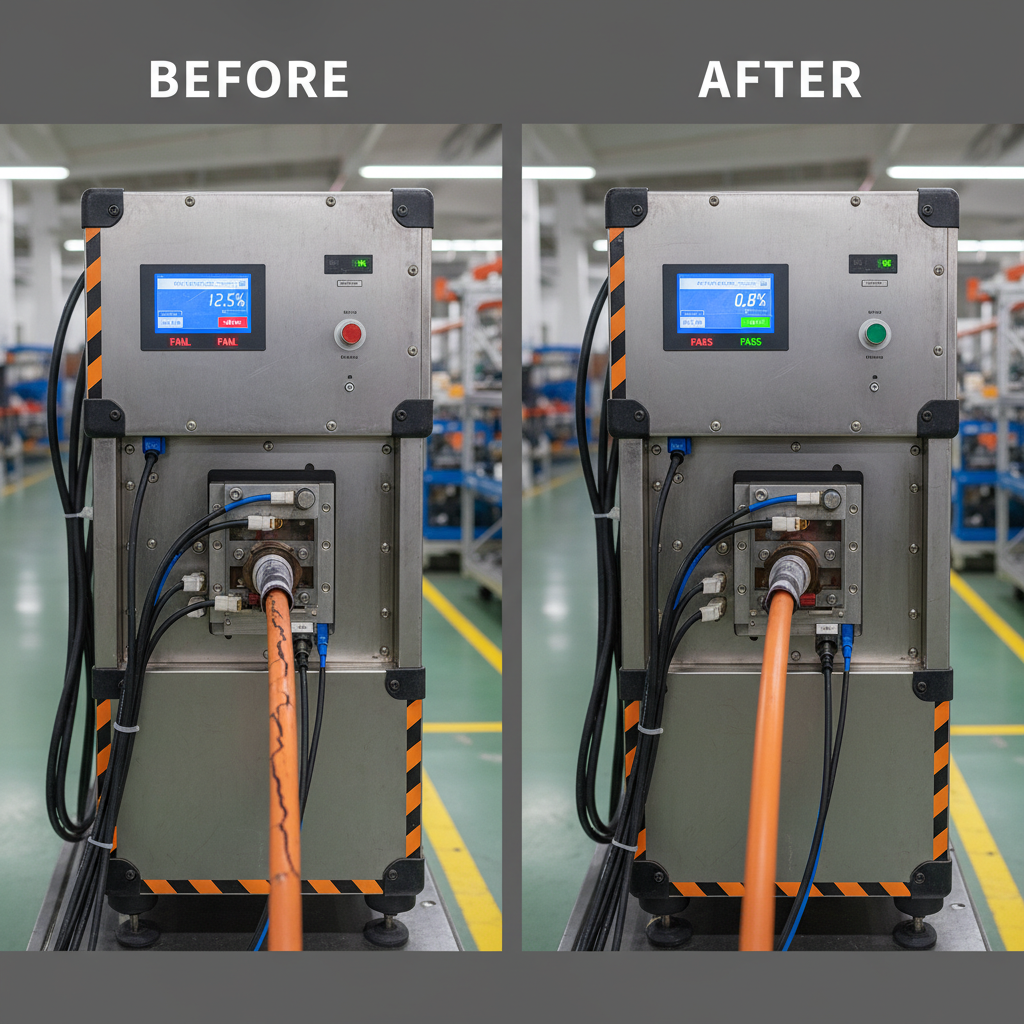
What is Test Tan Delta and Why Does it Matter?
Tan delta is the ratio of the imaginary part of a material's permittivity (representing energy loss) to the real part (representing energy storage). Essentially, it quantifies how much energy is ‘lost’ as heat within a dielectric material when an alternating voltage is applied. A low tan delta is highly desirable because it means the material is efficient at storing energy rather than dissipating it as heat. High tan delta values indicate significant energy loss, which can lead to overheating, reduced efficiency, and potential failure of components. This is particularly critical in high-voltage applications, power capacitors, and cable insulation.
Key Takeaway: A lower tan delta signifies less energy loss and better dielectric performance.
Factors Influencing Test Tan Delta
Several factors can influence a material’s tan delta value. These include temperature, frequency of the applied voltage, and the material’s composition. Temperature typically increases tan delta, as increased molecular motion leads to greater energy dissipation. Similarly, tan delta often rises with increasing frequency, as the material struggles to keep up with the rapidly changing electric field. The type of polymer, the presence of impurities, and the moisture content also play significant roles. Careful control of these factors is essential during tan delta measurements.
Influencing Factors:
• Temperature
• Frequency
• Material Composition
• Moisture Content
Applications of Test Tan Delta Measurement
The measurement of test tan delta is vital across a broad spectrum of industries. In the power industry, it’s used to assess the condition of transformers, cables, and switchgear, predicting potential failures before they occur. In capacitor manufacturing, tan delta is a crucial quality control parameter. For polymers, it helps characterize material properties and optimize formulations for specific applications. Furthermore, it’s essential in research and development for new dielectric materials. Accurate tan delta measurements help ensure the reliability, safety, and efficiency of electrical equipment and systems.
Measuring Test Tan Delta: Techniques and Instrumentation
Traditionally, tan delta is measured using impedance analyzers or LCR meters. These instruments apply an AC voltage to the material and measure the resulting current, allowing the calculation of impedance, capacitance, and tan delta. However, these methods can be slow and require specialized expertise. Push Tester offers innovative, automated tan delta measurement systems designed for faster, more accurate, and user-friendly results. Our instruments provide precise control of test parameters and advanced data analysis capabilities.
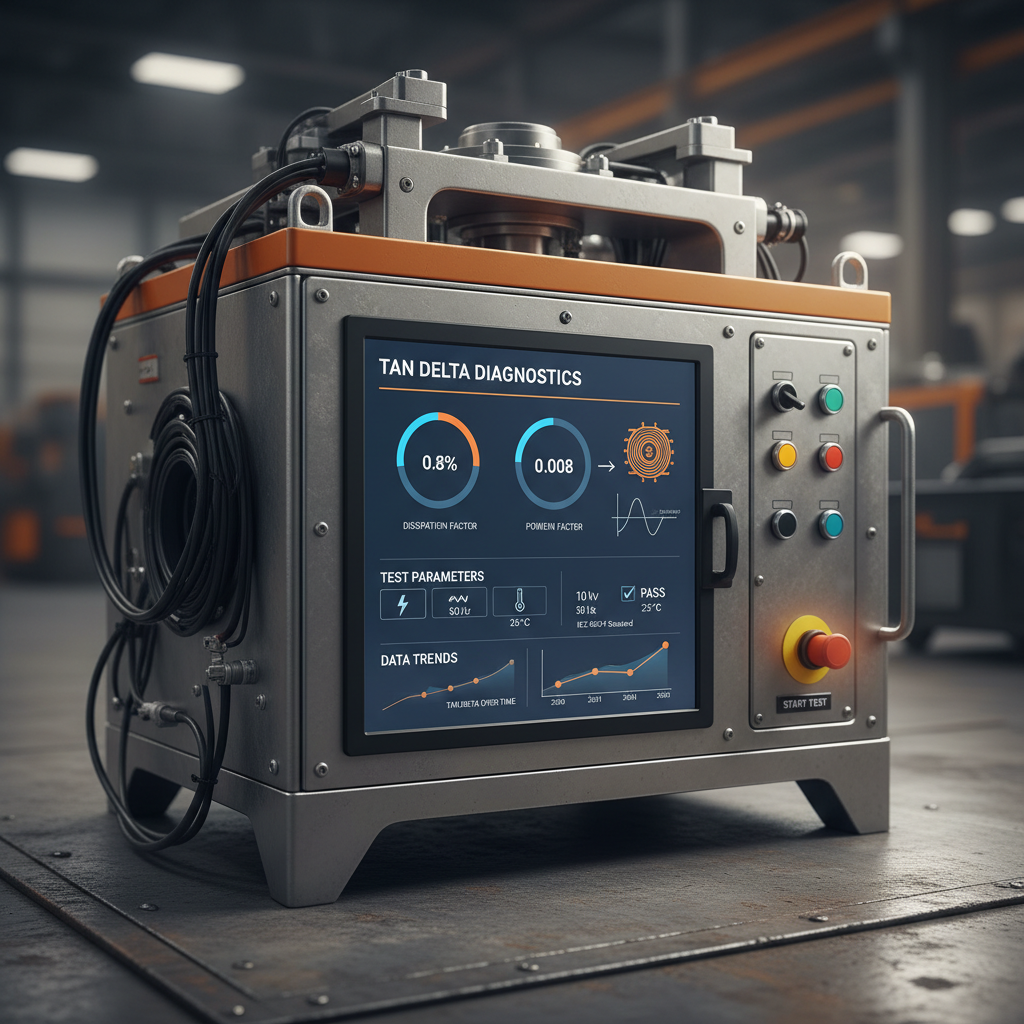
Push Tester’s Solutions for Accurate Tan Delta Measurements
At Push Tester, we specialize in providing cutting-edge solutions for dielectric property measurement. Our systems incorporate advanced signal processing and automated algorithms to deliver highly reliable tan delta data. We offer a range of instruments suitable for various applications, from laboratory research to industrial quality control. We are committed to providing our customers with the tools they need to ensure the quality and reliability of their products. Contact us today to learn more about our tan delta measurement solutions.
Conclusion: The Importance of Tan Delta Measurement
Accurate test tan delta measurements are essential for ensuring the performance, reliability, and safety of electrical systems and materials. By understanding the factors that influence tan delta and utilizing advanced measurement techniques offered by Push Tester, industries can effectively monitor the condition of their assets, optimize material formulations, and prevent costly failures.
Frequently Asked Questions (FAQs)
What is a 'good' tan delta value?
A 'good' tan delta value depends heavily on the material and application. Generally, a lower value is better, indicating less energy dissipation. For many polymers, a tan delta below 0.02 is considered excellent. However, acceptable ranges vary. For instance, power capacitors typically aim for very low tan delta values (e.g., below 0.001%). It’s important to establish baseline values for a specific material under known conditions and monitor changes over time. Comparing to manufacturer’s specifications is also crucial.
How does frequency affect tan delta measurements?
Tan delta is frequency-dependent. As the frequency of the applied AC voltage increases, the tan delta often increases. This is because the material’s polarization mechanisms may not be able to keep up with the rapidly changing electric field, leading to increased energy dissipation. Therefore, it's essential to specify the test frequency when reporting tan delta values. Standard test frequencies are often used for comparison, such as 1 kHz or 1 MHz.
What types of samples can be tested with Push Tester's equipment?
Push Tester’s equipment can accommodate a wide range of sample types, including solid polymers, films, liquids, and powders. Different sample holders are available to suit various geometries and sizes. We offer solutions for both laboratory samples and larger-scale industrial components. Our team can also provide guidance on selecting the appropriate sample preparation and measurement techniques for specific materials. You can find more details about our sample handling capabilities on the Push Tester website.
What are the common causes of high tan delta values?
Common causes of high tan delta values include impurities within the material, excessive moisture absorption, and degradation of the polymer structure. Also, the presence of ionic contaminants can contribute to increased energy dissipation. High tan delta can also indicate incomplete polymerization or improper curing of the material. Careful material selection, proper processing techniques, and adequate environmental control are crucial for minimizing tan delta.
-
Find the Best Loop Impedance Tester for Sale and Ensure Electrical SafetyNewsMar.31,2026
-
Comprehensive Guide to Loop Impedance Meter for Electrical SafetyNewsMar.28,2026
-
Understanding and Choosing a Line Impedance Tester for Optimal Network PerformanceNewsMar.26,2026
-
Comprehensive Guide to Line Earth Loop Impedance Test for Electrical SafetyNewsMar.24,2026
-
Comprehensive Guide to Fault Loop Impedance Meter and Electrical SafetyNewsMar.21,2026
-
Comprehensive Guide to External Loop Impedance Test for Electrical SafetyNewsMar.19,2026


