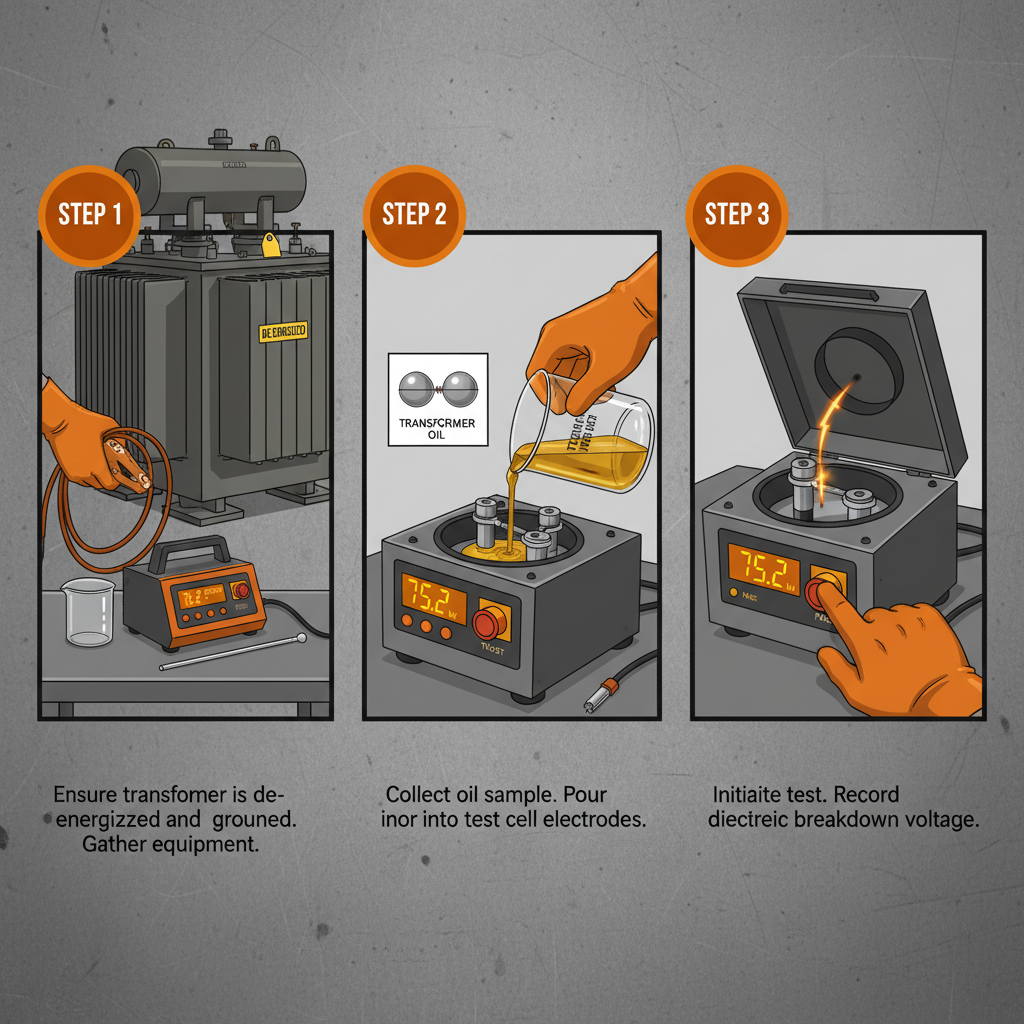
Look, oil analysis equipment… it's not glamorous, right? But after years crawling around refineries and power plants, I'll tell you, it’s the difference between a smooth operation and a multi-million dollar shutdown. Everyone's talking about predictive maintenance these days. It’s the buzzword, you know? But predictive maintenance is nothing without getting a good read on your oil. We’re not just talking about changing the oil when the light comes on anymore, it’s about understanding what the oil is telling you before something catastrophic happens.
Honestly, seeing the stuff people try to get away with is… something. I was at a paper mill in Georgia last month, and they were still relying on visual inspections! Visual inspections! Can you believe it? Just looking at the color and sniffing it. Like some kind of oil sommelier. It works, maybe, until it doesn't. And when it doesn’t, it’s a messy, expensive problem.
It's moved so far beyond just dipsticks, you wouldn’t recognize it. The new equipment isn't just looking for metal particles, it's looking at everything – water content, acidity, oxidation… even the specific types of wear metals. Tells you a whole story, it does.
Understanding the Evolution of Oil Analysis Equipment
To be honest, it started with guys smelling and looking. Then came basic viscosity tests. Now? We’re talking about spectrometers, ferrography… stuff that used to be science fiction. I remember seeing one of the first portable units. It was the size of a suitcase and weighed a ton. Nowadays, you’ve got handheld devices giving you detailed reports in minutes. The miniaturization and the speed are incredible.
The biggest shift, I think, is the software. It's not just about collecting the data, it's about interpreting it. These systems now use algorithms and machine learning to predict failures with impressive accuracy. But, and this is a big but, it still relies on getting a good sample. Garbage in, garbage out, right?
Key Components and Their Practical Application
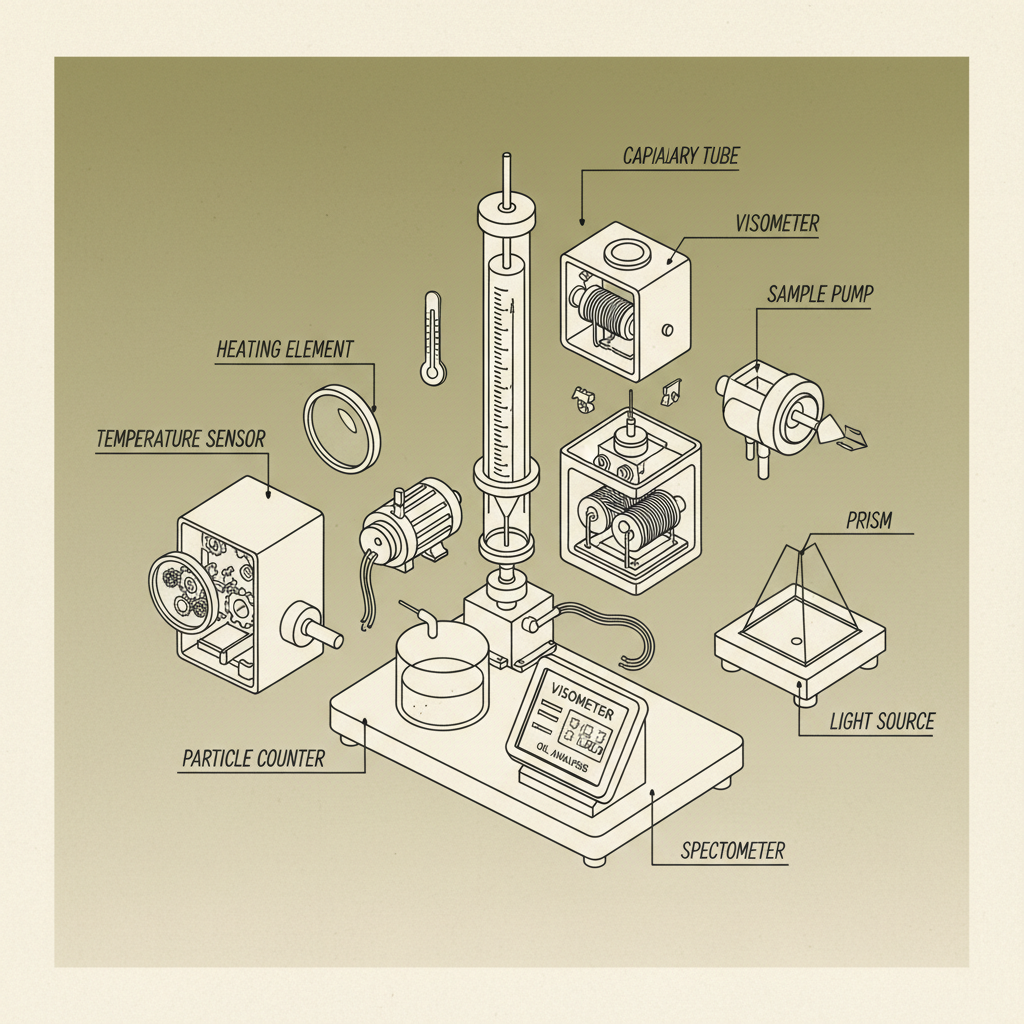
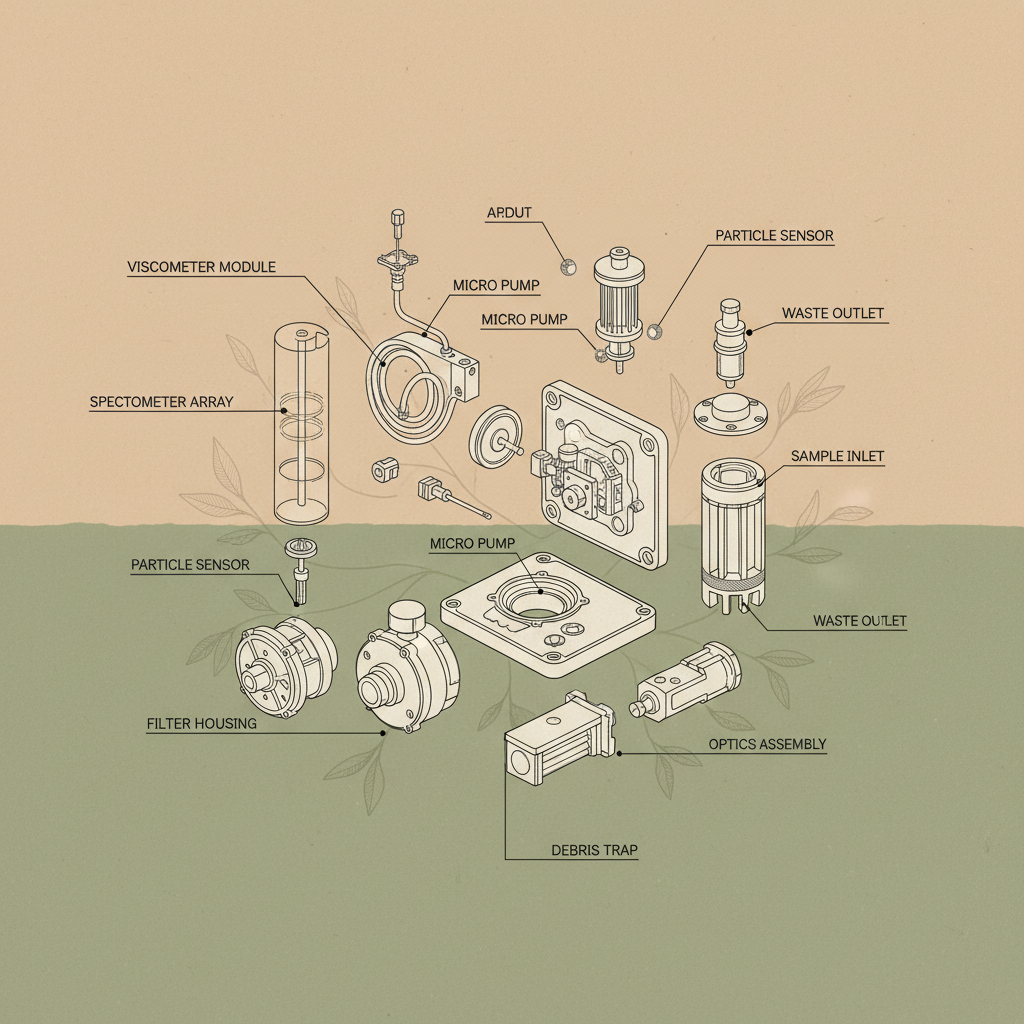
You've got your spectrometers – those are key for identifying the elemental composition of the oil, giving you a breakdown of the wear metals. Then you’ve got particle counters, which tell you the size and number of contaminants. Viscometers, obviously, for measuring oil thickness. And then there's the FTIR (Fourier Transform Infrared Spectroscopy) which gives you a chemical fingerprint of the oil, telling you about oxidation and degradation. Strangely, it kinda smells like burnt toast when the oil is really breaking down...
The practical application? It’s all about understanding the root cause of problems. High iron levels? Probably bearing wear. Silicon? Could be dirt ingress. Water? Well, that’s never good. These tools don't just tell you something is wrong, they help you pinpoint what is wrong, so you can fix it proactively.
And let's not forget the sampling itself. That’s critical. You need a clean sample, taken from the right location, at the right time. A poorly taken sample can give you completely misleading results. I encountered this at a coal-fired power plant last time, a guy was taking samples right after a filter change... completely skewed the results. Had to walk him through it.
Global Deployment and Diverse Use Cases
You see this stuff everywhere. Power generation, oil and gas, mining, manufacturing, transportation… anywhere there’s machinery, there’s a need for oil analysis. In the North Sea, they’re using it constantly on offshore platforms. Extremely harsh conditions, you need to know what’s going on with your equipment. In remote mines in Australia, it's essential because downtime is incredibly expensive.
Interestingly, it’s becoming more common in smaller operations too. Even fleet management companies are using it to monitor the health of their vehicles. It’s all about preventing breakdowns and maximizing uptime. I was talking to a guy running a small trucking company, and he said it’s saved him thousands of dollars in repair costs. He's got a small lab set up in his garage and sends samples out for detailed analysis.
Anyway, I think it’s going to be even bigger in developing countries. They’re building a lot of infrastructure, and they need to ensure the reliability of their equipment. It’s cheaper to prevent a breakdown than to fix one, especially when you're dealing with complex machinery.
Advantages & Long-Term Value Proposition
The biggest advantage is, without a doubt, reduced downtime. That translates to huge cost savings. But it's more than just money. It's about safety. A catastrophic failure can put people at risk. It’s also about sustainability. Extending the life of your equipment reduces waste and conserves resources.
Now, the downsides? Well, it requires investment – both in the equipment and in training. And it can be overwhelming, especially with all the data. You need someone who can interpret the results and make informed decisions. It’s not a magic bullet, it’s a tool that needs to be used correctly.
Oil Analysis Equipment Impact on Maintenance Costs
Future Trends and Innovation in Oil Analysis
I think the big thing is going to be real-time monitoring. Sensors embedded in the machinery, constantly analyzing the oil and sending data to the cloud. No more waiting for lab results. That will allow for even more proactive maintenance.
Also, AI is going to play a bigger role. Automated diagnosis, predictive modeling… the possibilities are endless. They’re even looking at using drones to collect samples from hard-to-reach areas. It sounds crazy, but it could actually work.
Common Challenges and Innovative Solutions
Getting good samples, as I said, is always a challenge. Contamination is a big issue. Then there’s the cost of the equipment and the expertise needed to interpret the results. And, honestly, getting people to change their habits. They’ve been doing things a certain way for years, and it’s hard to convince them to adopt a new approach.
But there are solutions. Remote sampling kits are making it easier to get clean samples. Online training courses are helping to build expertise. And companies are offering managed services, where they handle the analysis and interpretation for you. It seems like every week someone is trying to make it easier, but at the end of the day the skilled technician is still the most important factor.
I saw a good setup at a wind farm in Texas, they had a dedicated oil analysis room right on site, with a full-time technician. They were able to respond to problems almost immediately. That’s the kind of proactive approach that makes a real difference.
Material Considerations and Testing Protocols
The materials used in the equipment itself are important. You need things that are resistant to corrosion, chemicals, and high temperatures. The housings are typically made of durable plastics, like polycarbonate, or stainless steel. The sampling probes are often made of titanium, which is incredibly strong and resistant to corrosion.
Testing protocols are standardized, but there’s still room for variation. ASTM standards are the industry benchmark. But even within those standards, there are different methods and procedures. It’s important to choose a lab that follows rigorous quality control procedures. I worked with a supplier in China, and let me tell you, quality control was… a learning experience.
And you have to consider the oil itself. Different types of oil require different analysis techniques. Synthetic oils, for example, require different testing than mineral oils. It's a complex field, but getting it right can save you a lot of headaches.
A Simplified Overview of Oil Analysis Testing Parameters
| Test Parameter |
Typical Range/Units |
Significance/Potential Issue |
Severity Level (1-10) |
| Viscosity (cSt) |
40-100 |
Indicates oil thickness; deviations suggest contamination or degradation. |
6 |
| Total Acid Number (TAN) (mg KOH/g) |
0.1-0.5 |
Measures oil acidity; high values indicate oxidation and potential corrosion. |
8 |
| Water Content (%) |
|
Presence of water leads to corrosion, reduced lubrication, and microbial growth. |
9 |
| Iron (ppm) |
|
Indicates wear of ferrous components (bearings, gears). |
7 |
| Silicon (ppm) |
0-15 |
Suggests dirt or abrasive particle ingress. |
5 |
| Oxidation (ABS) |
0-50 |
Indicates oil degradation due to oxidation; increasing values indicate a need for oil change. |
7 |
FAQS
A simple viscosity test only tells you about the oil’s thickness. A full analysis, though, looks at everything – wear metals, contaminants, acidity, oxidation… it gives you a complete picture of the oil’s condition. Think of it like this: viscosity is just checking the temperature, while the full analysis is a complete physical. It’s more expensive, but it’s also much more informative and can save you a lot of money in the long run.
It depends on the application and the equipment. For critical machinery, I'd recommend at least quarterly, maybe even monthly. For less critical equipment, you can get away with annual analysis. The key is to establish a baseline and then monitor for trends. If you see something changing, that’s when you need to investigate further.
High copper usually points to wear in bushings or bearings, but it could also come from corrosion in copper-alloy components within the system. It's not always a critical issue immediately, but it's a sign that something is starting to degrade and needs monitoring. Ignoring it can lead to more significant problems down the road.
Absolutely. The FTIR analysis can identify the base oil type and any additives present. If you suspect someone has used the wrong oil, an analysis can confirm it. Using the wrong oil can cause all sorts of problems, from reduced lubrication to corrosion. It’s a surprisingly common issue.
Yes, even for small operations. The cost of oil analysis is typically far less than the cost of a major equipment failure. Plus, it can help you extend the life of your equipment and reduce maintenance costs. It's a proactive approach that pays for itself in the long run, even with just a few machines.
That’s a big one! You need to take the sample from the right location, after the equipment has been running for a while to ensure the oil is well-mixed. Use a clean sampling port and a dedicated sampling kit. Avoid contamination by wiping the port clean before sampling. And always label the sample clearly with the equipment ID and date.
Conclusion
So, yeah, oil analysis equipment isn’t exactly glamorous, but it's critical for ensuring the reliability and longevity of machinery. From simple viscosity tests to advanced spectroscopic analysis, these tools provide valuable insights into the condition of the oil and the health of the equipment. It's a proactive approach to maintenance that can save you money, prevent downtime, and improve safety.
Ultimately, whether this thing works or not, the worker will know the moment he tightens the screw. But having good data beforehand… that's what separates the pros from the guys just hoping for the best. If you’re serious about maintaining your equipment, you need to invest in oil analysis. And if you're looking for reliable oil analysis equipment, well, you know where to look.
 English