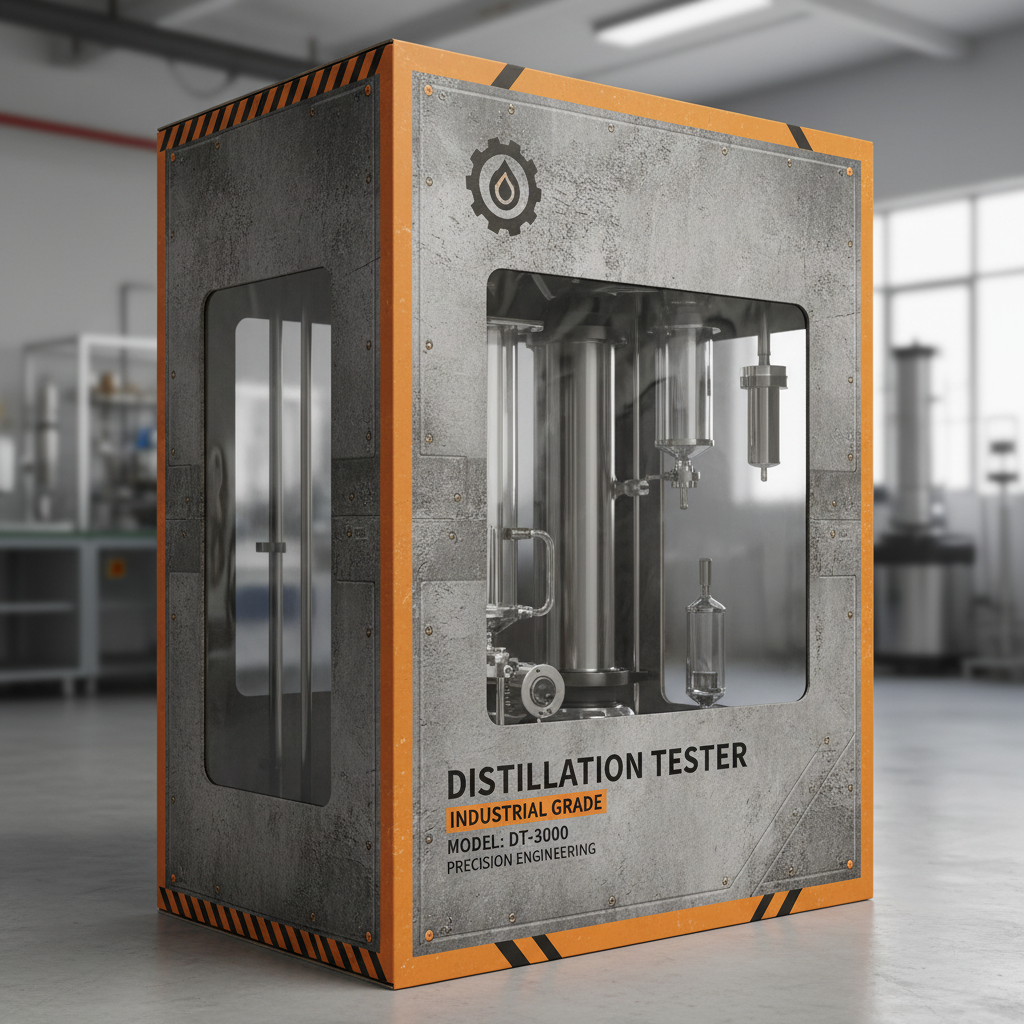
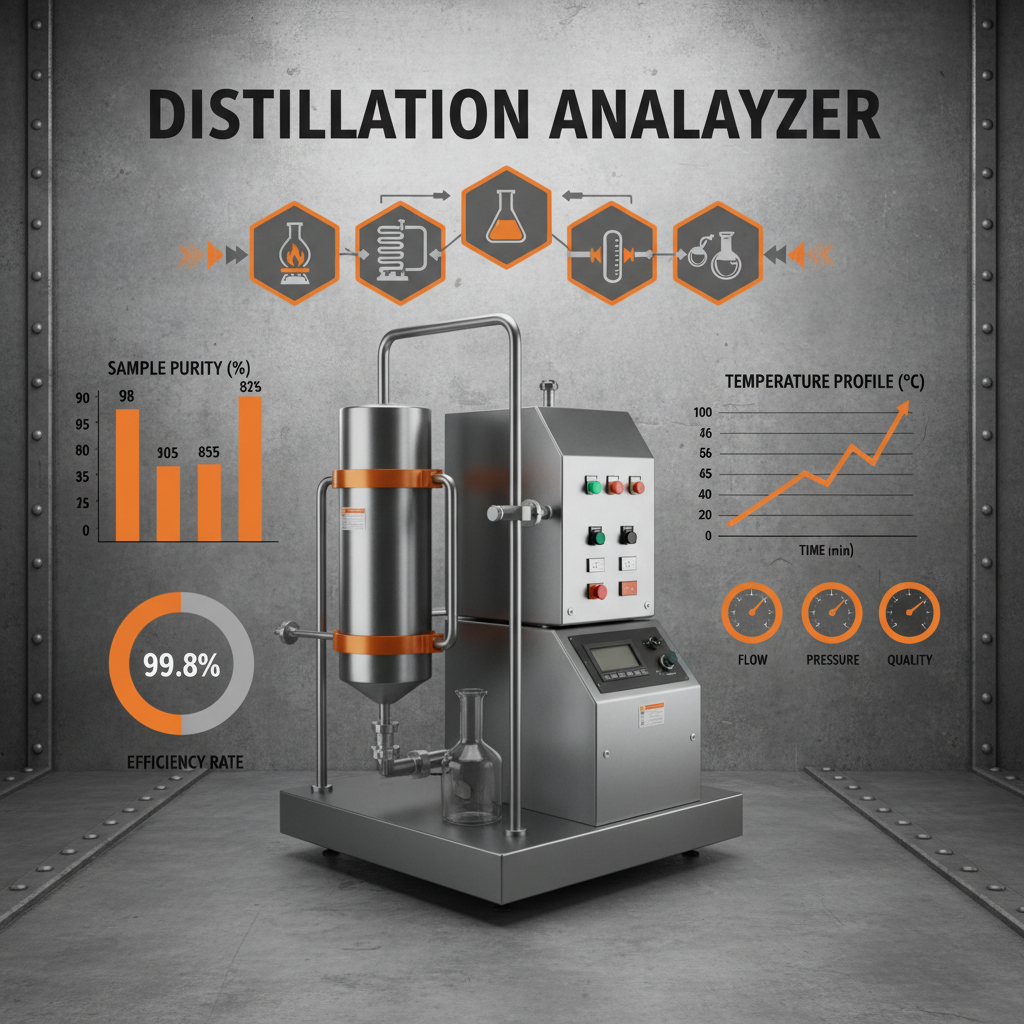
The meticulous assessment of chemical compositions is paramount across a diverse range of industries, from petrochemical refinement to pharmaceutical quality control. A distillation tester stands as an indispensable instrument, enabling precise determination of boiling point ranges, purity levels, and compositional breakdowns of liquid mixtures. This capability underpins critical processes, ensuring product quality, adherence to regulatory standards, and the optimization of industrial operations globally.
The increasing complexity of modern chemical formulations necessitates increasingly sophisticated analytical techniques. A reliable distillation tester provides the accuracy and repeatability demanded by these advanced applications. Furthermore, advancements in technology are continually pushing the boundaries of distillation testing, leading to faster, more automated, and more informative results.
Understanding the principles and applications of distillation testing is no longer confined to the laboratory. It’s a crucial skill for professionals involved in chemical engineering, quality assurance, regulatory compliance, and research & development, impacting industries vital to global economic stability and public safety.
The Core Principles of distillation tester
At its core, a distillation tester operates on the principle of separating liquids based on differences in their boiling points. The process involves heating a liquid mixture and collecting the vapors that condense at different temperature ranges. This allows for the identification and quantification of each component within the mixture. Accurate temperature control and precise collection of distillates are fundamental to obtaining reliable results.
Understanding the relationship between vapor pressure, boiling point, and chemical composition is essential for interpreting the data generated by a distillation tester. Factors like atmospheric pressure, heating rate, and column efficiency all play a role in the accuracy and resolution of the separation. Modern testers incorporate sophisticated sensors and control systems to optimize these parameters.
Global Relevance and Industry Standards for distillation tester
The demand for accurate compositional analysis drives the global distillation tester market. Industries such as petroleum refining, petrochemical production, alcoholic beverage manufacturing, and pharmaceutical development rely heavily on these instruments to ensure product quality and meet stringent regulatory requirements. Data from the American Petroleum Institute (API) and the International Organization for Standardization (ISO) highlights the importance of standardized distillation testing procedures.
Regulatory bodies worldwide, including the FDA in the United States and the EMA in Europe, mandate comprehensive compositional analysis for various products. Adherence to standards like ASTM D86 (for petroleum products) and similar protocols for other industries is critical for market access and compliance. Distillation tester manufacturers must meet these standards to provide reliable and legally defensible results.
The challenge of maintaining consistent quality control across global supply chains emphasizes the need for widely accepted testing methodologies and reliable equipment. A standardized distillation tester provides a common language for evaluating product composition, enabling seamless international trade and fostering consumer trust.
Defining distillation tester and Its Applications
A distillation tester is an analytical instrument used to determine the boiling point range and composition of liquid mixtures. It functions by heating the sample and collecting the vapors that condense at different temperatures. These condensed fractions, known as distillates, are then analyzed to identify and quantify the components present in the original mixture.
The instrument’s applications are widespread. In the petroleum industry, it's crucial for characterizing crude oil and refining processes. In the chemical industry, it's used to verify the purity of solvents and reactants. For alcoholic beverages, it determines alcohol content and identifies potential contaminants. Pharmaceutical applications include quality control of raw materials and final products. The versatility of a distillation tester makes it essential across many sectors.
Beyond these core applications, distillation tester are also used in environmental monitoring (analyzing volatile organic compounds), food and beverage analysis (determining aroma profiles), and research & development (studying chemical reactions and separations). The ability to accurately characterize liquid mixtures is fundamental to innovation in these fields.
Key Factors Influencing distillation tester Performance
The accuracy and reliability of a distillation tester depend on several key factors. First, precise temperature control is vital; even minor fluctuations can significantly impact the separation process. Second, the efficiency of the distillation column – its ability to provide good vapor-liquid contact – influences the purity of the collected fractions.
Calibration is another crucial element. Regular calibration with certified reference materials ensures the instrument provides accurate readings. The skill of the operator also plays a role; proper setup, data interpretation, and maintenance are essential for optimal performance.
Distillation Tester Method Comparison
Real-World Applications of distillation tester
In the petrochemical industry, a distillation tester is routinely used to analyze crude oil, determining its composition and suitability for different refining processes. This information is vital for optimizing yields and producing high-quality fuels and chemical feedstocks.
The beverage industry utilizes distillation testers for quality control, ensuring compliance with legal regulations concerning alcohol content and identifying undesirable components. Breweries and wineries employ these instruments to maintain consistent product quality and meet consumer expectations.
Advantages and Long-Term Value of Using distillation tester
Employing a distillation tester translates to significant cost savings by optimizing production processes and minimizing waste. Improved product quality leads to greater customer satisfaction and enhanced brand reputation. The long-term reliability and accuracy of modern testers reduce the need for frequent replacements, offering a strong return on investment.
Beyond the tangible benefits, a reliable distillation tester fosters trust and confidence in product integrity. Adherence to industry standards and regulatory requirements ensures compliance and mitigates legal risks. The instrument contributes to a safer and more sustainable manufacturing environment.
Future Trends and Innovations in distillation tester Technology
Future developments in distillation tester technology are focused on automation, miniaturization, and increased analytical capabilities. Automated sample handling and data analysis reduce operator error and improve throughput. The integration of spectroscopic techniques – such as infrared (IR) or mass spectrometry (MS) – allows for more detailed compositional analysis.
Sustainability is another driving force, with manufacturers exploring energy-efficient designs and environmentally friendly materials. Digitalization and data connectivity will enable remote monitoring, predictive maintenance, and integration with laboratory information management systems (LIMS). These innovations promise to further enhance the efficiency and accuracy of distillation testing.
The trend towards miniaturization is creating portable distillation tester suitable for field applications, offering on-site analysis and rapid decision-making. These developments are poised to revolutionize how liquid mixtures are characterized and controlled across various industries.
A Summary of Challenges and Solutions in Distillation Tester Application
| Challenge |
Impact on Distillation Tester Results |
Proposed Solution |
Implementation Cost (1-10) |
| Sample Matrix Effects |
Distorted boiling point ranges and inaccurate compositional analysis. |
Employ sample preparation techniques like dilution or solvent extraction. |
3 |
| Temperature Control Instability |
Inconsistent fraction collection and inaccurate identification of components. |
Utilize a distillation tester with advanced PID temperature control and precise heating elements. |
7 |
| Column Efficiency Limitations |
Poor separation of components with close boiling points. |
Optimize column packing material and reflux ratio for improved separation efficiency. |
5 |
| Operator Skill Variation |
Inconsistent results due to differences in setup, data interpretation, and maintenance. |
Implement standardized operating procedures and provide comprehensive training to all operators. |
4 |
| Calibration Drift |
Inaccurate temperature readings and unreliable results. |
Establish a regular calibration schedule using certified reference materials. |
6 |
| Data Management Issues |
Difficulty in tracking, analyzing, and reporting distillation test results. |
Integrate the distillation tester with a laboratory information management system (LIMS). |
8 |
FAQS
In the oil and gas sector, a distillation tester is primarily used to characterize crude oil, determine its boiling point range, and assess its suitability for refining. It helps identify the different hydrocarbon fractions present, aiding in optimizing refining processes and ensuring the production of high-quality fuels like gasoline, kerosene, and diesel. Precise compositional analysis is critical for meeting industry standards and optimizing resource utilization.
To maintain accuracy, a distillation tester should be calibrated regularly, typically every 6-12 months, or more frequently if it is used intensively. Calibration involves verifying the temperature sensors and heating rate using certified reference materials. Consistent calibration ensures reliable and legally defensible results, minimizing the risk of errors and deviations from established standards. Documentation of calibration procedures is also essential.
Distillation testers involve handling flammable liquids and high temperatures, necessitating strict safety protocols. Always wear appropriate personal protective equipment (PPE), including safety glasses, gloves, and a lab coat. Ensure adequate ventilation to prevent the build-up of flammable vapors. Never leave the instrument unattended during operation. Follow the manufacturer's instructions carefully and be prepared for emergency situations.
A standard distillation tester is designed for analyzing liquid mixtures with volatile components. If a sample contains significant amounts of non-volatile materials, it can lead to inaccurate results and potential damage to the instrument. In such cases, pre-treatment of the sample may be necessary to remove the non-volatile components. Alternative analytical techniques, such as gas chromatography-mass spectrometry (GC-MS), may be more suitable.
Automated distillation tester offer several benefits over manual models, including increased throughput, reduced operator error, and improved data precision. Automation minimizes human intervention, leading to more consistent and reliable results. Automated systems often include sophisticated data analysis software and remote monitoring capabilities, further enhancing efficiency and streamlining workflows.
The reflux ratio – the ratio of liquid returned to the column to the liquid collected as distillate – significantly influences the separation efficiency. A higher reflux ratio promotes better separation by increasing the contact between vapor and liquid, allowing for a more refined separation of components. However, excessively high reflux ratios can slow down the distillation process. Optimizing the reflux ratio is crucial for achieving the desired level of separation.
Conclusion
In conclusion, the distillation tester remains an indispensable tool for accurate liquid mixture analysis across a broad spectrum of industries. From ensuring fuel quality to guaranteeing pharmaceutical purity, its ability to determine boiling point ranges and compositional breakdowns is paramount. Advancements in automation and data analysis continue to enhance its capabilities, making it a vital component of modern analytical laboratories.
Looking ahead, the integration of distillation tester with digital technologies and a focus on sustainable practices will further solidify its importance. Investing in high-quality instrumentation and comprehensive operator training remains crucial for maximizing accuracy, efficiency, and long-term value. Visit our website at www.pushtester.com to explore our range of distillation testers and learn how we can support your analytical needs.
 English