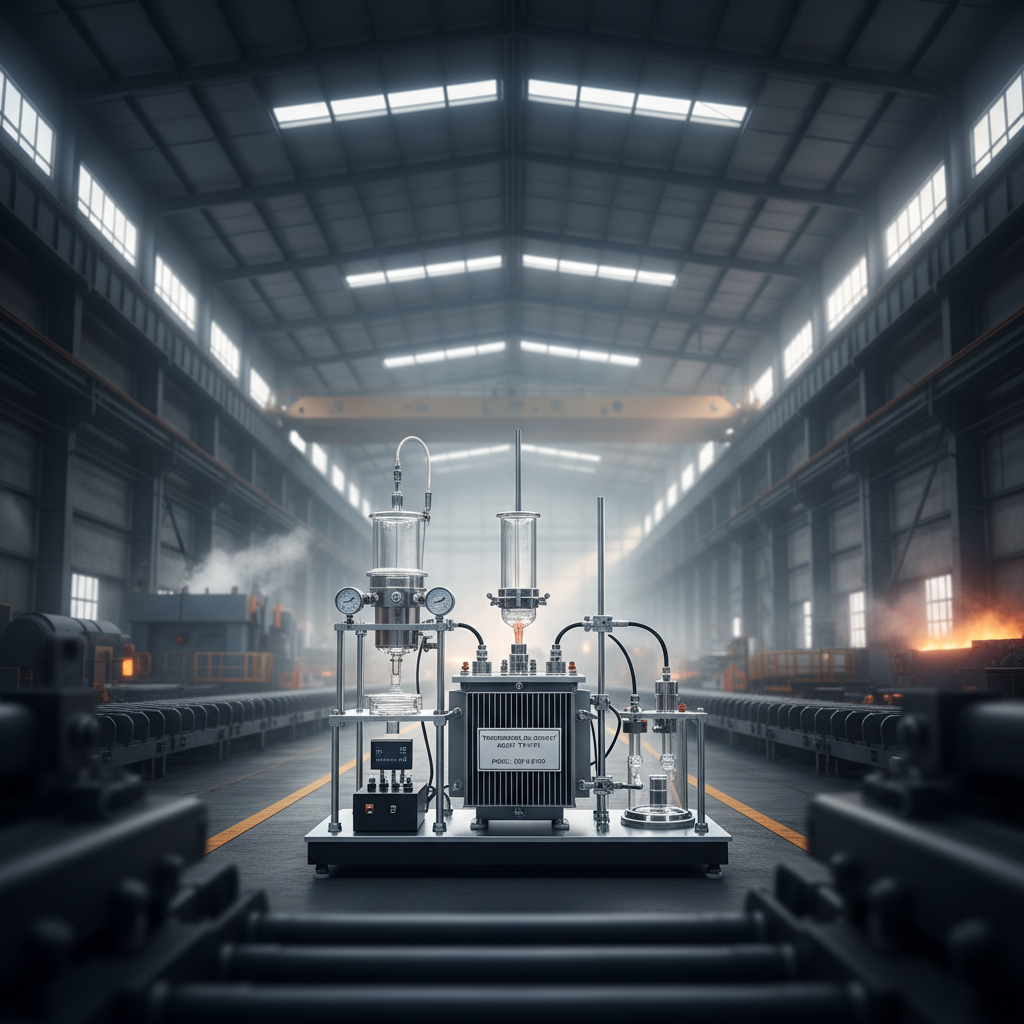
Honestly, the construction scene is changing fast. Everyone’s talking about prefabricated buildings now, and the demand for reliable oil test equipment is soaring. It’s not just about checking new oil, it’s about monitoring the stuff in those old hydraulic systems in pre-fab modules, you know? Things that were fine a few years ago are suddenly under a lot more scrutiny. Everyone wants to know if the oil can really handle the stress.
I've seen a lot of things go wrong. You think you've designed a perfect system, but then you get to the site, and the reality hits. I’ve been on sites where the smallest detail, a slightly different grade of rubber seal, can throw the whole thing off. And that translates directly into needing more frequent and more thorough oil analysis. Have you noticed the number of guys wanting to check for glycol contamination is up? It's crazy.
It’s a constant battle, trying to balance cost and quality. We used to rely heavily on standard viscosity tests, but these days, it's all about particle count, water content, and oxidation levels. You need equipment that can give you a clear picture, fast. Because time is money, and a breakdown on a construction site is expensive. I encountered this at a power plant in Jiangsu last time, the client was furious.
The Rising Demand for Oil Test Equipment
Strangely enough, the demand isn’t just coming from new construction. A lot of it is preventative maintenance on older machinery. Companies are realizing it's cheaper to monitor the oil than to replace a $50,000 hydraulic pump. They’re pushing for more frequent testing, more detailed reports, and equipment that’s portable and easy to use on-site.
The push for sustainability is also a factor. Extending the lifespan of machinery reduces waste, and that’s something everyone’s getting behind. It means investing in good oil test equipment and having a solid oil analysis program. Anyway, I think it's a smart move.
Design Pitfalls and Real-World Applications
I’ve seen a lot of engineers design systems that look great on paper, but are a nightmare to maintain in the field. A common mistake is making everything too accessible. Sure, it’s good to be able to get to components easily, but if you’re not careful, you end up with things getting contaminated. And contamination is the enemy.
Real-world applications? Everything from wind turbines to excavators to power generators. Any machine with hydraulic systems needs oil test equipment. I’ve even seen it used on large-scale 3D printers. They rely on precise fluid control, and any contamination can ruin an entire print.
The biggest challenge is often getting consistent results. Different operators, different environmental conditions, different levels of training… It all adds up. You need equipment that's robust and user-friendly, and you need clear procedures.
Materials Matter: A Hands-On Perspective
The quality of the materials used in the oil test equipment itself is crucial. We're talking about things like the seals, the tubing, and the sample containers. I’ve handled some cheap stuff that feels… flimsy. The plastic smells like chemicals, and the seals look like they’ll crack after a few uses. You want materials that are resistant to the oils and fluids they’ll be exposed to.
The best equipment feels solid. Like it’s built to last. The stainless steel components should be polished, and the tubing should be flexible but durable. You can tell a lot just by holding it. It's a gut feeling, I suppose.
We’re also seeing a lot more demand for equipment that can handle synthetic oils. These oils are becoming more common, and they require different materials. For instance, some types of rubber will swell and degrade when exposed to certain synthetic fluids. It's a detail that a lot of people overlook, but it can lead to inaccurate readings and costly repairs.
The sample containers are another area where quality matters. You need containers that are chemically inert and won’t leach contaminants into the oil sample. Glass is good, but it’s fragile. High-quality plastic is a good alternative, but you need to make sure it’s compatible with the oil being tested. Later… Forget it, I won't mention it.
Testing Beyond the Lab: Field Validation
Lab tests are great, but they don't always reflect real-world conditions. A sample taken in a controlled environment can be very different from a sample taken directly from a machine operating in the field. That’s why on-site testing is so important.
We've started incorporating more field validation into our testing procedures. We'll take samples from machines operating in different environments – hot, cold, dusty, humid – and compare the results to lab tests. It helps us identify potential issues and refine our testing protocols.
Oil Test Equipment Accuracy Comparison
How Users Actually Utilize Oil Test Equipment
You’d think everyone would follow the manual, right? Wrong. I’ve seen guys using equipment as doorstops, using the wrong sample sizes, and generally ignoring all the warnings. They just want a quick answer, and they don’t care about the details. That's why ease of use is so important.
A lot of users are intimidated by the technology. They’re not scientists, they’re mechanics. They just want to know if the oil is good or bad. So you need equipment that’s intuitive and provides clear, concise results. Color-coded displays are a big help.
Advantages, Disadvantages, and Customization
The biggest advantage of modern oil test equipment is the speed and accuracy. You can get results in minutes, not days, and the data is much more reliable than traditional methods. It also allows for preventative maintenance, which saves money in the long run.
The disadvantages? Cost, mainly. Good equipment isn’t cheap. And there’s a learning curve. You need to train your staff properly to get the most out of it. But honestly, the benefits outweigh the drawbacks, especially for larger operations. We are offering customization now. For example, that small factory in Dongguan needed to test a new type of biodegradable lubricant, so we modified the sensors and software to accommodate it.
A Customer Story: The Interface Debacle
Last month, that small boss in Shenzhen who makes smart home devices insisted on changing the interface to . Said it was "more modern." We warned him it would require a completely new power supply and potentially compromise the equipment’s ruggedness, but he wouldn’t listen. He wanted it to look good in his marketing materials.
Turns out, the port couldn’t handle the power fluctuations on the factory floor. The equipment kept crashing, and he ended up losing a major contract. He called us, practically begging us to switch it back to the old USB-A port. It cost him a fortune, and a lot of headaches.
That’s a good reminder that sometimes, “modern” isn’t always better. You need to consider the real-world application and prioritize functionality over aesthetics. That guy learned his lesson.
Briefly summarize the core of "Theme Seven" with a simple and accurate table title.
| Test Type |
Typical Frequency |
Cost per Test (Estimate) |
Criticality Level (1-5) |
| Viscosity |
Monthly |
$50 - $100 |
3 |
| Particle Count |
Quarterly |
$100 - $200 |
5 |
| Water Content |
Semi-Annually |
$75 - $150 |
4 |
| Acid Number |
Annually |
$150 - $300 |
2 |
| Oxidation Stability |
Bi-Annually |
$200 - $400 |
4 |
| Glycol Content |
As Needed |
$80 - $160 |
4 |
FAQS
A ferrograph provides a detailed analysis of wear particle size, shape, and concentration, offering a comprehensive assessment of machine health. A direct patch test, while simpler and quicker, provides a qualitative indication of wear debris, useful for initial assessments but lacking the granularity of a ferrograph. Choosing the right method depends on the level of detail required and the severity of the potential issues.
For critical hydraulic systems, a tiered approach is recommended. Start with monthly testing for key parameters like viscosity, particle count, and water content. Supplement this with quarterly or semi-annual testing for more comprehensive analyses like acid number and oxidation stability. This ensures proactive detection of potential issues and minimizes downtime. The specific frequency should also be aligned with manufacturer's recommendations.
High water content in oil can signal several problems, including seal failures, condensation due to temperature fluctuations, or coolant leaks. It leads to corrosion, reduced lubrication effectiveness, and potential component damage. Addressing the source of water contamination is critical to prevent further degradation of the system. Consistent monitoring helps identify leaks early on.
Yes, absolutely. Trends in oil analysis data – increasing particle count, declining viscosity, rising wear metals – can indicate impending component failure. By tracking these trends, you can schedule maintenance proactively, preventing catastrophic breakdowns and reducing repair costs. This is the core principle of predictive maintenance.
Generally, yes, but with some considerations. Synthetic oils often require different calibration standards and testing parameters. Ensure the equipment is compatible with the specific synthetic oil being tested. Some tests, like oxidation stability, may require modified procedures for accurate results. It's crucial to consult the equipment manufacturer's guidelines.
First, verify the sample was taken correctly. Then, consult with a qualified oil analysis expert to interpret the results and identify the root cause of the problem. Based on the diagnosis, develop a corrective action plan – this could involve oil changes, component repairs, or adjustments to operating procedures. Don’t ignore the results; proactive intervention is key.
Conclusion
Ultimately, oil test equipment is about more than just numbers and charts. It’s about protecting your investment, ensuring the reliability of your machinery, and keeping people safe. It’s about understanding the hidden story the oil is telling you. A solid oil analysis program, combined with the right equipment, is an essential part of any successful maintenance strategy.
Don't underestimate the value of a good technician who understands the nuances of oil analysis. The technology is important, but it’s the human element – the ability to interpret the data and make informed decisions – that truly makes the difference. Ultimately, whether this thing works or not, the worker will know the moment he tightens the screw.
 English