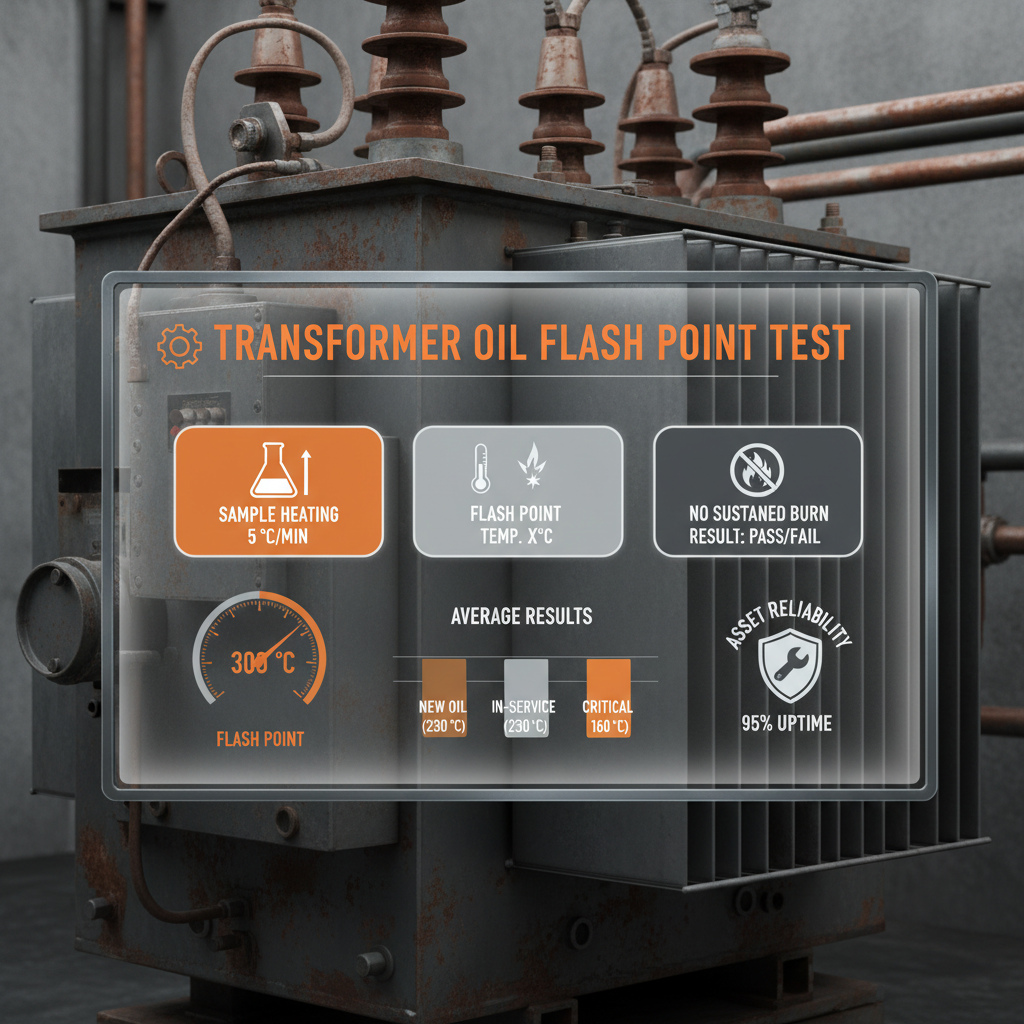
Transformer oil flash point testing is a crucial aspect of maintaining the reliability and safety of electrical transformers. This process determines the temperature at which the oil’s vapors will ignite when exposed to an ignition source. Regular transformer oil flash point test ensures the oil retains its insulating and cooling properties, preventing catastrophic equipment failure and costly downtime. It’s a fundamental practice in power grids worldwide.
The global demand for reliable power is ever-increasing, driven by population growth, industrialization, and the expansion of renewable energy sources. This places a significant strain on existing transformer infrastructure. Implementing robust transformer oil management programs, including frequent flash point testing, is essential for mitigating risk and extending the lifespan of these critical assets. Data from the International Energy Agency (IEA) highlights the projected need for substantial investment in grid modernization, with transformer maintenance representing a significant portion of those costs.
Ultimately, consistent and accurate transformer oil flash point testing safeguards power distribution networks, protecting vital infrastructure and ensuring uninterrupted power supply for homes, businesses, and essential services. The implications extend beyond mere economics, impacting public safety and the stability of entire economies.
Introduction to Transformer Oil Flash Point Testing
Transformer oil, a vital component in the operation of power transformers, performs two crucial functions: insulation and cooling. The flash point of this oil is a critical indicator of its condition and suitability for continued use. A lowered flash point signals the presence of contaminants or degradation products, compromising the oil’s ability to prevent electrical breakdown and effectively dissipate heat. transformer oil flash point test is therefore a key preventative maintenance procedure.
Regular monitoring of the flash point allows operators to proactively address potential issues, avoiding unplanned outages, equipment damage, and the associated costs. It's not simply a compliance requirement; it’s a best practice that safeguards investment and ensures the reliable delivery of electricity.
Defining the Transformer Oil Flash Point Test
The transformer oil flash point test is a standardized laboratory procedure designed to determine the lowest temperature at which the oil’s vapors will ignite when exposed to an open flame. Typically performed using a Pensky-Martens Closed Cup tester, the test involves gradually heating a small sample of oil while exposing it to a flame under controlled conditions. The flash point is recorded as the lowest temperature at which a momentary flash is observed.
This test is directly related to the safety and operational efficiency of transformers. A higher flash point indicates a cleaner, more stable oil, offering better protection against fire hazards and maintaining its insulating properties. Conversely, a lower flash point signals degradation and an increased risk of failure.
The results obtained from the transformer oil flash point test are essential for making informed decisions regarding oil maintenance, filtration, or replacement, ensuring the continued reliable operation of transformer equipment.
Key Factors Influencing Flash Point Results
Several factors can influence the flash point of transformer oil. Contamination from water, particulate matter, and oxidation byproducts are primary contributors to a decreased flash point. Water lowers the oil’s ignition temperature, while oxidation products increase its flammability.
Oil degradation, occurring over time due to thermal stress and electrical discharges, also significantly affects the flash point. This degradation process forms sludge and acidic compounds, lowering the oil’s resistance to ignition. The age of the oil, the operating temperature of the transformer, and the loading conditions all play a role in the rate of degradation.
Furthermore, the type of oil itself can influence the flash point. Different formulations of mineral oils, and the increasing use of ester fluids, have inherent differences in their flammability characteristics. Proper selection of the appropriate oil for the application and subsequent monitoring of its flash point are critical.
Practical Applications of Flash Point Testing
The insights gleaned from transformer oil flash point testing translate directly into practical maintenance strategies. For example, a consistently decreasing flash point necessitates further oil analysis to identify the root cause – whether it be moisture ingress, oxidation, or contamination.
Based on the results, actions might include oil filtration to remove particulate matter, drying to remove moisture, or complete oil replacement if the oil is severely degraded. Proactive maintenance based on flash point data minimizes the risk of unexpected failures, reducing downtime and extending transformer lifespan.
Transformer Oil Flash Point Test Methods Comparison
Global Applications and Industry Standards
Transformer oil flash point testing is universally applied across the power generation, transmission, and distribution sectors globally. National and international standards, such as those defined by the IEC (International Electrotechnical Commission) and ASTM International, provide standardized procedures and acceptable limits for flash point values.
Power utilities, industrial facilities, and renewable energy plants all rely on regular testing to ensure the integrity of their transformer assets. In developing countries, where grid infrastructure may be aging and maintenance resources limited, the importance of routine flash point testing is even more pronounced.
Advantages and Long-Term Value Proposition
Implementing a robust transformer oil flash point testing program offers numerous advantages. Reduced downtime translates into significant cost savings, avoiding production losses and expensive emergency repairs. Improved transformer reliability enhances grid stability and reduces the risk of widespread power outages.
Furthermore, proactive maintenance extends the lifespan of transformer equipment, maximizing return on investment. A commitment to regular testing also demonstrates a commitment to safety and environmental responsibility, bolstering public trust and mitigating potential liabilities.
Future Trends and Innovations in Oil Testing
The future of transformer oil testing is heading towards more advanced and automated solutions. Online monitoring systems, utilizing sensors to continuously track oil properties, are becoming increasingly prevalent. These systems provide real-time data and alerts, enabling proactive maintenance interventions.
Further advancements include the development of more sensitive and accurate testing methods, as well as the application of data analytics and machine learning to predict oil degradation and optimize maintenance schedules. The integration of these technologies will contribute to a more resilient and efficient power grid.
The rise of ester fluids, offering improved biodegradability and fire safety, is also driving innovation in testing methodologies. Specialized tests are being developed to accurately assess the condition of these alternative fluids.
Summary of Factors Influencing Transformer Oil Degradation
| Degradation Factor |
Impact on Flash Point |
Mitigation Strategy |
Severity Level (1-5) |
| Moisture Contamination |
Significantly lowers flash point |
Regular oil drying and sealing |
4 |
| Oxidation |
Decreases flash point, forms sludge |
Antioxidant additives, controlled temperature |
5 |
| Particulate Contamination |
Indirectly lowers flash point by accelerating degradation |
Oil filtration |
3 |
| Thermal Stress |
Accelerates oxidation and degradation |
Proper transformer loading and cooling |
4 |
| Electrical Discharge |
Causes localized heating and oil breakdown |
Effective insulation and grounding |
3 |
| Oil Age |
Naturally degrades over time |
Scheduled oil replacement |
2 |
FAQS
The frequency of testing depends on factors like transformer age, load, and environmental conditions. However, a minimum annual test is generally recommended. For new transformers, initial testing is crucial, and then a schedule based on risk assessment should be followed. Increased testing frequency may be necessary for transformers operating under heavy loads or in harsh environments. Regular monitoring is key to identifying trends and preventing failures.
A low flash point indicates oil degradation. Immediate further investigation is necessary. This includes conducting a full dissolved gas analysis (DGA) to identify the root cause, checking for moisture content, and assessing the oil’s acidity and dielectric strength. Depending on the results, actions may include oil filtration, drying, or complete oil replacement. Ignoring a low flash point can lead to equipment failure and safety hazards.
The Pensky-Martens Closed Cup method is the most widely used standard for transformer oil flash point testing. Other methods include the Tag Closed Cup and Cleveland Open Cup. The Pensky-Martens method is preferred due to its accuracy and safety. It’s important to ensure the lab performing the test uses a standardized and calibrated method for reliable results.
While the flash point test itself directly measures flammability, a decreasing flash point often correlates with other forms of oil degradation, such as increased acidity, oxidation product levels, and reduced dielectric strength. It’s an early warning sign prompting further, more comprehensive oil analysis to assess the overall health of the transformer oil.
Different types of transformer oil, such as mineral oil and ester fluids, have varying inherent flash points. Ester fluids generally have a higher flash point and are considered safer. However, the flash point of any oil can decrease with age and contamination. It’s important to compare results to the manufacturer’s specifications for the specific oil type being used.
Transformer oil can be flammable and may contain harmful substances. Always wear appropriate personal protective equipment (PPE), including gloves, safety glasses, and a lab coat. Ensure adequate ventilation during testing. Handle oil spills immediately and dispose of waste oil according to local regulations. Follow the safety guidelines provided by the testing laboratory.
Conclusion
In summary, the transformer oil flash point test is an indispensable component of proactive transformer maintenance. It provides a critical indicator of oil condition, safeguarding against fire hazards, preventing equipment failures, and ensuring the reliable delivery of electrical power. Consistent monitoring and timely intervention based on flash point results are essential for maximizing asset lifespan and minimizing operational costs.
Looking forward, the integration of advanced monitoring technologies and data analytics will further enhance the efficiency and effectiveness of transformer oil management. Investing in these technologies, coupled with a commitment to regular testing, will be crucial for ensuring the long-term stability and resilience of power grids worldwide. Visit our website at www.pushtester.com to learn more about our comprehensive transformer oil testing solutions.
 English