The accurate determination of a substance’s flammability is paramount across numerous industries, making the oil flash point tester an indispensable tool. From ensuring the safe transportation of fuels to maintaining quality control in chemical manufacturing, understanding the flash point – the lowest temperature at which a liquid produces enough vapor to form an ignitable mixture with air – is critical for preventing accidents and adhering to stringent safety regulations. This analysis is not just a procedural requirement; it’s a foundation for responsible handling and storage of flammable materials.
Globally, industries dealing with petroleum products, paints, solvents, and various other chemicals rely heavily on precise flash point measurements. Compliance with international standards like those set by ASTM, ISO, and others mandates the use of reliable testing equipment. The increasing focus on workplace safety and environmental protection further amplifies the importance of these tests. Failures to accurately determine flash points can lead to catastrophic events, underscoring the necessity of investing in robust and accurate oil flash point tester technology.
The ramifications of inaccurate flash point determination extend beyond immediate safety concerns. They can have significant economic consequences, impacting insurance costs, regulatory fines, and potential legal liabilities. Furthermore, the demand for eco-friendly and sustainable practices drives the need for efficient and reliable testing methods to ensure the safe handling of bio-based fuels and alternative solvents. Ultimately, the oil flash point tester is central to safe, efficient, and responsible chemical management worldwide.
Introduction to oil flash point tester
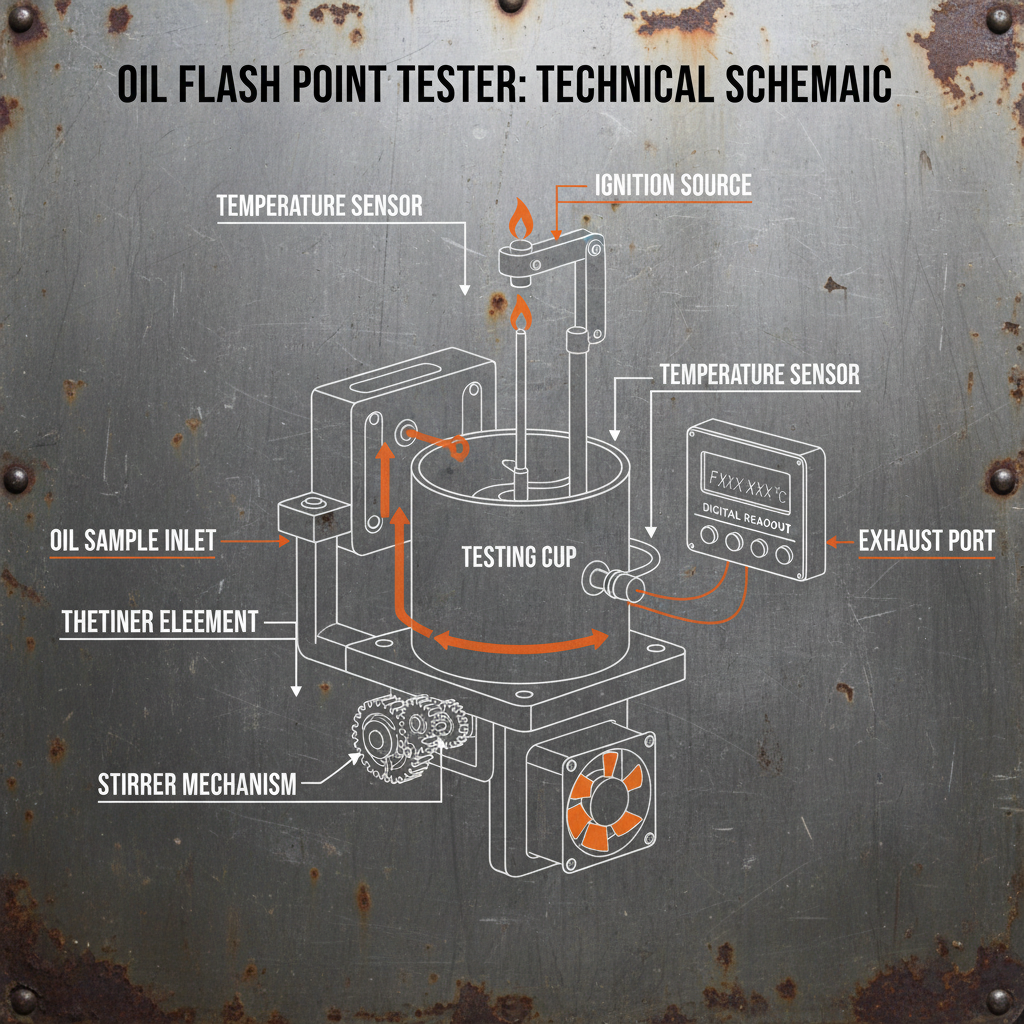
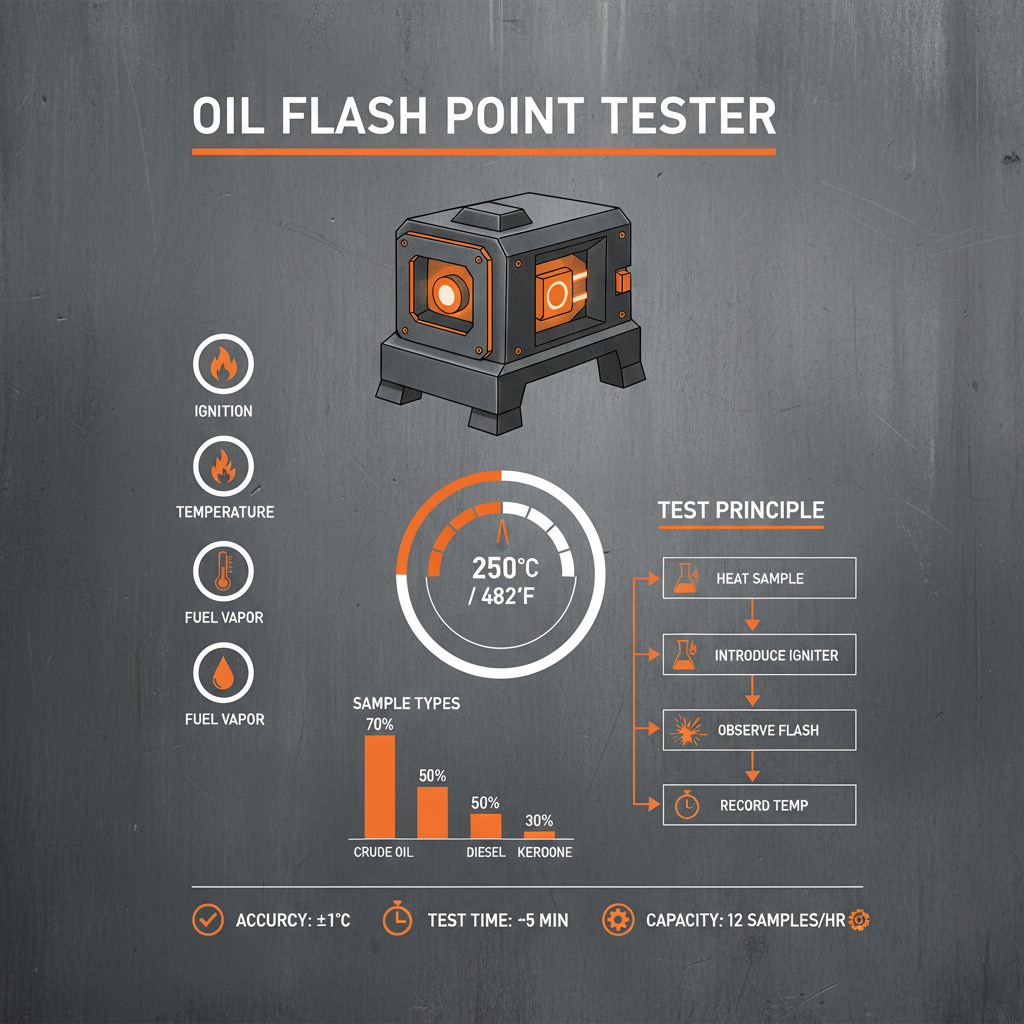
An oil flash point tester is an essential laboratory instrument used to determine the flash point of various liquids. This testing process is a crucial step in ensuring the safe handling, storage, and transportation of flammable materials. It operates on the principle of applying a flame to the liquid at incrementally increasing temperatures until ignition occurs.
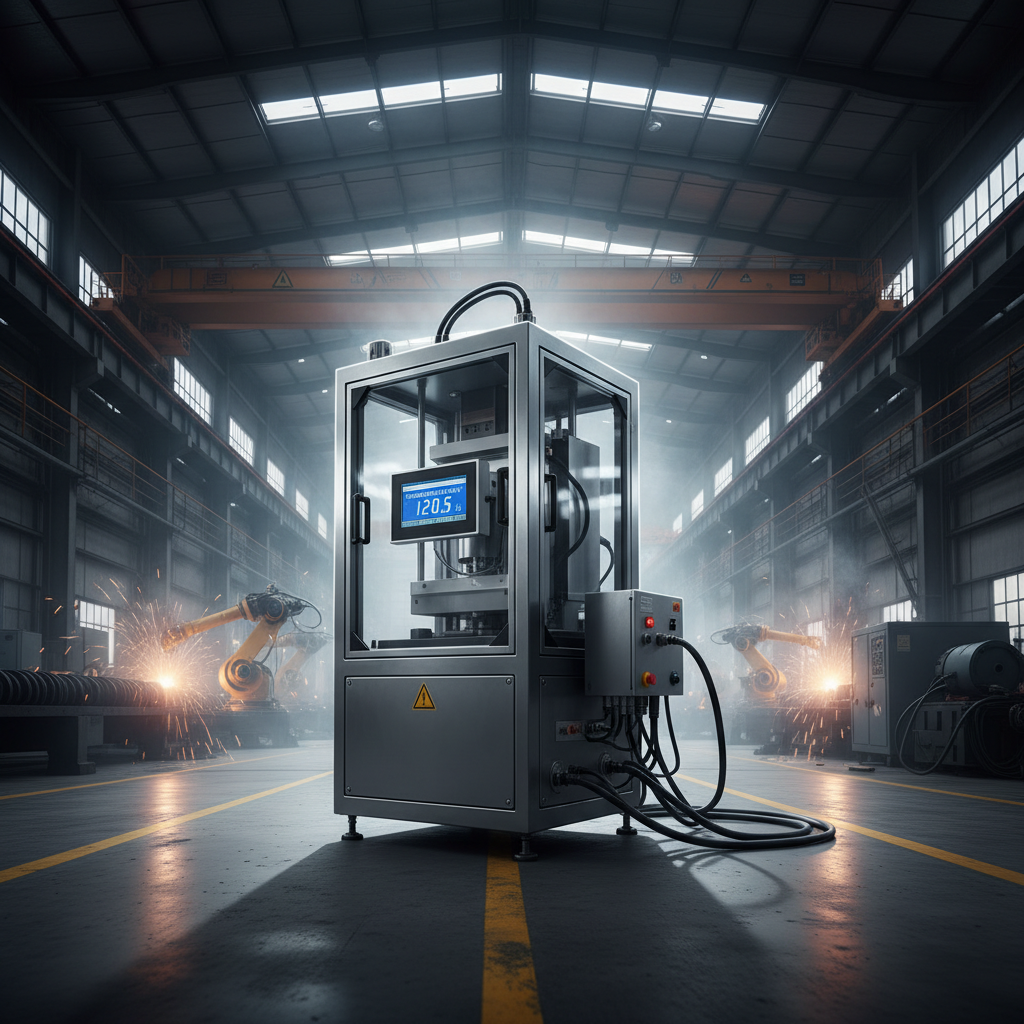
Modern oil flash point tester models have evolved significantly, incorporating automated features, digital displays, and enhanced safety mechanisms. These advancements offer improved accuracy, repeatability, and operator protection compared to earlier, manual designs. The selection of the appropriate tester depends on the specific industry, the types of fluids being tested, and the relevant regulatory standards.
Global Significance and Industrial Context
The necessity for accurate flash point determination is universally recognized, underscored by stringent regulations worldwide. Organizations like ASTM International and the International Organization for Standardization (ISO) have established standardized test methods – such as ASTM D93 (Pensky-Martens Closed Cup) and ISO 2719 – that dictate how oil flash point tester instruments must perform and the protocols for conducting tests.
Industries spanning petroleum, petrochemicals, pharmaceuticals, paints, coatings, and biofuels all require reliable flash point testing. The energy sector, for example, relies heavily on these tests to ensure the safe handling of crude oil, gasoline, diesel, and jet fuel throughout the supply chain. In the chemical industry, flash point data is vital for hazard assessments, storage classifications, and emergency response planning.
According to data from the World Bank, the global trade in petroleum products reached trillions of dollars in recent years, highlighting the immense economic stakes involved. Accurate flash point testing is not simply a matter of compliance; it's a fundamental component of safeguarding this vast economic activity and protecting human life and the environment. The widespread adoption of standardized testing methods reflects a global commitment to safety and quality in the handling of flammable substances.
Defining the oil flash point tester
At its core, an oil flash point tester determines the flash point of a liquid – the lowest temperature at which the liquid emits vapors sufficient to form an ignitable mixture with air near the surface of the liquid. This is not the same as the auto-ignition temperature, which is the temperature at which the substance will spontaneously ignite without an external ignition source.
The testing process typically involves gradually heating a sample of the liquid while periodically applying an ignition source. Different types of testers employ different ignition methods – such as an open flame or an electrical spark – and may utilize either a closed-cup or an open-cup apparatus. Closed-cup testers generally yield lower flash point values, making them more sensitive for detecting lower flammability hazards.
The relevance of flash point testing extends beyond industrial safety. It plays a critical role in understanding the flammability characteristics of fuels for combustion engines, assessing the fire hazards associated with household chemicals, and ensuring the proper storage and handling of flammable liquids in laboratories and research facilities.
Key Characteristics of Modern oil flash point tester
Modern oil flash point tester models are characterized by several key features that enhance their accuracy, safety, and usability. These include automated temperature control, digital displays for precise readings, and sophisticated safety interlocks to prevent accidents.
Several factors determine the suitability of an oil flash point tester for a specific application. These include the testing standard required (e.g., ASTM D93, ISO 2719), the type of sample being tested (e.g., viscosity, corrosivity), and the desired level of automation and data logging.
oil flash point tester Performance Metrics
Diverse Applications of oil flash point tester
The applications of an oil flash point tester are widespread across various sectors. In the petroleum industry, flash point testing is crucial for quality control of crude oil, gasoline, diesel fuel, and jet fuel, ensuring they meet safety standards for transportation and use. It is also essential for monitoring the stability of fuel blends.
The chemical industry utilizes these testers to assess the flammability of solvents, paints, coatings, adhesives, and other chemical products. This information is vital for safe handling, storage, and labeling according to regulations like Globally Harmonized System (GHS). In post-disaster relief operations, quick flash point assessments can determine the safe handling of recovered fuels and chemicals.
Furthermore, oil flash point tester are used in the pharmaceutical industry to assess the flammability of alcohol-based solutions and solvents used in drug manufacturing. In remote industrial zones or research facilities, where access to centralized laboratories may be limited, portable or compact testers offer a convenient solution for on-site flash point determination.
Advantages and Long-Term Value
Investing in a high-quality oil flash point tester delivers significant advantages beyond mere regulatory compliance. Reduced risk of accidents, improved workplace safety, and enhanced product quality translate into substantial cost savings over the long term, minimizing potential liabilities and insurance premiums.
The ability to accurately and reliably determine flash points fosters trust among stakeholders – including customers, regulators, and employees. This contributes to a positive brand reputation and enhances the organization’s commitment to sustainability and responsible chemical management. This demonstrates a commitment to both safety and environmental protection, crucial elements of modern business practices.
Future Trends and Innovations in oil flash point tester Technology
The future of oil flash point tester technology is poised for further innovation, driven by the demand for increased automation, miniaturization, and sustainability. The integration of digital sensors, data analytics, and cloud connectivity will enable real-time monitoring, remote diagnostics, and predictive maintenance.
Development is leaning toward more eco-friendly testing methods that reduce solvent consumption and waste generation. Advances in microfluidics and lab-on-a-chip technology could lead to portable, low-cost testers capable of performing rapid and accurate flash point measurements in the field. These technological advancements will support the transition towards greener energy sources and sustainable chemical practices.
Additionally, increased emphasis on artificial intelligence (AI) and machine learning (ML) algorithms could automate data analysis and identify potential anomalies, improving the reliability and efficiency of flash point testing processes. These technologies will contribute to a safer, more efficient, and environmentally responsible approach to handling flammable materials.
Challenges and Solutions
Despite the advancements in oil flash point tester technology, some challenges remain. Maintaining calibration accuracy and ensuring proper sample handling can be complex, potentially leading to inaccurate results. Furthermore, the cost of high-end automated testers can be prohibitive for smaller laboratories or businesses.
To address these challenges, manufacturers are focusing on developing user-friendly calibration procedures and providing comprehensive training programs. The availability of affordable, portable testers with comparable accuracy is also increasing. Regular participation in proficiency testing programs and adherence to established quality control protocols are essential for maintaining the reliability of test results.
Finally, embracing remote diagnostics and predictive maintenance capabilities can minimize downtime and reduce the overall cost of ownership. By proactively addressing these challenges, we can continue to improve the safety and efficiency of flash point testing processes.
Core Analysis of Challenges and Solutions for the oil flash point tester
| Challenge Area |
Impact on oil flash point tester Accuracy |
Proposed Solution |
Implementation Cost (1-10) |
| Calibration Drift |
Significant reduction in accuracy over time. |
Automated calibration routines and traceable standards. |
6 |
| Sample Contamination |
False readings and unreliable results. |
Strict sample handling protocols and disposable sample containers. |
4 |
| Operator Error |
Inconsistent testing and incorrect data interpretation. |
Comprehensive operator training and automated data logging. |
7 |
| High Equipment Cost |
Limited access to advanced testing capabilities. |
Leasing options and development of cost-effective testers. |
8 |
| Lack of Standardization |
Difficulty in comparing results across different labs. |
Promotion of standardized testing methods (ASTM, ISO). |
5 |
| Maintenance Requirements |
Instrument downtime and potential inaccuracies. |
Predictive maintenance programs and readily available spare parts. |
6 |
FAQS
Closed-cup testers, like Pensky-Martens, are more sensitive and generally provide lower flash point values as they restrict vapor escape. Open-cup testers, such as Cleveland Open Cup, allow for more vapor dissipation, yielding higher values. The appropriate choice depends on the specific regulations and the type of sample being tested. Closed-cup testers are often preferred for lighter, more volatile liquids, while open-cup testers are suitable for heavier oils.
Calibration frequency depends on usage and manufacturer recommendations, but generally, an oil flash point tester should be calibrated at least annually, or more frequently if used extensively or if discrepancies are noticed. Calibration should be traceable to national standards and performed by a qualified technician. Regular calibration ensures the accuracy and reliability of test results.
Flash point testing involves flammable materials, so strict safety precautions are essential. Always wear appropriate personal protective equipment (PPE), including safety glasses, gloves, and a lab coat. Ensure adequate ventilation and keep ignition sources away from the testing area. Follow the manufacturer’s instructions carefully and be prepared for potential fires.
Several standards govern flash point testing, most notably ASTM D93 (Pensky-Martens Closed Cup), ASTM D92 (Cleveland Open Cup), and ISO 2719. These standards specify the procedures, equipment requirements, and reporting formats for accurate and reliable flash point determination. Adherence to these standards is crucial for regulatory compliance and ensuring the validity of test results.
Viscosity can impact flash point measurements. Highly viscous liquids may take longer to reach ignition, potentially influencing the results. Some testing methods incorporate corrections for viscosity, while others require specific adaptations to the procedure. Accurate flash point determination for viscous samples often necessitates careful consideration of the testing method and appropriate sample preparation.
The ignition source is a critical component of flash point testing, providing the energy needed to ignite the flammable vapors. Different testers employ different ignition methods, such as an open flame or an electrical spark. The type of ignition source can influence the measured flash point, so it's essential to use the ignition source specified in the relevant testing standard.
Conclusion
The oil flash point tester is a foundational instrument for ensuring safety, regulatory compliance, and operational efficiency across a multitude of industries. Accurate flash point determination protects lives, prevents environmental damage, and supports the responsible handling of flammable materials. The continued development of innovative testing technologies will further enhance the reliability, automation, and sustainability of this crucial analytical process.
Looking ahead, the integration of digital technologies and data analytics will play an increasingly important role in optimizing flash point testing procedures. By embracing these advancements and prioritizing continuous improvement, we can ensure that the oil flash point tester remains a vital tool for safeguarding our world and promoting sustainable practices for years to come. Visit our website: www.pushtester.com
 English