 English



-
 Afrikaans
 -
 Albanian
 -
 Amharic
 -
 Arabic
 -
 Armenian
 -
 Azerbaijani
 -
 Basque
 -
 Belarusian
 -
 Bengali
 -
 Bosnian
 -
 Bulgarian
 -
 Catalan
 -
 Cebuano
 -
 China
China -
 China (Taiwan)
 -
 Corsican
 -
 Croatian
 -
 Czech
Czech -
 Danish
 -
 Dutch
Dutch -
 English
 -
 Esperanto
 -
 Estonian
 -
 Finnish
 -
 French
 -
 Frisian
 -
 Galician
 -
 Georgian
 -
 German
 -
 Greek
Greek -
 Gujarati
 -
 Haitian Creole
 -
 hausa
hausa -
 hawaiian
 -
 Hebrew
 -
 Hindi
Hindi -
 Miao
Miao -
 Hungarian
 -
 Icelandic
 -
 igbo
igbo -
 Indonesian
 -
 irish
irish -
 Italian
 -
 Japanese
 -
 Javanese
 -
 Kannada
 -
 kazakh
 -
 Khmer
Khmer -
 Rwandese
 -
 Korean
 -
 Kurdish
 -
 Kyrgyz
 -
 Lao
Lao -
 Latin
Latin -
 Latvian
 -
 Lithuanian
 -
 Luxembourgish
 -
 Macedonian
 -
 Malgashi
 -
 Malay
Malay -
 Malayalam
 -
 Maltese
 -
 Maori
Maori -
 Marathi
 -
 Mongolian
 -
 Myanmar
 -
 Nepali
 -
 Norwegian
 -
 Norwegian
 -
 Occitan
 -
 Pashto
 -
 Persian
 -
 Polish
 -
 Portuguese
 -
 Punjabi
 -
 Romanian
 -
 Russian
 -
 Samoan
 -
 Scottish Gaelic
 -
 Serbian
 -
 Sesotho
 -
 Shona
Shona -
 Sindhi
 -
 Sinhala
 -
 Slovak
 -
 Slovenian
 -
 Somali
 -
 Spanish
 -
 Sundanese
 -
 Swahili
 -
 Swedish
 -
 Tagalog
 -
 Tajik
Tajik -
 Tamil
Tamil -
 Tatar
Tatar -
 Telugu
 -
 Thai
Thai -
 Turkish
 -
 Turkmen
 -
 Ukrainian
 -
 Urdu
Urdu -
 Uighur
 -
 Uzbek
Uzbek -
 Vietnamese
 -
 Welsh
Welsh -
 Bantu
Bantu -
 Yiddish
 -
 Yoruba
 -
 Zulu
Zulu
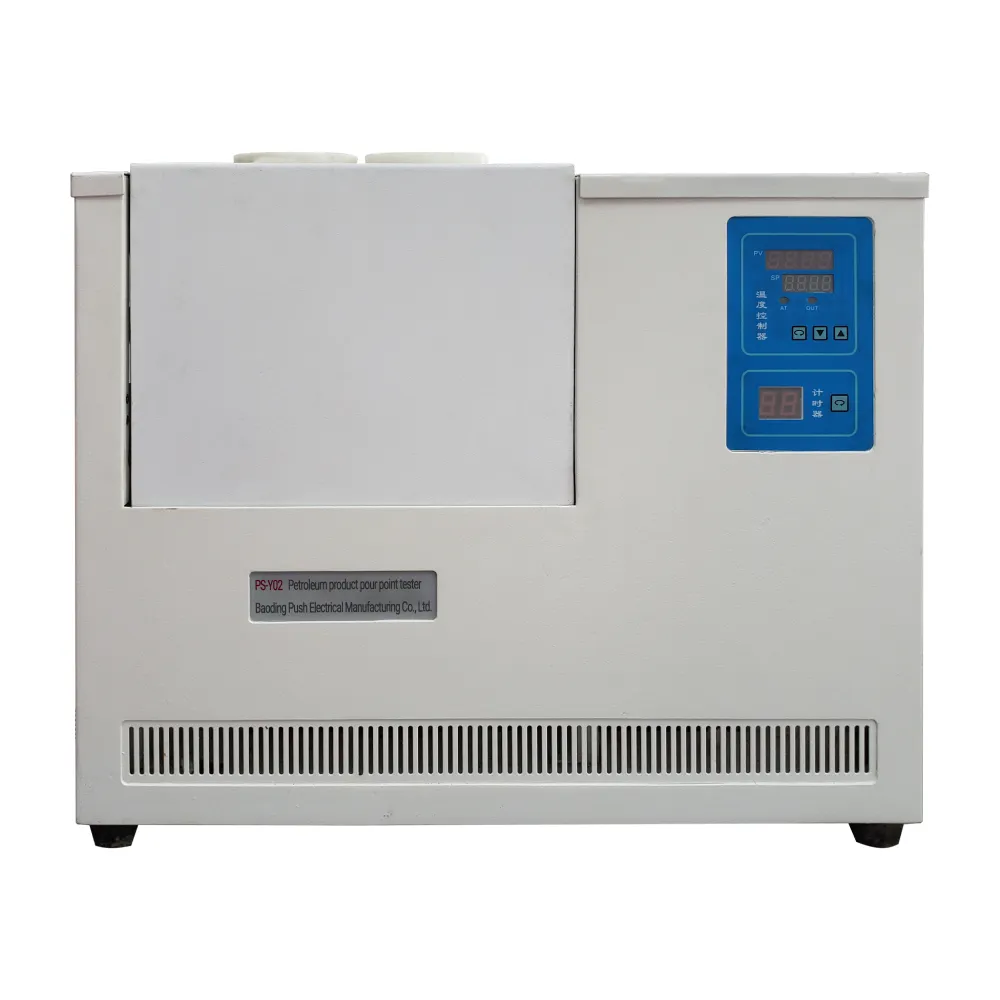
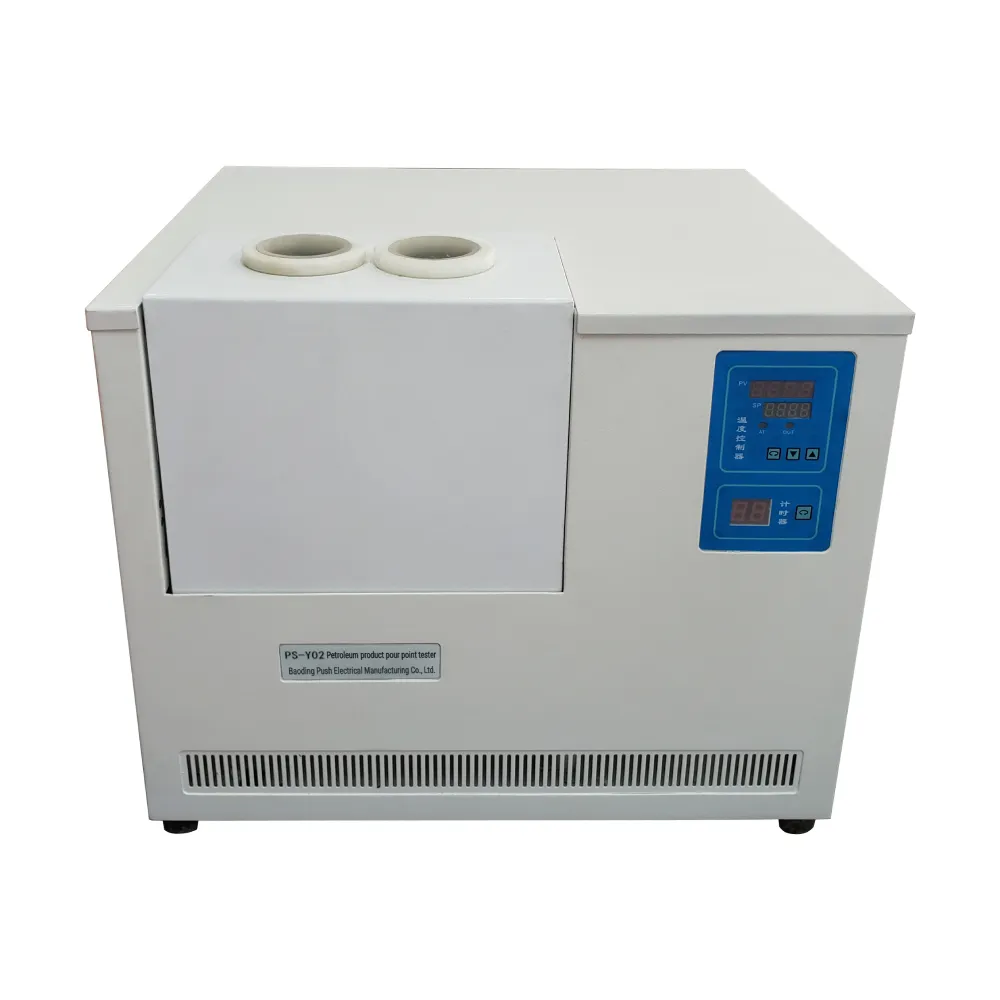
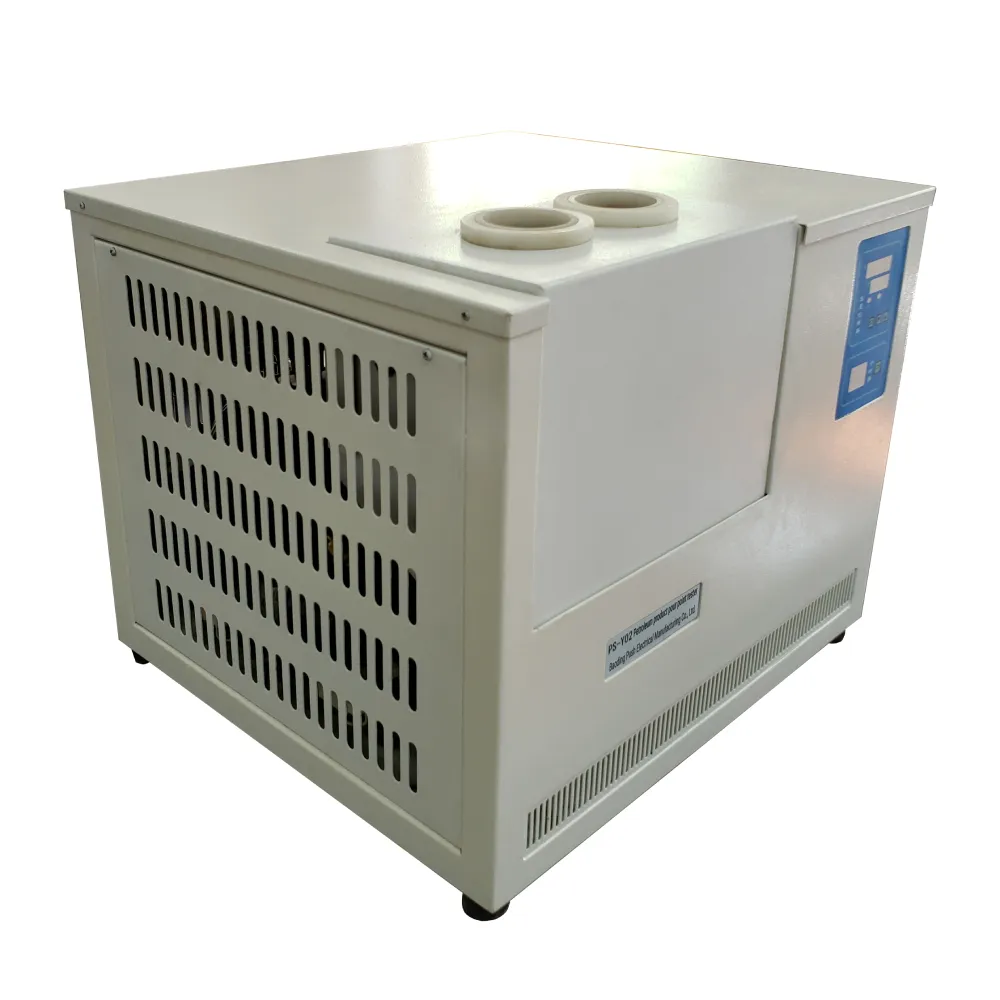
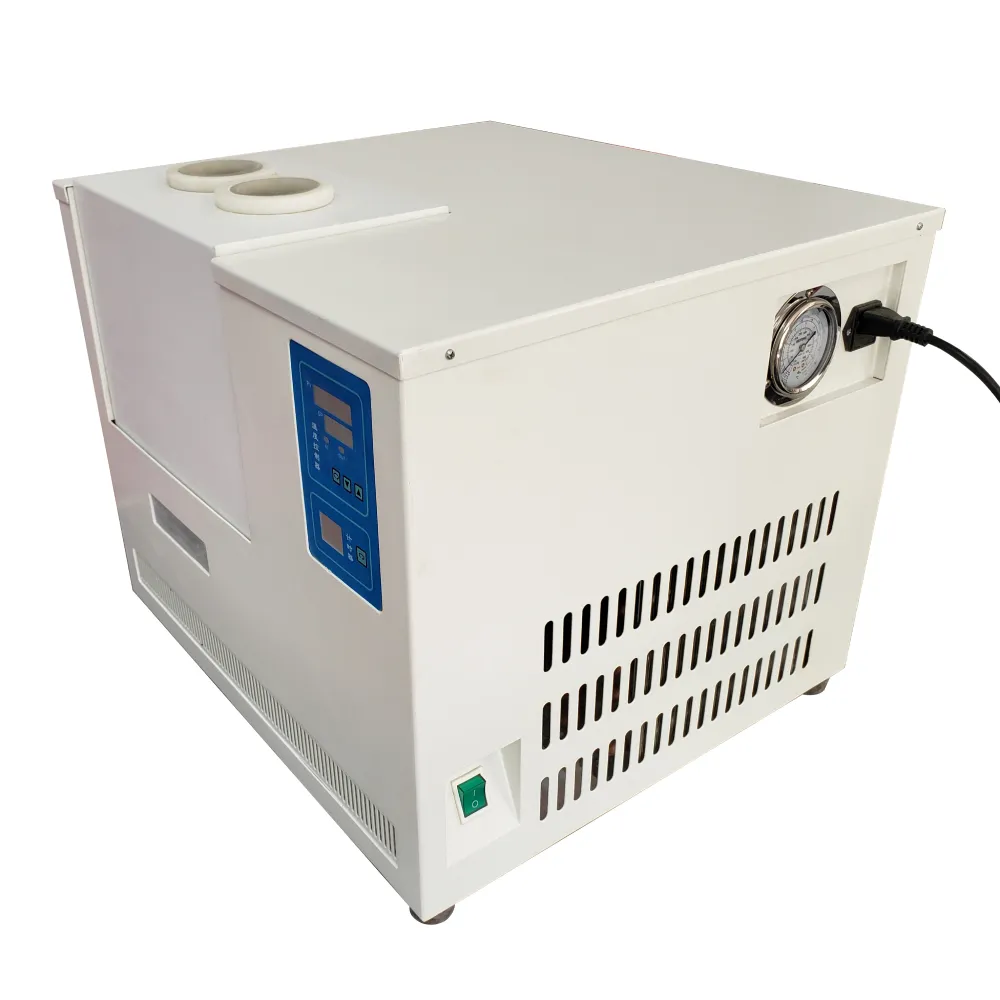
1. Integrated design, one slot two holes.
2.Refrigeration cycle system and temperature control system composed of imported totally enclosed compressor.
3.The cold tank adopts the patented technology of refrigeration and cold trap without alcohol, which has the advantages of fast cooling speed and long service life.
4.The imported PT100 temperature measurement system has high temperature control precision.
The Pour Point Tester is a specialized instrument used for determining the pour point of petroleum products, particularly lubricating oils and fuels. The pour point is the lowest temperature at which the oil remains fluid enough to flow or be pumped under specified conditions. This parameter is crucial in assessing the low-temperature performance of oils and fuels, especially in cold climates or applications where temperature variations are significant.
Lubricating Oil Industry: Used for quality control and performance assessment of lubricating oils, ensuring optimal performance under cold weather conditions.
Fuel Industry: Employed for evaluating the low-temperature flow properties of diesel, biodiesel, and other fuels, ensuring proper operation in cold environments.
Petrochemical Industry: Utilized for assessing the pour point of various petroleum-based products, including base oils, hydraulic fluids, and waxes.
Quality Control: Ensures that lubricating oils and fuels meet specified standards and performance requirements, preventing operational issues due to poor low-temperature properties.
Product Development: Helps in formulating and optimizing oil and fuel formulations to achieve desired pour point characteristics for specific applications and climates.
Cold Climate Operations: Essential for industries operating in cold regions or during winter months, where low-temperature flow properties are critical for equipment performance and reliability.
Research and Testing: Used by research institutions and laboratories to study the effects of additives, base oil types, and formulation changes on pour point characteristics, contributing to the development of advanced oil and fuel products.
The Pour Point Tester works by cooling a sample of oil or fuel gradually and monitoring its temperature. At the pour point temperature, the oil begins to solidify, resulting in a significant increase in viscosity and hindered flow. The instrument detects this temperature, providing a precise measurement of the pour point. This information helps operators and manufacturers ensure the suitability of oils and fuels for specific applications and environmental conditions, thereby enhancing equipment performance, reliability, and safety.
|
compressor |
imported air cooled fully closed |
|
measurement range |
20℃~-70℃ |
|
temperature control accuracy |
±0.5℃ |
|
cooling time |
<60minutes |
|
accuracy |
0.1℃ |
|
power voltage |
AC220V±10% |
|
power frequency |
50Hz±2% |
|
power |
≤35W |
|
ambient temperature |
10~40℃ |
|
ambient humidity |
<85%RH |
|
wide*hight*depth |
530mm*440mm*460mm |
|
net weight |
65kg |
automatic cloud and pour point analyzer
automatic pour point analyzer
cloud and pour point tester
cloud point analyzer
cloud point tester
pour point analyzer
pour point test equipment
pour point tester
-
 Find the Best Loop Impedance Tester for Sale and Ensure Electrical SafetyWhen ensuring electrical safety, accurate loop impedance testing is crucial. Whether you’re an electrician, a facilities manager, or a safety inspector, having a reliable loop impedance tester for sale is essential. This article will guide you through the key considerations when purchasing a loop impedance tester, explore the different types available, and highlight the benefits of choosing a high-quality instrument. Understanding the nuances of these testers will help you make an informed decision and ensure compliance with safety regulations.Detail
 -
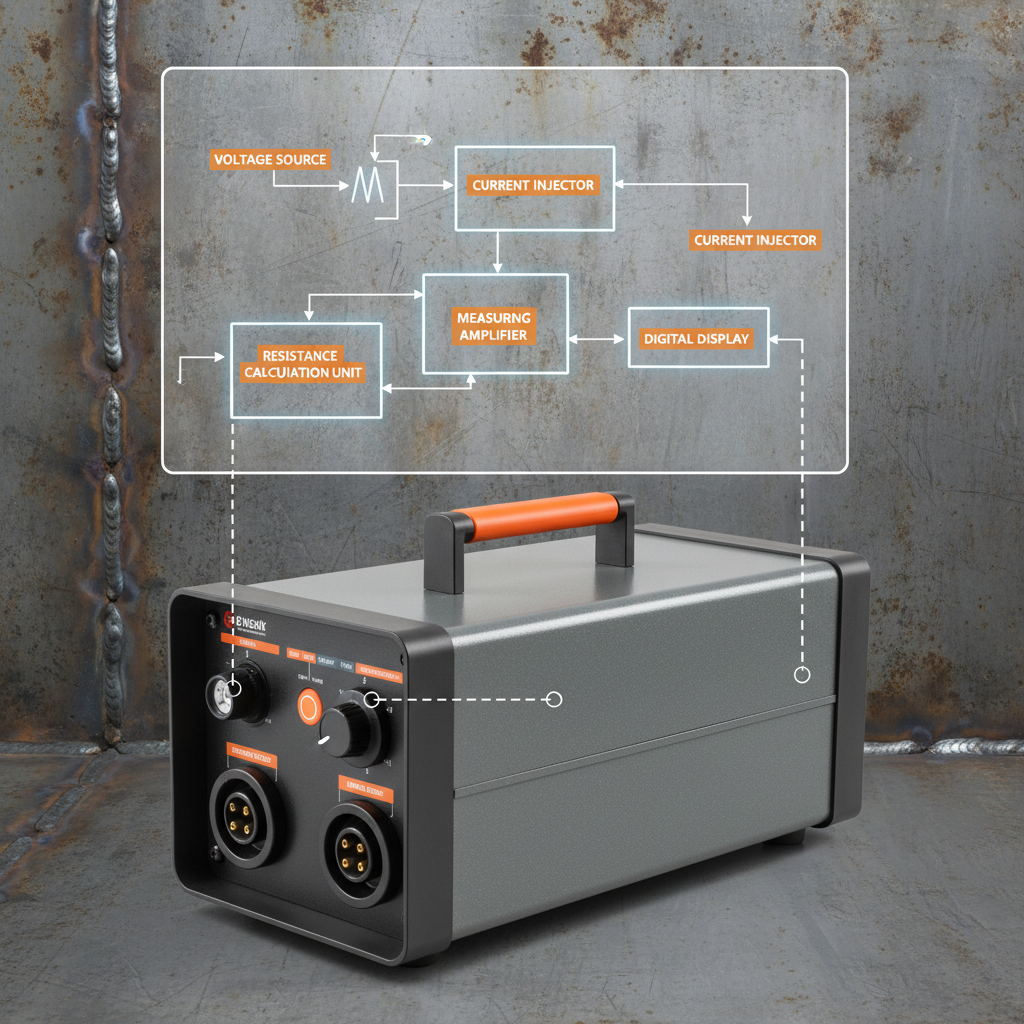 Comprehensive Guide to Loop Impedance Meter for Electrical SafetyEnsuring electrical safety is paramount in any installation, and a loop impedance meter is a crucial tool for achieving this. This device measures the total impedance of the earth fault loop, helping to verify that protective devices will operate correctly under fault conditions. In this article, we'll explore what a loop impedance meter is, how it works, its applications, factors influencing measurements, choosing the right meter, and the importance of regular testing. Investing in a quality meter from Push Tester is a step towards safer electrical systems.Detail
 -
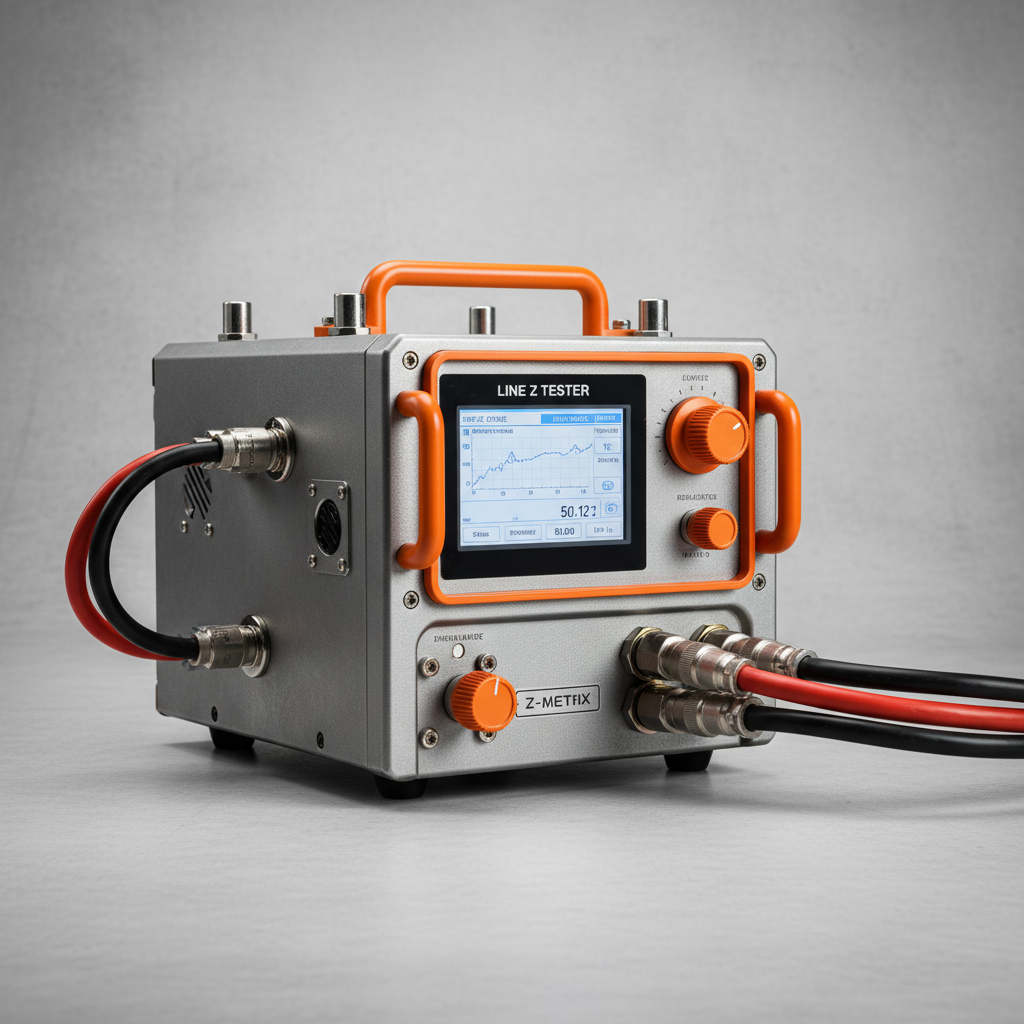 Understanding and Choosing a Line Impedance Tester for Optimal Network PerformanceIn the realm of telecommunications and electrical engineering, maintaining the integrity of transmission lines is paramount. A line impedance tester is a crucial instrument for ensuring optimal signal transmission and preventing costly network disruptions. This article delves into the world of line impedance testing, exploring its importance, applications, types of testers, and what to look for when making a purchase. Ensuring accurate impedance measurements is essential for efficient and reliable network performance. Choosing the right tester can significantly impact troubleshooting speed and the overall quality of your infrastructure. A line impedance tester, also known as a cable impedance analyzer, is a device used to measure the characteristic impedance of coaxial cables, twisted pair cables, and other transmission lines. Impedance, measured in ohms, represents the opposition to the flow of alternating current. Maintaining the correct impedance (typically 50 or 75 ohms) is vital for minimizing signal reflections, ensuring efficient power transfer, and preventing signal degradation. Mismatched impedance can lead to signal loss, ghosting, and reduced network performance. Regular testing helps identify faults and maintain network integrity.Detail


